
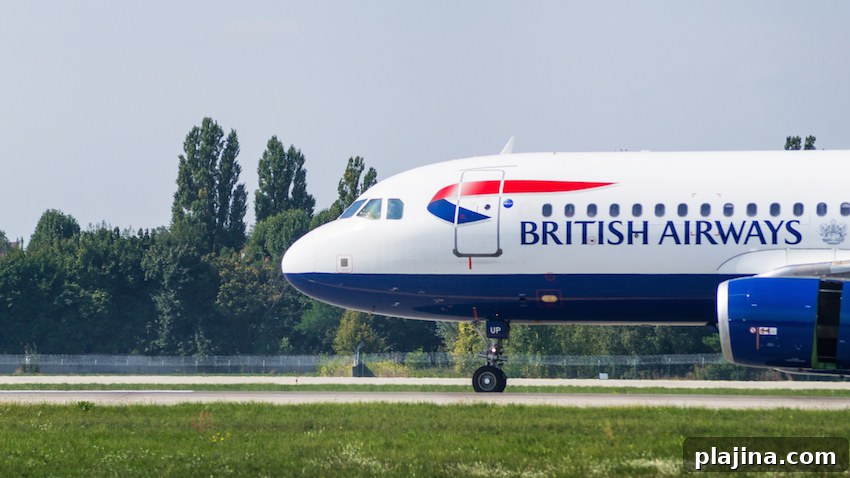
British Airways has expanded trials of biometric boarding at Los Angeles (LAX), Orlando (MCO), Miami (MIA) and New York (JFK) airports. The airline began testing biometric gates at Los Angeles International in November and reported that the technology helped board more than 400 customers in 22 minutes — roughly half the time typically required without biometrics.
British Airways is now collaborating with the Greater Orlando Aviation Authority, U.S. Customs and Border Protection and technology partner SITA to trial biometric boarding gates on daily flights from Orlando to Gatwick (LGW). The airline says it can board about 240 customers in approximately 10 minutes using this system.
With biometric boarding, passengers do not need to present a boarding pass or passport at the gate. Instead, they look into a camera and walk onto the aircraft. The system verifies a passenger’s facial features against passport, visa or immigration photos to confirm identity securely and quickly.
Carolina Martinoli, director of brand and customer experience at British Airways, commented on the trials: “We’re using technology that consumers are now familiar with and trust because it delivers a convenient, reliable and secure experience. Our latest trial with SITA in Orlando is helping us to reduce the time it takes to board our aircraft, and early indications are that using biometrics for arrivals has huge potential too. These trials will help us to evolve the technology and processes we use to best suit the needs of our customers.”
Airlines and airport authorities are increasingly exploring biometric solutions to streamline passenger flow, reduce queue times and enhance security. Trials like British Airways’ provide real-world data on performance, customer acceptance and operational impacts, helping stakeholders refine system integration, privacy safeguards and passenger communication. While technology can speed boarding, its effectiveness depends on accurate enrolment, robust data protection practices and clear coordination between airlines, airport operators and border agencies.
Passengers participating in biometric trials typically enroll by confirming their identity once, allowing subsequent gate checks to be handled via facial recognition. This reduces the need to handle documents and can accelerate both departure and arrival processes. However, carriers and authorities emphasize that participation is voluntary and alternative document checks remain available for travelers who prefer not to use biometric systems.
As trials continue, airlines will evaluate metrics such as boarding speed, error rates, customer satisfaction and operational reliability. The balance between convenience and privacy will stay central to deployments, with transparency about how biometric data is used, stored and protected proving key to broader adoption. British Airways’ expanded trials across multiple U.S. airports aim to gather consistent evidence to guide future rollouts and to ensure the technology meets regulatory and passenger expectations.