
When Mount Erciyes poured lava across central Turkey thousands of years ago, volcanic ash settled into a strange, lunar-like terrain of cone-shaped “fairy chimneys” and soft volcanic layers called tufa. Early Christians discovered that the porous rock was ideal for hiding from persecution. When damp, the tufa could be carved like soap, creating cave dwellings, cliffside refuges and even underground cities stretching hundreds of feet below the surface.
At first glance this extraordinary landscape looks like a science-fiction set. In fact, hot-air balloon pilots first floated above the region in 1989 for a promotional flight, and ballooning over Cappadocia quickly became one of the area’s signature experiences. The most recent widely reported figures showed a major rise in balloon passengers, reflecting the activity’s growing popularity among travelers.
Daily balloon flights depend on weather and wind conditions. Up to 100 balloons may inflate before sunrise on good mornings, so book your flight in advance for the first morning you are in Cappadocia. Tour operators cancel many flights when conditions are unsafe, so planning for a second or third morning increases your chances of getting aloft. Choose an established operator with a good safety record and clear information in English. Companies offer different categories of flights—from Standard group baskets to more private or deluxe options. Balloons usually carry up to about 16 passengers, and prices vary according to comfort level and season.
Although the airborne portion of a typical flight lasts about 60–90 minutes, the full experience takes roughly four to five hours. Operators pick up guests around 4:30–5:00 a.m., provide a light preflight breakfast, and bring you to the launch field to watch crews fill the colorful envelopes before dawn. After boarding, the basket rises as the sun begins to color the rock formations below.
The timing of these flights is perfect for photographers and anyone seeking that iconic image: the sunrise painting warm hues across the valleys while dozens of balloons drift nearby. Depending on wind direction you may glide above Göreme and Zelve, where tight clusters of fairy chimneys rise from the valley floor, or travel over surrounding modern villages such as Ürgüp. Views change constantly, revealing churches, carved facades and agricultural terraces interspersed with the surreal geology.
Booking with a reputable outfitter typically includes an experienced pilot who acts as a guide, explaining the region’s geology and history in English. The valleys of Cappadocia drew the first organized Christian communities in the fourth century, led by figures such as St. Basil. These early settlers carved homes, bakeries and workshops into the soft rock and established secluded hermitages and churches. Frescoes painted on cave-chapel walls—protected by the dry climate—remain remarkably well preserved, offering a vivid window into early Christian life.
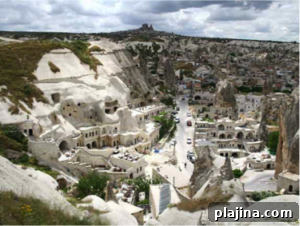
PHOTO: © PEPE14 – DREAMSTIME.COM
The flight inevitably ends too soon. After landing you’ll often be offered a celebratory glass of sparkling wine and a certificate to commemorate the ride. Many visitors find the balloon trip a perfect introduction to exploring the open-air museums at Göreme and Zelve, where hundreds of carved churches and cave homes are concentrated. Equally compelling are the subterranean cities such as Kaymaklı and Derinkuyu, excavated over centuries into multi-level complexes. These underground networks include sleeping quarters, communal kitchens, storage rooms and stables; historians estimate tens of thousands of people could shelter below for extended periods during crises.
When visiting the underground cities, hire a guide and bring a sweater. Passageways can be narrow and labyrinthine, and the deeper levels are noticeably cooler than the surface—even on hot summer days. A guide helps you navigate the tunnels safely and explains the architecture and social life of the people who once lived there. Combining a balloon flight, valley walks and subterranean exploration gives a rounded sense of why Cappadocia is one of Turkey’s most captivating destinations.
INFO TO GO
From Istanbul (IST) the easiest way to reach Cappadocia is a short flight—about one hour and 20 minutes—to Kayseri (ASR), followed by an approximately one-hour drive or transfer to Ürgüp in the region’s heart. Staying in a converted cave hotel offers a memorable experience; some properties feature suites carved into the rock with kitchens and patios. In Ürgüp you can also find rooftop cafés serving local small plates—eggplant, lamb and fresh tomato preparations are regional specialties—while you watch the hills and valleys that draw travelers from around the world.