
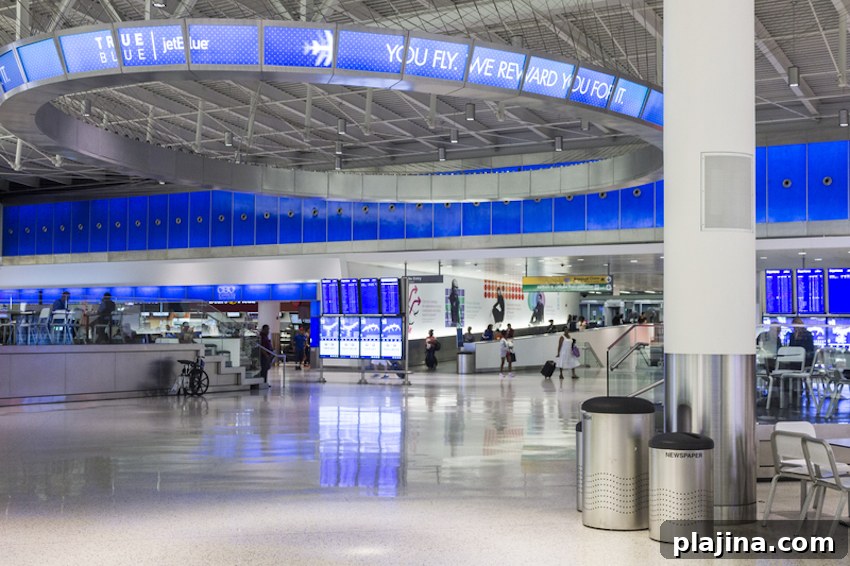
A major renovation plan for New York’s John F. Kennedy International Airport will add two large international terminals and expand the airport’s passenger capacity from about 60 million in 2017 to an estimated 80 million by 2035.
New York Governor Andrew Cuomo described the expansion as a move to transform JFK — long criticized in many airport rankings — into “one of the finest airports in the world.” The renovation aims to modernize passenger flow, improve amenities, and create a more connected terminal layout.
The project carries an estimated price tag of $13 billion and was scheduled to break ground in 2020. Initial terminal facilities were planned to open in 2023, with broader construction phases expected to finish by 2025. These dates reflect the original timeline announced by project leaders.
The two new international terminals will replace the existing arrangement of six smaller, standalone terminals that are currently connected mainly by roadways. The redesign emphasizes consolidated, contiguous terminal structures to simplify transfers, reduce walking distances, and streamline security and customs processing.
“There are more steps to go, but ultimately the goal is to have all of the passenger facilities interconnected,” said Rick Cotton, executive director of the Port Authority of New York and New Jersey. Interconnected terminals are intended to enhance passenger convenience, improve operational efficiency, and support future growth in international travel.
Despite these improvements, some critics note the plan does not address airfield capacity. Because the renovation does not include the construction of new runways, it is unlikely to eliminate the delays JFK repeatedly experiences during peak travel periods. Runway capacity and air traffic control remain separate challenges that affect on-time performance.
The expansion focuses on terminal modernization, passenger experience, and operational consolidation rather than on-flight-scheduling solutions. Supporters argue that upgrading terminals will attract more airlines and passengers, boost retail and dining options, and create jobs during construction and long-term airport operations. Opponents caution that without coordinated investments in runways, taxiways, and broader airspace management, passenger growth could outpace the airport’s ability to handle takeoffs and landings smoothly.
As plans move forward, officials and stakeholders will need to balance terminal improvements with broader infrastructure and operational measures. The proposed transformation of JFK aims to position the airport for projected international travel demand while improving the traveler experience through modern facilities and better-connected passenger services.