
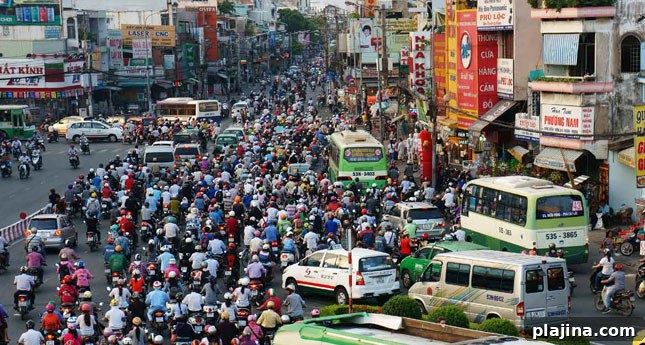
They’re buzzing, darting, swerving — they’re everywhere. The streets of Ho Chi Minh City form a moving sea of motorbikes, ridden by everyone from babies in arms to elderly grandparents. These ubiquitous two-wheelers are a defining feature of Vietnam’s largest city; estimates suggest the city alone may host around two million of them.
In Ho Chi Minh City (formerly Saigon), visitors encounter a nonstop hubbub of activity and a feast for the senses. Sidewalks overflow with vendors wearing conical hats, cooking fragrant soups and stews over tiny burners. Shops range from boutiques offering European-style clothing to stalls selling souvenirs and inexpensive watches. Construction cranes dot the skyline, and traffic—especially motorbikes—dominates the streets.
As Vietnam’s economic center, Ho Chi Minh City contributes a substantial portion of the nation’s output. Key industries include seafood processing, agriculture, construction, tourism, finance, manufacturing, and trade. The city hosts multiple industrial parks, a large network of banks with hundreds of branches, and Vietnam’s first stock exchange, which opened in 2001.
The business environment in Vietnam offers attractive opportunities for American companies. Vietnamese professionals are generally open to partnerships and foreign investment, and many sectors show strong potential for growth. Still, cultural differences matter, so visitors should prepare and adapt to local customs when doing business here.
Business etiquette in Vietnam tends to be conservative. Men typically wear darker suits, a white shirt, and a tie. Women have somewhat more flexibility but should choose modest, professional attire; form-fitting or sleeveless clothing is usually inappropriate for formal meetings.
Meetings generally begin with a handshake, and it’s respectful to address people by their title and last name at first. Present business cards using both hands and receive cards the same way. Punctuality is important—arrive on time for appointments. Meetings may proceed at a slower pace than Americans expect; long pauses are common and it is considered impolite to interrupt. Energetic communicators should be prepared to listen patiently.
Vietnamese professionals appreciate partners who are informed about their country. A little background research before the first meeting demonstrates respect and interest and can help build stronger relationships.
While locals often travel to work by motorbike, most foreign business travelers use taxis, which are abundant and reasonably priced in the city.
One of the first challenges visitors face in Ho Chi Minh City is crossing the street. With dense motorbike traffic and few traffic signals, crossing can seem daunting. Some rely on accompanying locals for guidance, while others adopt the local technique: step off the curb and walk at a steady pace without hesitating. Drivers usually weave around pedestrians, and maintaining a calm, predictable gait helps you cross safely.
The city offers many hotels catering to business travelers, with new properties opening regularly. Most choose to stay near the city center to be close to corporate offices and meeting venues. From there, choices depend on budget and desired amenities.
A notable addition to the luxury hotel scene is the Sheraton Saigon Hotel & Towers, situated between the river and the Opera House. Its executive level includes a multi-level lounge with city views, workstations, complimentary refreshments throughout the day, and private check-in and check-out services.
Breakfast on the balcony at Hotel Majestic © Nigel Spiers | Dreamstime.com
Hotel Majestic is a Ho Chi Minh City landmark, showcasing French colonial architecture from 1925. Updated for modern comfort while retaining its historic charm, the hotel features spacious suites, hardwood floors, and European-style furnishings. Corporate amenities include a business center, meeting rooms, and hotelwide WiFi. Its rooftop bar overlooking the Saigon River is a memorable spot for an evening drink.
The Caravelle Hotel, originally built in 1959 and renovated in the late 1990s, combines retro glamour with modern conveniences. Its popular Saigon Saigon Bar offers live entertainment and city views, and the hotel provides business travelers with WiFi throughout, a business center, and meeting facilities.
Ho Chi Minh City’s dining scene serves nearly every cuisine. French influence remains evident in bistros and bakeries selling fresh baguettes, while Vietnamese options span lively street stalls to refined restaurants. Choosing a venue for a business lunch or dinner usually comes down to the desired atmosphere and menu.
Restaurant Bobby Chinn is known for creative dishes served in a relaxed, elegant setting and operates long hours that suit a range of schedules. For quieter, classically Vietnamese fare, Hoi An restaurant offers a peaceful interior and specialties such as spicy seafood soup served in a coconut and grilled shrimp wrapped in banana leaves, often accompanied by live traditional music.
For an upscale business meal, Square One at the Park Hyatt Saigon provides several distinctive dining rooms and an outdoor terrace. The restaurant blends Vietnamese and Western styles—meats are often grilled in the Western tradition, while seafood and other dishes reflect Vietnamese culinary techniques.
Ho Chi Minh City blends fast-paced urban energy with rich cultural traditions, making it a dynamic destination for business travelers. With a little preparation and awareness of local customs, visitors can navigate the city’s streets, meetings, and dining scene with confidence.