
For millennia, pearling and its related trades shaped the economy and culture of Bahrain’s island society. Archaeological evidence indicates pearl diving in Bahrain dates back thousands of years, with activity recorded as early as 2000 B.C.E. The shallow, oyster-rich waters of the Arabian Gulf and Bahrain’s strategic location helped the islands become a regional center for this valuable industry.
© Anne Holtrop
As a pearling hub, Bahrain attracted divers and crews from across the Gulf who sailed on dhows and converged here each season. The pearling season underpinned livelihoods across many professions: merchants, boat owners and builders, captains, divers, haulers, and sailmakers all depended on the success of the fisheries.
The buildings and urban fabric of Muharraq and the northern waters of Bahrain preserve the physical evidence of this economy and its traditions. They form some of the last remaining elements that tell the complete story of the pearling culture. With more than 4,000 years of pearling history, Bahrain’s pearl fisheries—known in antiquity as Tylos—are widely documented across time.
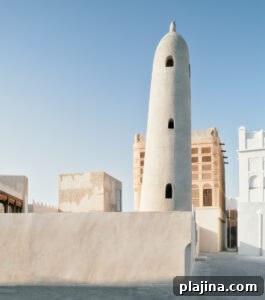
Bahrain’s pearling heritage is especially visible in Muharraq, the former capital and a UNESCO-listed center of Bahraini culture. The revitalized Siyadi Pearl Museum offers a renewed home for this legacy, celebrating the island’s historic role in the pearl trade while safeguarding its cultural and economic significance.
The Siyadi and Murad family districts in Muharraq are central features of the Pearling Path. Both families were prominent pearl merchants, and the Siyadi Majlis is an architecturally distinct gathering place where Tajir Al-Lulu received buyers from India and Europe. The Majlis was the setting for negotiations over prized pearl collections.
© Anne Holtrop
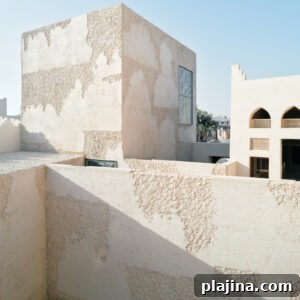
Studio Anne Holtrop has been active in Muharraq, contributing to several major conservation projects. Their recent work on the Siyadi Pearl Museum and mosque used a plastering approach that preserves the historic character of these buildings.
Anne Holtrop, originally from the Netherlands, and Noura Al Sayeh have led significant architectural efforts in Bahrain, playing a key role in the conservation and sensitive updating of 11 UNESCO-listed heritage buildings in Muharraq, including the former king’s residence and Qaisariya Suq. Their practice emphasizes material processes and careful integration of historic fabric with contemporary interventions.
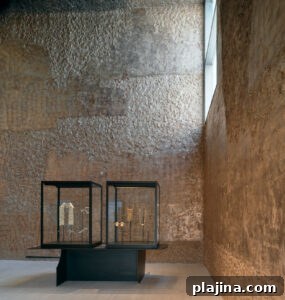
The restoration of the Siyadi Majlis and mosque began by removing later, incompatible additions to reveal the original form. With the historic elements exposed, missing sections were re-created by extending the remaining walls along their original alignments, guided by the surviving foundations. These restored and completed rooms now display pearl jewelry and loose pearls from the collections of the Bahrain National Museum, Mattar Jewelers and the Cartier Collection.
Traditional construction in Muharraq used coral stone (froush) finished with lime-based plaster. Historically, plaster was applied in two stages: a thick, hand-thrown base layer over the coral stone and a fine, smooth finishing layer that was often carved with gypsum and lime reliefs and painted. The grand guestroom of the Siyadi Majlis retains rare decorative motifs that are unique within Muharraq.
© Anne Holtrop
To distinguish the new repairs from the original fabric while honoring traditional methods, a new plastering technique was developed. After applying the rough base layer, craftsmen partially smeared a smooth layer about eight feet wide from bottom to top, leaving irregular boundaries that reveal both layers. The effect preserves the character of historic plaster while clearly signaling contemporary repair work.
In the main exhibition room, with a 21-foot ceiling, plaster surfaces are finished with silver leaf. Silver develops a subtle patina through exposure to air and humidity, producing a soft golden hue that echoes the historic ornamental interiors of spaces like the Siyadi Majlis.
Visitors to the Siyadi Pearl Museum can see the tools, techniques and traditions that made Bahraini pearls highly prized, and enjoy close-up views of exquisite pearl jewelry spanning centuries.