
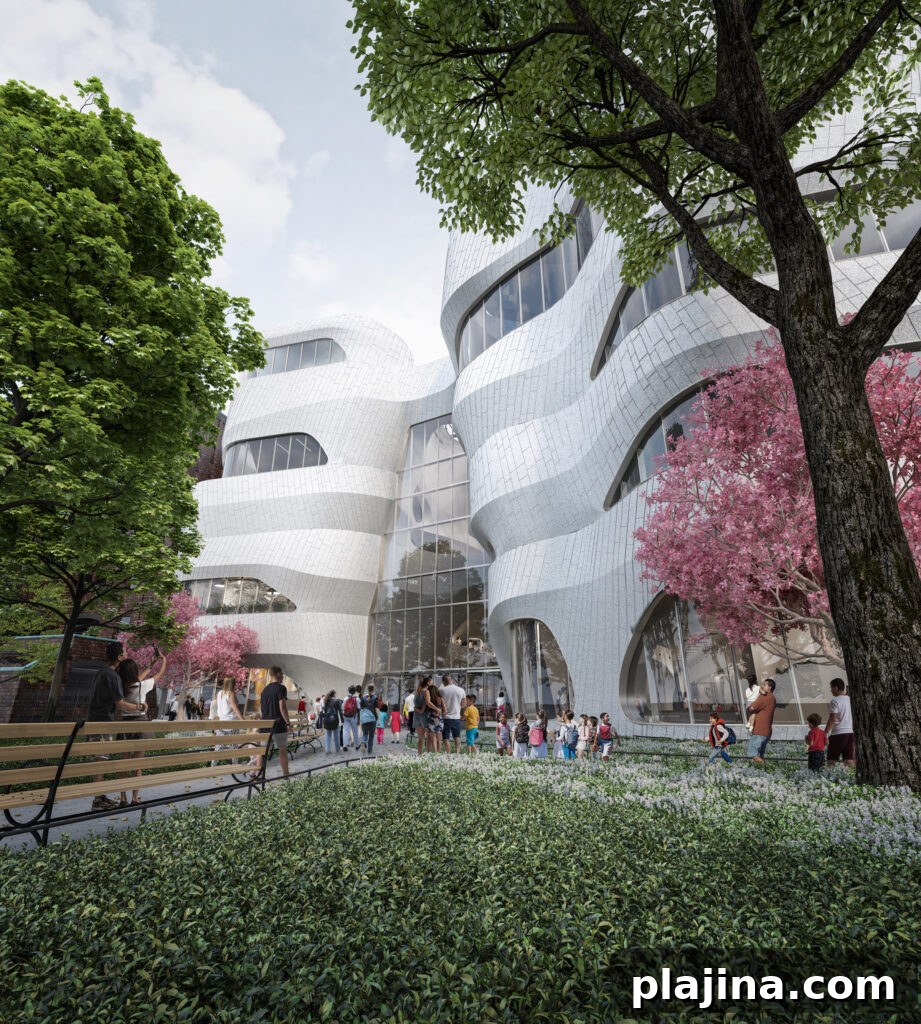
New York City’s American Museum of Natural History will soon open its Richard Gilder Center for Science, Education, and Innovation, a striking new addition composed of steel, glass, and sculpted shotcrete. The museum will welcome visitors to the Gilder Center on Feb. 17.
Designed by Studio Gang, the 230,000-square-foot Gilder Center highlights the complex relationships among life on Earth and connects the museum’s collections, research, educational programs, and exhibitions. The new building physically links several museum structures, completing a continuous campus across four city blocks as envisioned more than 150 years ago. The Gilder Center embodies a core museum message: all life is connected.
Neoscape, Inc./© AMNH
“In a time when the need for science literacy has never been more urgent, we are thrilled and proud to be nearing the long-awaited opening date for the Richard Gilder Center for Science, Education, and Innovation,” said Ellen V. Futter, president of the American Museum of Natural History. “This major new facility will transform the museum’s work and the cultural landscape of New York City.”
Exhibition design by Ralph Appelbaum Associates centers on the Kenneth C. Griffin Exploration Atrium, a four-story civic space that creates a new entrance from Columbus Avenue, opens onto Theodore Roosevelt Park, and establishes a clear visitor path to Central Park West.
The David S. and Ruth L. Gottesman Research Library and Learning Center, located on the fourth floor, will be a public-facing hub that connects visitors to the museum’s research collections. With sweeping westward views, the facility includes a scholars’ reading room, an exhibition alcove, a group study room, and spaces for casual reading or organized programming. Displays will highlight the history of science through materials such as the museum’s Rare Book Collection.
The five-story Louis V. Gerstner Jr. Collections Core is a vertical collections facility that presents three stories of floor-to-ceiling exhibits covering the museum’s holdings in vertebrate and invertebrate biology, paleontology, geology, anthropology, and archaeology. Exhibits will range from fossil tracks and trilobites to antlers and pottery.
Neoscape, Inc./© AMNH
Together, the Gilder Center will house nearly 4 million scientific specimens—about 12 percent of the museum’s collection. The Macaulay Family Foundation supports the collections and exhibits on the first and second floors of the Collections Core.
The Susan and Peter J. Solomon Family Insectarium, a 5,000-square-foot gallery and the museum’s first new insect-focused space in over 50 years, opens within the Gilder Center. Dedicated to insects—the most diverse and ecologically essential group of animals—the Insectarium will present live and pinned specimens, interactive graphics, and digital displays. Visitors will encounter many of the roughly 30 insect orders and learn about their roles in ecosystems. Overhead oversized honeybee models lead to a monumental hive at the gallery’s west end. A transparent skybridge provides a corridor for live leafcutter ants as part of one of the largest displays of its kind. Touchscreens highlight insects found across New York City’s boroughs, while a sound gallery surrounds visitors with insect-produced audio and corresponding vibrations.
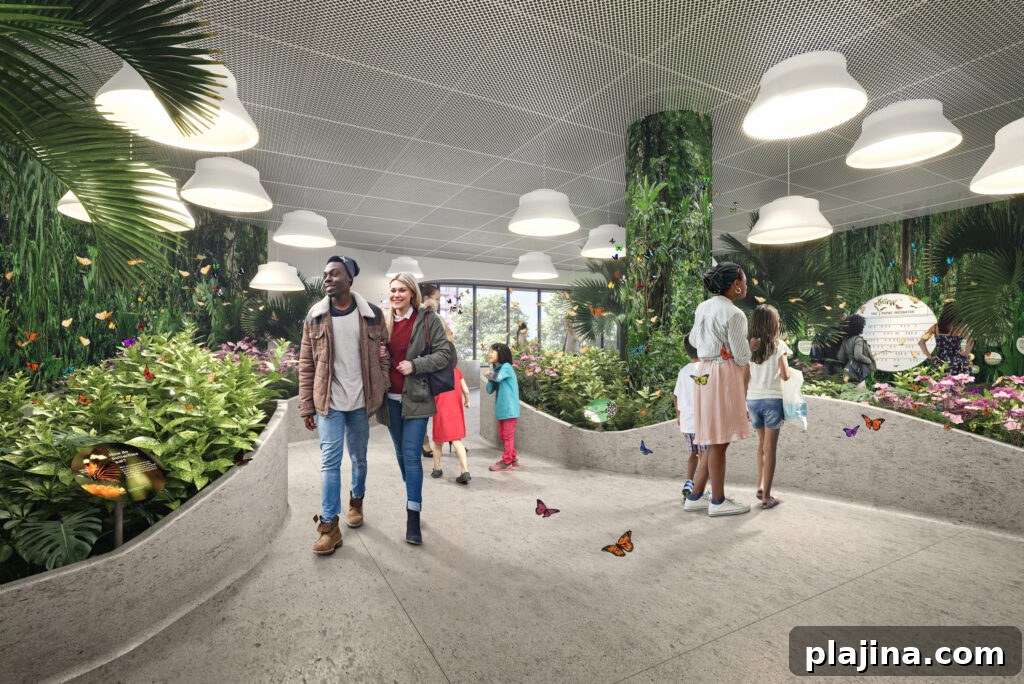
The Davis Family Butterfly Vivarium is a year-round, 3,000-square-foot space where visitors can mingle with up to 80 species of free-flying butterflies. The vivarium presents a series of micro-environments along a winding route where butterflies can be observed in flight. An identification board, updated daily, offers illustrated cards for each species likely to be seen, and staff-assisted digital microscopes allow closer inspection.
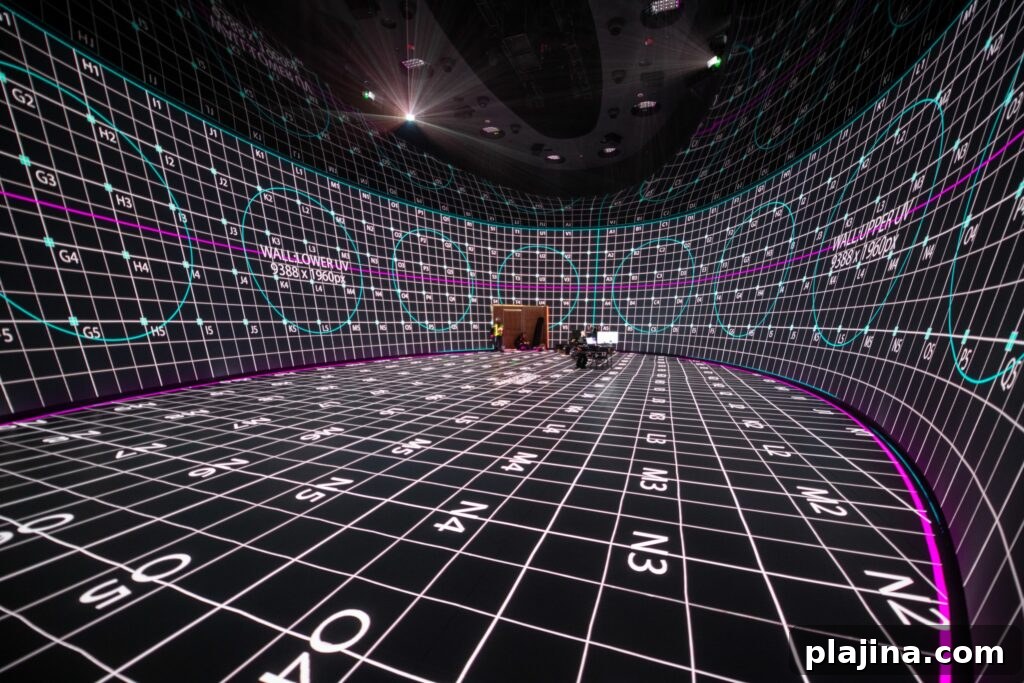
Invisible Worlds is a 360-degree immersive science-and-art experience that provides a visually rich, scientifically grounded exploration of life’s networks at multiple scales. Presented in a custom theater that echoes the museum’s legacy of immersive displays—from habitat dioramas to planetarium shows—the experience combines striking visuals with rigorous content.
Timothy Schenck /© AMNH
Visitors begin in an introductory gallery that flows into a large projection space the size of a hockey rink, with 23-foot-high walls and mirrored ceilings that suggest infinity. A 12-minute looping presentation traces connections from DNA and cellular building blocks to ecological interdependencies in forests, oceans, and cities, and to neural networks in the human brain. Interactive moments allow visitors’ movements to influence the projected networks, placing them directly into the story.
The Griffin Atrium opens onto Theodore Roosevelt Park and creates a welcoming path to Central Park West. The canyon-like atrium, with bridges and multi-level openings, links exhibition galleries, education spaces, and collections areas, offering a sense of discovery. Much of the interior form is created using shotcrete—structural concrete sprayed onto rebar without traditional formwork—a technique pioneered by museum naturalist and taxidermist Carl Akeley. After curing, the surfaces are finished by hand to preserve the material’s fluid quality.
The Gilder Center project also includes phased improvements to Theodore Roosevelt Park, led by landscape design firm Reed Hilderbrand. The plan adds seating and gathering areas, improves circulation, refreshes plantings, and upgrades park infrastructure. Renovations to the park’s northwest corner, where the Nobel Monument stands, were completed last fall. Additional infrastructure work and enhancements to park entrances and adjacent spaces will open with the Gilder Center. Plantings are underway and scheduled for completion in the spring planting season, and streetscape restoration in front of the Gilder Center on Columbus Avenue will be finished in spring.
Timed-entry reservations are required for admission, and face coverings are strongly recommended for visitors ages 2 and up. The museum is open daily from 10 a.m. to 5:30 p.m. For residents of New York, New Jersey, and Connecticut, general admission tickets are pay-what-you-wish.