
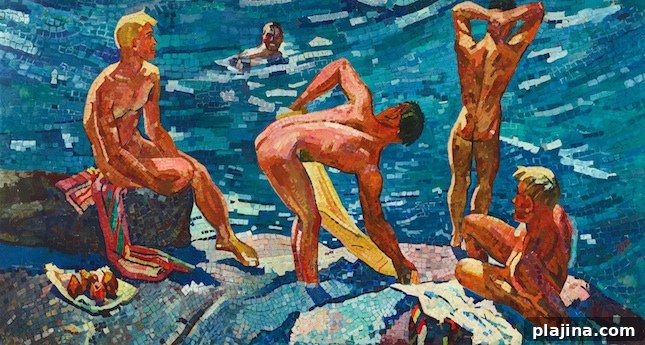
Examples of Russian art from the last two centuries are on view at the Sinebrychoff and Didrichsen Art Museums in Helsinki through May 15. The exhibition, titled Soviet Art from the Arefyev Collection, brings together works from Mikhail Arefyev’s collection alongside pieces from private collections abroad, many of which are shown in Finland for the first time.
The exhibition focuses primarily on socialist realism of the 1960s and 1970s while also presenting a selection of avant-garde, late Soviet and early post-Soviet works created after the collapse of the Soviet Union. Together, these works trace the shifting roles of art: from state-sponsored propaganda to more nuanced, realistic portrayals of everyday life and ordinary workers.
Visitors will find paintings, drawings and other works by 31 artists. Among the highlights is a large-scale work by Alexander Deineka (1899–1969), Good Morning, which exemplifies the era’s emphasis on optimistic, idealized images of labor and community. The show places such iconic pieces in dialogue with lesser-known works to reveal a broader picture of Russian artistic production across turbulent political and social changes.
Through its mix of canonical and recently rediscovered pieces, the exhibition offers insight into how artists negotiated official demands and personal expression. Some works adhere closely to the conventions of socialist realism—clear narratives, heroic figures, and idealized settings—while others reflect experimentation and a turn toward more intimate or fragmented approaches as restrictions loosened and artists explored new visual languages.
The curatorial selection highlights the ways subject matter and style evolved over time. Early pieces emphasize collective identity, industrial progress and the ideal worker; mid-century works often combine stylistic clarity with subtle psychological depth; late and post-Soviet works show increased diversity in theme and technique, addressing individual experience, memory and the complexities of social change.
Presented across two respected Helsinki institutions, the exhibition offers both residents and visitors an opportunity to engage with Russian art beyond familiar tropes, considering historical context and artistic innovation together. It invites viewers to reflect on art’s capacity to shape public perception and to record personal and political histories.
The show remains open until May 15 at the Sinebrychoff and Didrichsen Art Museums in Helsinki, featuring a range of works that illuminate the dialogues between ideology, daily life and artistic freedom over the past century and a half.