
Development in sunny, seaside Miami-Dade County, with Miami as its vibrant center, becomes apparent the moment you land at Miami International Airport. The sheer number of airlines serving the region stands out — the airport is the only one in the United States served by more than 100 carriers — and this connectivity supports a fast-growing hospitality and luxury market. The city expects hotel inventory to increase by roughly 9,000 rooms in coming years as upscale hotels, new attractions and high-end retail shape a transforming skyline. Easy to reach and increasingly equipped for large-scale events, Miami is positioning itself to attract conventions that demand premium hotel options.
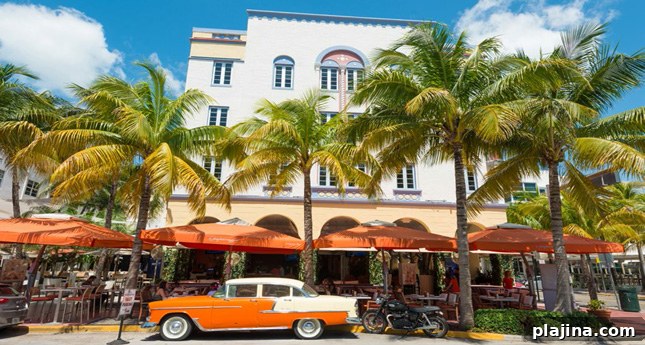
Miami already enjoys fame for its historic Art Deco District in South Beach and a thriving culinary scene. Port Miami remains prominent as a major cruise hub, and the city’s cultural calendar highlights events such as Art Basel Miami Beach. “Our tagline is ‘It’s #SoMiami,’” said William Talbert III, president and CEO of the Greater Miami Convention and Visitors Bureau, noting that global interest in Miami is stronger than ever. He pointed to projects led by well-known developers including Craig Robins and Alan Faena. Robins, the force behind Design Miami, is transforming the once-neglected downtown Design District in a multibillion-dollar effort that will be Florida’s first Gold LEED-certified neighborhood development, blending art, design and luxury retail for a broad audience.
International architects are contributing striking façades across the district, creating a unique environment where art and high-end retail intersect. On a morning stroll, it’s possible to find flagship stores from top luxury labels clustered together, and green rooftop initiatives are appearing alongside flagship boutiques. The district will host numerous luxury brands in a compact, upscale setting that mixes contemporary installations with restored historic structures. The former Moore Furniture Shop, Miami’s original furniture store built in the 1920s, has been incorporated into these revitalization efforts and now functions as an event-ready exhibition space featuring works by prominent designers and artists.
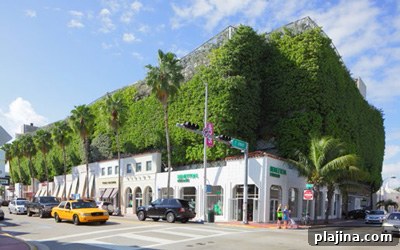
Eco-friendly parking garage and retail shops on Collins Avenue © FELIX MIZIOZNIKOV | DREAMSTIME.COM
Miami’s transformation extends beyond retail to ambitious mixed-use projects and waterfront developments, including a new superyacht marina and Alan Faena’s multi-block redevelopment along Collins Avenue. “This is an evolution of our community driven by privately financed projects,” Talbert said, adding that Miami remains one of the world’s most popular luxury destinations. The Patricia and Phillip Frost Museum of Science, located in the Arts & Entertainment District, is a much-anticipated cultural addition. Designed to function as an exhibit itself, the museum will house a planetarium, an aquarium and interactive science exhibits while providing space for private events. The $307 million complex is intended to be both educational and architecturally distinctive.
In the Brickell financial district, often compared to South America’s Wall Street because of the number of Latin American banks headquartered there, major urban projects are reshaping the skyline. The Brickell City Centre development introduced high-end retail and a new luxury hotel, EAST, Miami, which features a notable Uruguayan restaurant. Downtown streets such as Flagler Street and South Miami Avenue are seeing renewed investment, and historic buildings are being repurposed into boutique properties. The Langford Hotel, for example, is a restored 1920s Beaux-Arts building reopening as a boutique luxury property to meet growing downtown demand.
Convention planners have been closely watching the Miami Beach Convention Center’s $500 million expansion, slated for completion in 2018. The renovated center will offer enhanced infrastructure, a 60,000-square-foot ballroom, approximately 500,000 square feet of exhibition space and plans for an adjacent 800-room convention hotel, positioning the facility among the nation’s top venues for large-scale trade shows and conferences.
Nightlife and themed venues add another layer to Miami’s appeal. New bars and experiential concepts cater to both locals and visitors, offering distinctive event spaces and seasonal attractions. Some venues emphasize year-round programming and inventive themes that complement Miami’s reputation for lively, eclectic nightlife.
SCENIC DRIVES
Beyond the urban core, scenic drives reveal South Florida’s varied landscapes. The Tamiami Trail, a National Scenic Byway that crosses the peninsula, links Miami to Naples and threads through ecosystems such as Big Cypress National Preserve and Everglades National Park. The roughly 129-mile route can be driven along Interstate 75 or U.S. Route 41, beginning in downtown Miami on S.W. Eighth Street. Travelers should bring binoculars for wildlife viewing and plan stops that highlight the region’s natural and historic attractions.
For a quieter, more historic drive, the route south along Rickenbacker Causeway through Coconut Grove and Coral Gables leads to Old Cutler Road, where broad banyan trees provide shade and a sense of old-Florida charm. Along the way, notable stops include the Fairchild Tropical Botanic Garden, the Deering Estate—an environmental, historic and archaeological preserve—and Matheson Hammock Park, a peaceful coastal retreat away from Miami’s energetic nightlife. These drives offer visitors a well-rounded view of the region’s cultural, architectural and natural attractions while underscoring why Miami continues to attract visitors for both business and leisure.