
One can easily lose oneself in the streets of Le Marais, the oldest neighborhood in Paris. A day spent wandering its winding, narrow, medieval lanes reveals a new scene around every corner.
Le Marais, which means “marsh” or “swamp,” was once wetland until the 12th century, when it became an aristocratic quarter. After the French Revolution it declined, and only in the 1960s did it begin to revive and gentrify. Across centuries it has shifted roles—from a royal district to the Jewish Quarter, to today’s trendy, artsy enclave and a lively nightlife destination. All of those layers are still visible in modern Le Marais.
The neighborhood’s royal past—home to figures such as Henry IV and Louis XIII—is reflected in its architecture. Le Marais contains more pre-Revolution streets, 18th-century hôtels particuliers, and period buildings than almost anywhere else in Paris. Place des Vosges, often regarded as one of the city’s most beautiful squares, is an ideal place to relax: stroll beneath its arcades, listen to street musicians, and enjoy fine dining. Victor Hugo lived at Apartment No. 6 on the square and composed works including Les Misérables and The Hunchback of Notre Dame.
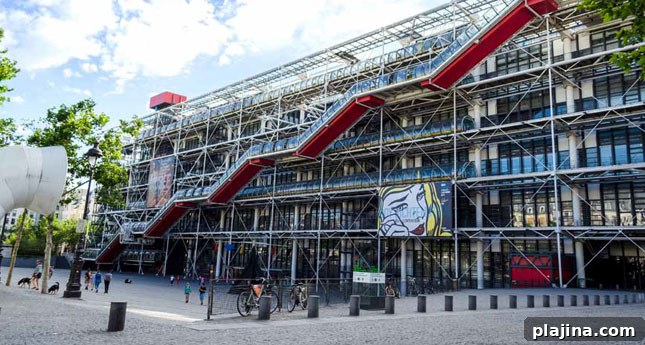
Place du Marché Sainte-Catherine, a charming pedestrian square with a village atmosphere, offers a quiet spot to watch daily life in the neighborhood. Cultural highlights include the Centre Pompidou, the city’s leading modern art museum, and the Musée Picasso, devoted to the work of the Spanish master.
The Jewish Quarter of Le Marais © Vvoevale | Dreamstime.com
Along Rue des Rosiers, the former Jewish Quarter still reveals its character. Here you can browse traditional delis, bakeries, and restaurants, admire distinctive façades, and sample the area’s famous falafel. The street remains a vibrant record of the neighborhood’s Jewish heritage.
Today Le Marais is also a fashionable district celebrated for art, shopping, and dining. Most streets are lively with bars, restaurants, boutique hotels, independent shops, wine bars, and private galleries. Saint-Paul Village hosts antiques dealers and small galleries, while Rue des Francs-Bourgeois is known for chic boutiques and popular perfumeries. Rue Saint-Paul is lined with bistros, bars, and sandwich shops, offering casual places to eat and meet. Nightlife centers on Rue Vieille du Temple, a bustling thoroughfare especially popular with the LGBT community.
Whether you visit for history, art, cuisine, or nightlife, Le Marais combines well-preserved architecture with a contemporary, energetic atmosphere. Its compact scale makes it ideal for walking, and its layered past—royal, Jewish, and artistic—creates an engaging neighborhood where every street has a story to tell.