
In 2017, Lonely Planet named Adelaide’s West End one of Australia’s coolest neighbourhoods. More recently, Adelaide ranked third for best lifestyle in The Economist Intelligence Unit’s 2021 Global Livability Index, reflecting a city that continues to grow in appeal. Situated on the west side of Adelaide’s Central Business District, the West End is a sunlit, lively quarter that has only become more attractive over time.
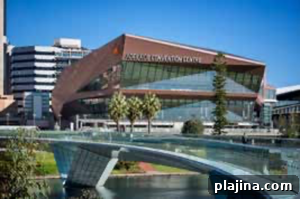
PHOTO: © ADELAIDE CONVENTION CENTRE,
The West End’s pedestrian laneways create a distinctive urban atmosphere. A mix of small bars, cafés, galleries, live-music venues, museums, public art and independent retail gives the neighbourhood a creative, slightly hedonistic character. At the same time, larger civic and commercial institutions sit comfortably alongside these smaller venues: the Adelaide Convention Centre anchors the precinct, the South Australian Health and Medical Research Institute contributes to the area’s BioMed City cluster, and a new 32-storey glass tower housing Sofitel Adelaide rises nearby, just a short walk from the Convention Centre.
Despite the density of activity, the West End never feels overcrowded. The Central Business District is ringed by greenery on all sides: the River Torrens (Karrawirra Parri) borders the north, while four square miles of parklands embrace the remaining edges of the city like a wide, verdant necklace. These open spaces and tree-lined streets give the area room to breathe and invite residents and visitors outdoors.
Residential options in the West End are diverse. Modern apartments and townhouses sit next to restored workers’ cottages, historic mansions and converted terraces tucked into laneways. The area’s compact layout means most everyday services are within easy walking or cycling distance. Adelaide’s original nineteenth-century layout effectively created a “15-minute city,” where shops, workplaces, parks and entertainment are conveniently close. Today about 37 percent of employed residents in the neighbourhood walk to work, reflecting that enduring, human-scale planning.
Local venues reinforce the West End’s welcoming, energetic vibe. The West Oak Hotel, established in 1838, is the city’s oldest continuously licensed site and now operates as a lively beer garden and music venue serving pub meals and tapas. The Pink Moon Saloon is known for its extensive drinks menu and lively atmosphere, while Cry Baby offers a curated jukebox spanning 1960s–1980s rock and a busy dance floor alongside a solid whiskey selection. Food lovers head to the Adelaide Central Market, a covered market that opened in 1900 and remains one of the largest fresh-produce markets in the Southern Hemisphere, with stalls selling fruit and vegetables, meat, poultry and seafood, and a façade decorated with vibrant hand-painted murals.
Geography is another advantage. South Australia covers a vast area, yet the West End occupies a convenient position between the cooler, vineyard-covered Adelaide Hills and the warm beaches to the west, where surfers and sun-seekers gather year-round. Travel times are short: Adelaide Airport is roughly three to five miles from the West End, making the neighbourhood an accessible base for short stays or longer exploration.
Altogether, the West End blends culture, convenience and green space in a compact urban setting. Whether you’re drawn by arts and nightlife, research and business, farmers’ markets or parks, this part of Adelaide offers a lively, walkable environment that continues to attract residents and visitors alike.