
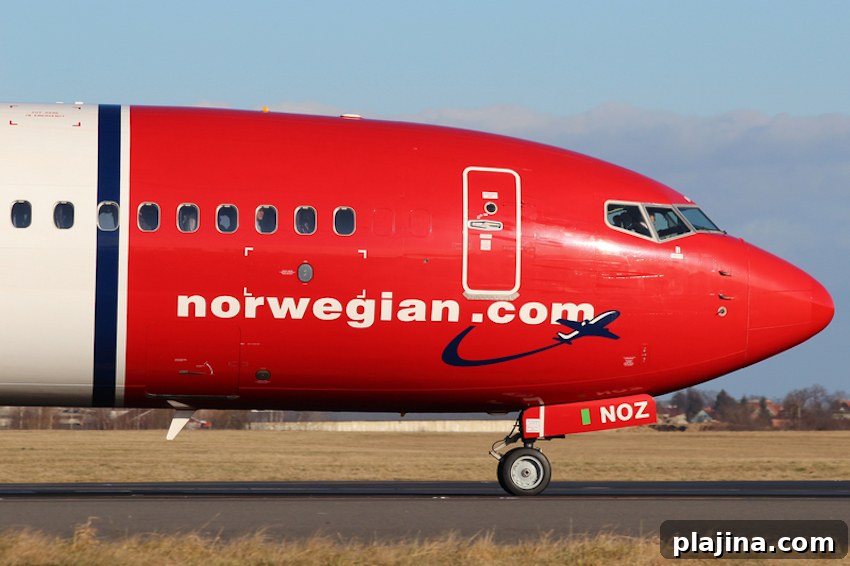
The current situation in Argentina’s economy is creating an unusual opportunity for domestic air travel. As Norwegian Air expands into South America, its low-cost model is arriving in Argentina too. Thanks to the weak peso, some domestic fares have fallen to as little as $18 per segment.
Starting in mid‑October, the budget carrier began selling tickets for routes within Argentina, aiming to make travel more affordable despite economic challenges. Passengers can find introductory fares from around 699 pesos (about $18) on the Buenos Aires (EZE) to Córdoba (COR) route, and roughly 999 pesos (about $25) for flights between Buenos Aires and Bariloche (BRC).
Norwegian’s move places it in direct competition with LATAM Airlines on these domestic routes. LATAM’s prices for comparable services tend to be higher, for example around 1,673 pesos (about $46) and 3,609 pesos (about $99) on the same routes.
Beyond lower prices, Norwegian is promoting travel to less-frequented destinations, encouraging Argentines to take advantage of air connections to explore more of the country. The timing coincides with a strong domestic travel trend: in August, about 1.3 million passengers flew on internal routes, setting a record for Argentina.
For travelers this shift means greater choice and more budget-friendly options for domestic trips. With competitive introductory fares, those looking to visit family, business contacts or tourist sites may find air travel more attainable than before. Airlines entering or expanding in the market often stimulate better scheduling, routes and occasional promotional sales, which can further benefit passengers.
Passengers should be aware that ultra-low fares frequently come with restrictions: basic tickets may exclude checked baggage, seat selection, or flexible changes. To avoid unexpected fees, travelers should check the specific fare conditions before booking and compare total costs across carriers once add‑ons are included.
In the broader context, cheaper flights could support regional tourism and help redistribute visitor flows from overcrowded centers to smaller cities and natural destinations. If competition remains strong, Argentine travelers may see sustained low prices and improved connectivity among major cities and remote areas alike.
Ultimately, the combination of a weakened currency and new low-cost entrants has opened a window for more affordable domestic aviation in Argentina. Those interested in taking advantage of these fares should monitor airlines’ offers, read fare rules carefully, and book early when promotional seats are available.