
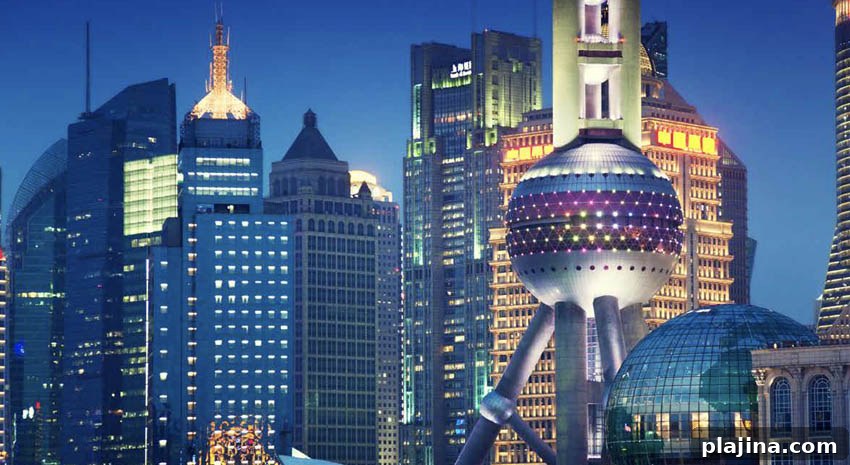
FEW CITIES IN THE WORLD evoke the mystique, glamour and vivid history of Shanghai. In the 19th and early 20th centuries the word “shanghai” took on a darker meaning in the West, referring to men drugged and coerced into service aboard ships bound for the booming Asian trade. That shadowy past contrasts dramatically with the city today.
Modern Shanghai is the most populous city proper on Earth, home to more than 24 million people. It features a Disneyland that opened in 2016 and serves as a major global financial center and transport hub. Shanghai also operates the world’s busiest container port, positioning the city as a central gateway for China’s trade and international investment.
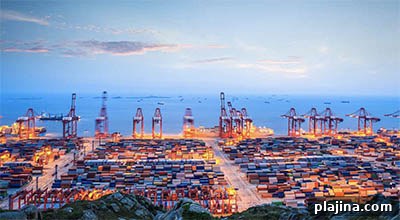
Shanghai container terminal © CHUYU | DREAMSTIME
Why has Shanghai thrived? Daniel R. Joseph, founder of The China Learning Curve, notes that Shanghai has long been a development priority for the Chinese government. Many liberalization measures are piloted in Shanghai before being rolled out nationally. That makes the city particularly attractive to foreign investors and helps foster growth in services and finance. Continued economic liberalization and more market-oriented policies would further boost Shanghai’s role as a regional and global business center.
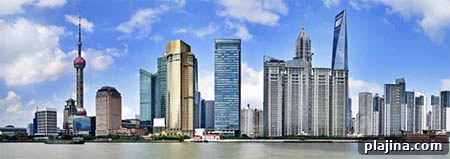
Pudong District skyline as seen from the Bund © YUNHAO ZHANG | DREAMSTIME
Shanghai presents a striking blend of East and West, modernity and tradition. The futuristic towers of Pudong, viewed from the historic Bund, sit alongside the leafy avenues and colonial architecture of the former French Concession. This juxtaposition of past and present contributes to Shanghai’s unique character and international appeal.
CHECKING IN WITH DANIEL R. JOSEPH
Founder, The China Learning Curve; consultant, author and award-winning filmmaker
What’s happening politically and economically in Shanghai?
Three major trends shape Shanghai’s trajectory: the development of free trade zones, financial globalization and the rise of the service sector. Shanghai’s free trade zone introduces more market-oriented rules and incentives for companies, encouraging foreign investment. As China pursues financial deregulation and greater global integration, Shanghai—China’s financial hub—stands to benefit the most and may even rival other regional finance centers over time. Meanwhile, as China’s economy shifts toward consumption and services, Shanghai’s advanced workforce and infrastructure make it an attractive base for service-oriented firms. If these reforms continue, Shanghai should see sustained growth and expanding business opportunities.
What are the strongest businesses and industries?
Shanghai’s economy is diverse. It hosts many state-owned enterprises—especially in industry and automotive sectors—alongside thriving entrepreneurial activity and significant foreign investment. Finance, electronics, information technology, automotive manufacturing, petrochemicals, high-grade steel and biopharmaceuticals are among the key industries. Retail and luxury goods are also on the rise.
How will new development affect business and investment?
Changes introduced in the free trade zone are being phased in gradually, so the immediate impact has been measured. However, if China continues to simplify rules and lower barriers to business in Shanghai, the long-term effects are likely to be substantial, unlocking growth across finance, services and trade.
Why do people, particularly business travelers, visit Shanghai?
Shanghai is China’s most international city, offering a blend of historical sites and ultra-modern urban life. Its infrastructure, wide choice of hotels and dining options, and abundant business resources make it especially convenient for business travelers. The city provides a clear window into both traditional and contemporary China.
Common misconceptions about doing business in Shanghai
China’s economy mixes state influence with market forces, which can be confusing for newcomers. Cultural differences also matter: building trust and personal relationships often takes time but is essential for long-term success.
Things to Do in Shanghai
Shanghai offers a wealth of engaging excursions. Five highlights include:
The Bund promenade provides one of the city’s most iconic cityscapes. From here you can view a striking line-up of 26 historic buildings showcasing a range of Western architectural styles—Gothic, Baroque, Romanesque, Classical and Renaissance—creating a distinctive skyline unique in the world.
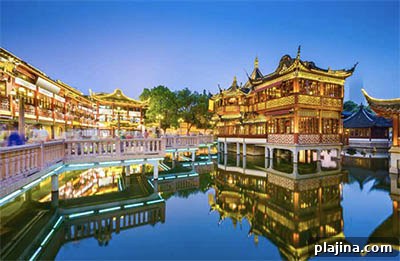
Yuyuan Garden © SEAN PAVONE | DREAMSTIME
The Oriental Pearl TV Tower, often likened to twin dragons playing with pearls, rises to about 1,535 feet and ranks among the world’s tallest towers. Its revolving restaurant offers sweeping views and a memorable dining experience—though on misty days you may find yourself among the clouds.
Yuyuan Garden, originally completed in 1577, is a classical Ming Dynasty garden of rockeries, ponds and cloisters. It remains a peaceful place for a stroll, with a bustling bazaar nearby where bargaining is part of the experience.
The former French Concession feels like a Western enclave amid Asian surroundings, known for its tree-lined streets, historic villas and relaxed café culture—an excellent area for people-watching and soaking up the neighborhood atmosphere.
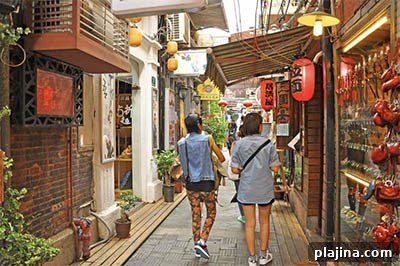
Tianzifang arts and crafts enclave © GUBGIB | DREAMSTIME
The Shanghai Museum in People’s Square offers an extensive collection of over one million items across 21 categories, from bronzes and ceramics to calligraphy, jade and ethnic minority artifacts. The museum’s design—a square base topped by a circular roof—symbolically represents Earth and Heaven and is notable as an architectural landmark.
Shanghai Info to Go
Shanghai has two main airports: Hongqiao International and Pudong International. Most international flights arrive at Pudong, located about 20 miles east-southeast of the city center. Taxi fares from the airport to downtown typically run around 170 RMB (approximately $12).
Pudong Airport was built on reclaimed tideland once used for fish farms. Designed by French architect Paul Andreu, the terminal’s sweeping form is said to resemble a seagull in flight, reflecting Shanghai’s dynamic growth.
Shanghai: Just the Facts
Time zone: GMT +8
Phone code: Country code 86, city code 21
Currency: Renminbi
Key industries: Finance, electronics and information technology, automotive manufacturing, power and large-scale electromechanical equipment, petrochemicals, high-grade steel and biopharmaceuticals; retail and luxury goods are expanding.
COMING AND GOING
U.S. citizens must obtain a visa before arrival and hold a passport valid for at least six months. Failure to have a valid visa or passport can result in fines and deportation. A 10-year multiple-entry visa is now available and useful for frequent travel or trips involving Hong Kong or Macau. Travelers must exit China before their authorized period of stay expires.
OFFICIAL LANGUAGE
Mandarin
Where to Stay in Shanghai
FAIRMONT PEACE HOTEL Located next to the Bund and known for Art Deco charm and its Old Jazz Band, the Fairmont Peace is a classic Shanghai choice. 20 Nanjing E. Road $$$$
JW MARRIOTT HOTEL SHANGHAI One of the city’s early luxury hotels, offering a central location near museums and theaters. Look for the 60th-floor library with a hidden balcony entrance. 399 Nanjing W. Road $$$$
THE PORTMAN RITZ-CARLTON Situated on a premier shopping street, this hotel appeals to business travelers and expatriates. Shanghai Centre, 1376 Nanjing W. Road $$$$$
Restaurants in Shanghai
M ON THE BUND Modern European and Middle Eastern dishes in a stylish setting at Five on the Bund, 20 Guangdong Road, 7th Floor $$$$
MR & MRS BUND Creative French cuisine recognized among the world’s best; late-night set menus are available. 18 Zhongshan Dong Yi Lu, 6th Floor $$$$
NANXIANG STEAMED BUN RESTAURANT Famous for Shanghai-style soup dumplings (soup-in-a-bun), this is a must for food lovers—buns often served with a straw for sipping the broth. 85 Yuyuan Road $$