
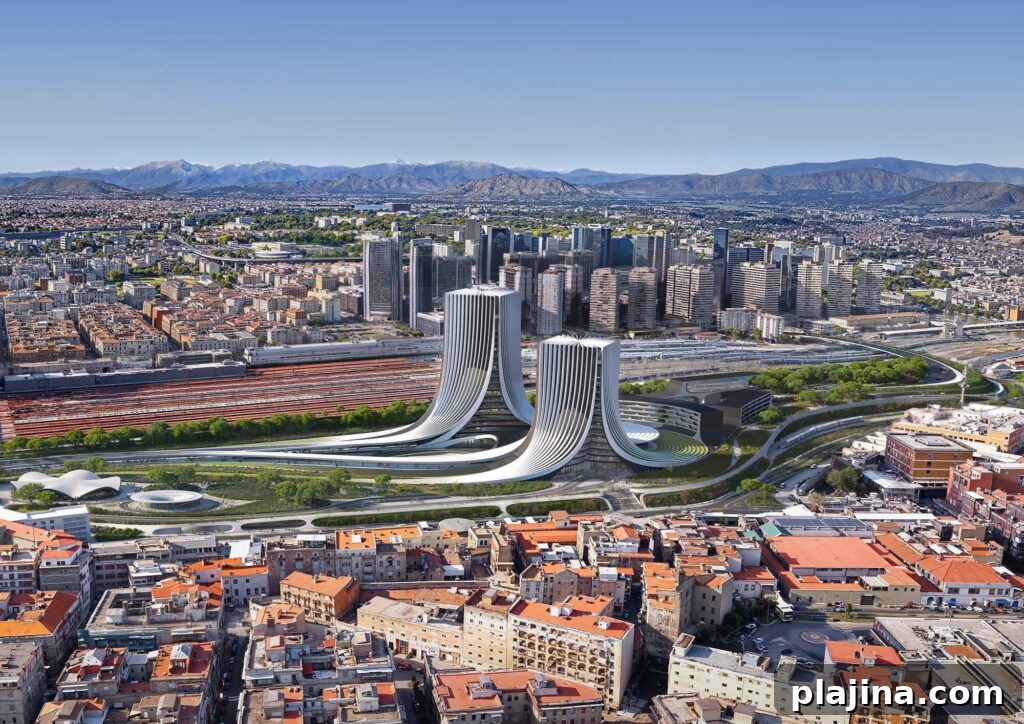
In recent years many architectural firms have expanded their portfolios beyond offices, residences and cultural institutions to take on the complex task of regenerating deteriorated urban districts. London-based Zaha Hadid Architects (ZHA) is among those firms: it has announced a masterplan for Napoli Porta Est aimed at reconnecting the fragmented eastern edge of Naples.
© BrickVisual, Felix Render ZHA
Zaha Hadid Architects is one of the world’s largest architectural and design firms, with substantial experience in transforming older, underused neighborhoods. Their projects typically aim to restore connectivity, improve public spaces and support local communities while creating conditions for cultural and economic activity.
ZHA’s Napoli Porta Est proposal addresses a district long isolated by industrial decline. The area has suffered from the closure and retreat of heavy industry, creating physical and psychological barriers that limit mobility, constrain social interaction and leave public spaces underused or neglected. The masterplan is designed to remove those barriers and reintegrate the district with the rest of the city.
© BrickVisual, Felix Render ZHA
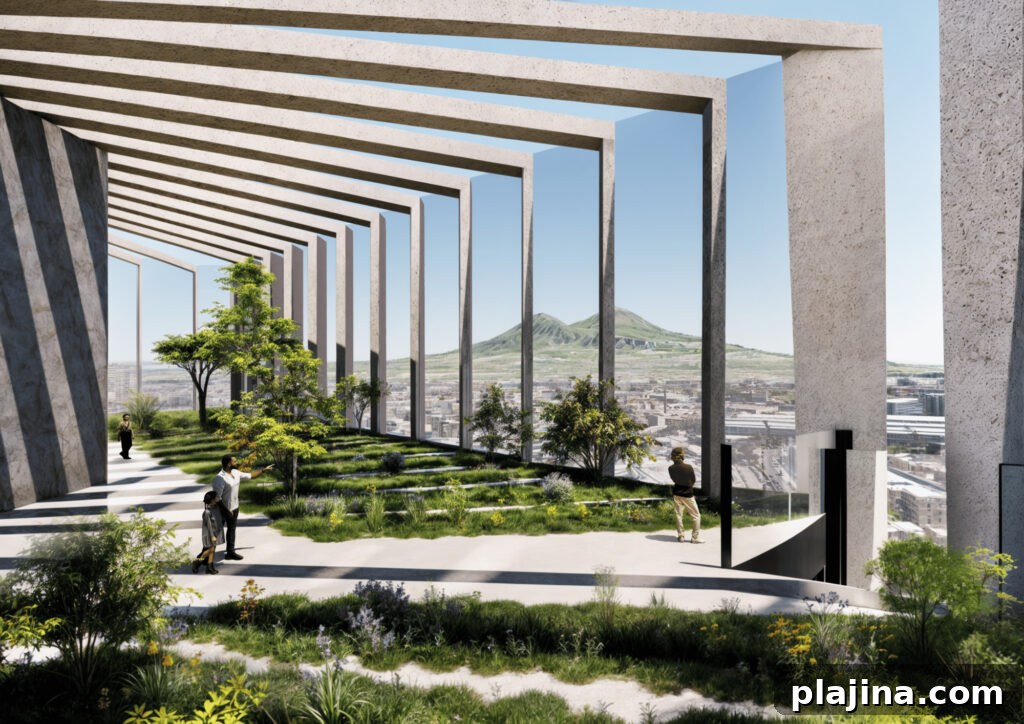
The plan proposes new infrastructure tailored to the district’s needs, including expansive urban parks and the conversion of a disused railway yard into publicly accessible space. It also addresses severe traffic congestion at one of Naples’ main interchanges, which functions as a gateway to the national transport network. Improving connections to the historic center of Naples is intended to enhance access for residents, visitors and cultural activities.
By removing the barrier posed by extensive unused rail yards, the masterplan would unlock more than 75 acres of former industrial sites for transformation. This includes the former Manifattura Tabacchi factory and other vacant structures within the Feltrinelli industrial area, which could be repurposed for housing and mixed uses, supporting neighborhood revitalization.

© BrickVisual, Felix Render ZHA
Beyond the immediate redevelopment, ZHA’s proposal highlights the potential to convert a further 247 acres of an obsolete oil depot and adjacent maintenance yards into a new city quarter. That larger site, located at the eastern edge of Naples’ industrial zone, has been derelict for decades. Redevelopment could introduce civic spaces, amenities and community infrastructure, contributing to one of Europe’s largest urban regeneration efforts.
The masterplan seeks to reconnect several neighboring zones that historically developed as separate, disconnected areas: Centro Direzionale, Napoli Centrale train station, Mercato and the Oriental Zone. The design emphasizes pedestrian movement and includes plans for a multimodal transport interchange below ground to improve flows between these parts of the city.
Following the city’s established urban patterns, the proposal promotes a sustainable vision for Naples’ future as the civic, cultural, economic and transport hub of southern Italy. By reintegrating neglected territory, improving public spaces and strengthening transport links, the masterplan aims to support both local communities and broader urban resilience.