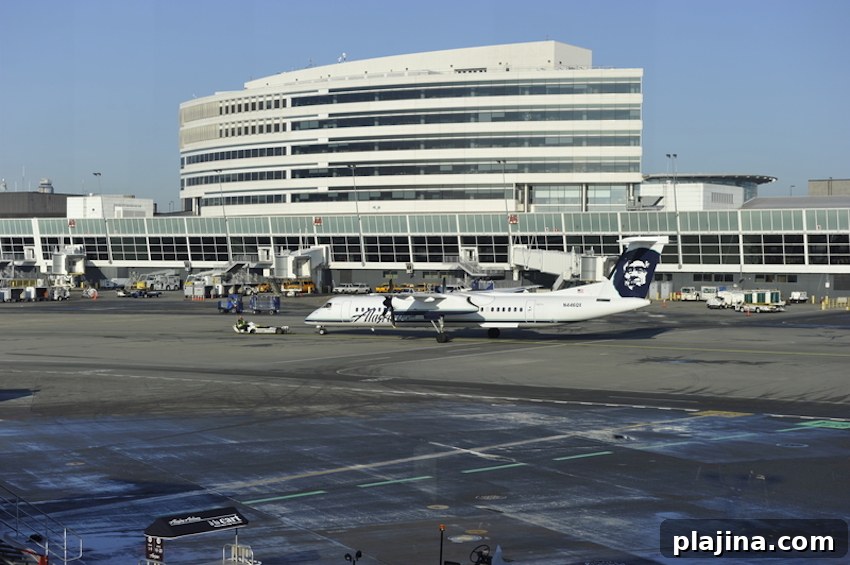
Last month, a ground-support worker boarded an unattended commercial aircraft and took off from Seattle-Tacoma International Airport. The incident underscored the need for stronger screening of the thousands of airport employees who have authorized access to aircraft.
According to reporting in The Seattle Times, about 12,600 people at Sea‑Tac hold clearances that allow them to access aircraft on the airfield. Comparable numbers likely exist at other major U.S. airports, highlighting the scope of personnel who move freely around planes each day.
In August, Horizon Air ground service agent Richard Russell gained control of a Q400 turboprop, flew it for roughly an hour and then crashed on an island in Puget Sound. The crash ended Russell’s life; there were no other injuries.
Perry Cooper, a spokesman for the airport, said Russell’s presence near the aircraft did not register as a “red flag” at the time. Still, the event prompted an immediate reassessment of how employees are screened and monitored.
Sea‑Tac has already implemented tighter security measures around cargo areas and other sensitive zones as part of an initial response. Officials emphasized that the changes aim to reduce the risk that an occupant with airside access could commandeer equipment or aircraft.
U.S. Senator Maria Cantwell called for congressional hearings to examine airport safety and employee vetting procedures. “The fact that this incident occurred at Sea‑Tac, which is one of the few large airports in the country to require full screening for all employees who work in the sterile area, shows that we need to continually adapt security measures to meet new threats,” she said.
Security experts note several areas for review: background checks and ongoing screening for employees with airside privileges; improved access-control systems and real-time monitoring of restricted zones; and better coordination among airlines, airport operators and federal agencies to flag unusual behavior.
Airport operators must balance efficient operations with safety. Tens of thousands of workers, contractors and vendors need regular, close access to aircraft to keep flights on schedule. That breadth of access makes it essential to employ layered safeguards—combining personnel vetting, technology and procedures—to detect and deter threats before they escalate.
The Sea‑Tac incident has prompted broader conversations among airport administrators nationwide about whether current screening standards and personnel oversight are sufficient. While full-scale policy changes take time and coordination, the event has already led to immediate operational adjustments at Sea‑Tac and could accelerate reviews at other hubs.
For passengers and the public, the takeaways are clear: airports must continuously reassess their security posture, and agencies should ensure that employee access and behavior are monitored with the same vigilance applied to passenger screening. Strengthening those protections aims to prevent similar incidents and preserve safety across the aviation system.