
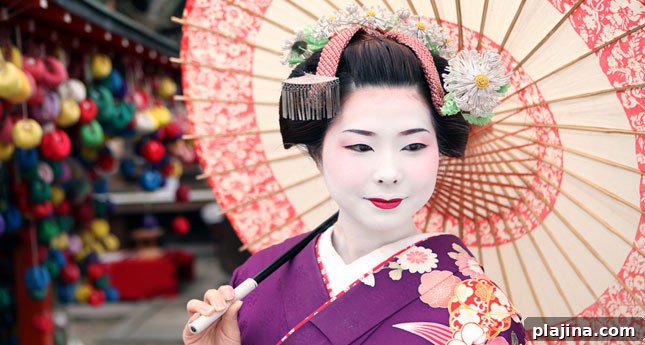
With their white-painted faces, rosebud lips and silk kimonos, geisha and maiko (apprentice geisha) remain powerful symbols of Japan’s cultural past. In Kyoto’s Gion district at dusk, it is still possible to catch a glimpse of these women as they make their way to evening appointments at okiya and ochaya—traditional houses where they entertain guests, serve tea, and offer meals and drinks. The term “geisha” literally means “artist”: from gei (art) and sha (person). “Maiko” translates as “dance child,” reflecting their status as trainees.
Becoming a geisha or maiko requires years of disciplined training across a range of traditional Japanese arts. Apprentices and fully fledged geisha master the tea ceremony, calligraphy and classical dance, and learn to sing and play instruments such as the shamisen. Equally important is the skill of refined conversation—knowing how to entertain clients with wit, cultural knowledge and graceful manners. While some geisha or maiko may form personal or romantic relationships with patrons, providing sex is not an inherent part of their profession; their primary role is as highly skilled entertainers, and they are free to choose the nature of their private relationships.
Geisha culture combines artistry, etiquette and performance. Their appearance—from makeup and hairstyle to the careful selection of kimono and obi—follows a visual language that signals training level, season and occasion. Maiko typically wear more elaborate hairstyles and brighter, more ornate kimono, while senior geisha tend toward subtler, more restrained attire. The rituals surrounding their presentations, from entering a room with measured steps to serving tea with precise movements, highlight a long tradition of refined hospitality and aesthetic expression.
Today’s geisha and maiko work to preserve these classical arts amid modern life. Many train in established hanamachi (geisha districts) such as Gion, Pontocho and Miyagawa-chō, where houses and tea rooms maintain customs that have been passed down for generations. Visitors to these districts may encounter public performances, seasonal events and cultural demonstrations that showcase traditional music, dance and costume. Respectful observation is encouraged: photographing is common, but it’s important to be mindful of their privacy and the intimate nature of private appointments.
For those interested in learning more about geisha traditions, attending a public dance performance, tea ceremony demonstration or a cultural workshop provides insight into the skills and discipline behind the appearances. These experiences reveal why geisha and maiko are valued not only as living links to history but also as active preservers of Japan’s artistic heritage.