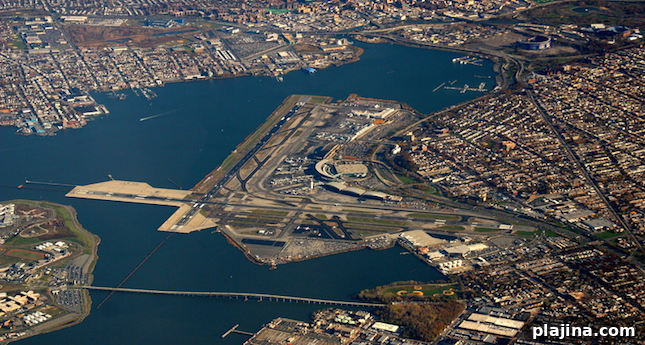
Plans for a rail connection between New York City and LaGuardia Airport have moved closer to reality. New York Governor Andrew Cuomo recently announced a proposal for an elevated AirTrain that would link LaGuardia with the Willets Point station on the IRT Flushing Line. The proposal aims to provide a direct, reliable transit option for travelers and commuters, reducing dependence on cars and buses while easing congestion on nearby roadways.
The proposed AirTrain would be an elevated guideway running from the airport to the Willets Point transit hub, where passengers would transfer to the 7 train. By connecting to the Flushing Line, the project would create a one-seat transfer to subway service into Manhattan and the broader New York transit network, improving access for passengers heading to and from LaGuardia.
Officials estimate the cost of the project at approximately $450 million, and they expect construction to take about five years once work begins. Those figures reflect preliminary planning assumptions; a formal financing plan, schedule and detailed engineering design will be required before construction can start. At this stage, project leaders are conducting studies, environmental reviews and community outreach to refine the design and address operational, safety and neighborhood impacts.
Several potential benefits are frequently cited by transportation planners and advocates. First, an AirTrain would provide a predictable trip time to and from the airport, less affected by rush-hour traffic than existing bus routes. Second, the elevated alignment minimizes interference with street-level activities and can be faster to build than extensive tunneling. Third, the connection at Willets Point offers intermodal options, with nearby commuter rail and future transit projects potentially linking into the same area.
Despite these benefits, challenges remain. A project of this nature must navigate funding constraints, community concerns and engineering hurdles such as integration with existing infrastructure and airport operations. The elevated guideway will need to meet strict safety standards, and planners must ensure that station layouts, accessibility features and baggage accommodations are adequate for airport travelers. Additionally, fare integration between the AirTrain and the subway system will be an important consideration to provide a seamless experience and encourage transit use.
Community engagement will be a key part of the next phase. Neighborhood stakeholders, local officials and transit users will have opportunities to weigh in on routing, station design, pedestrian access, and potential environmental impacts such as noise or visual changes. Public input can help shape measures to mitigate negative effects and enhance benefits, such as sound barriers, landscaping and improved pedestrian connections.
Timing for the start of construction has not been announced. Before any groundbreaking, project sponsors must complete environmental review processes, secure funding commitments and finalize design plans. Those steps can take several years, which aligns with the roughly five-year construction estimate once work begins. If the project proceeds as envisioned, travelers could eventually enjoy a more direct and reliable transit link between LaGuardia Airport and the rest of the city.
Overall, the proposed LaGuardia AirTrain represents a strategic effort to improve airport access and reduce roadway congestion. With careful planning, community input and secure financing, the elevated connection to Willets Point could become an important addition to the region’s transportation network, offering a convenient alternative to current ground transportation options.