
Based on their locations and distinct personalities, comparisons between New York and Los Angeles (or San Francisco) naturally arise when discussing the South Korean cities of Seoul and Busan. Seoul serves as the country’s business and government center, while Busan is defined by its coastline, beaches, cliffs and mountains, offering a more relaxed — though far from sleepy — tempo. Busan’s public hot springs, historic temples, ornate parklands and regional flavors, along with local spins on global trends such as craft beer, help set the city apart.
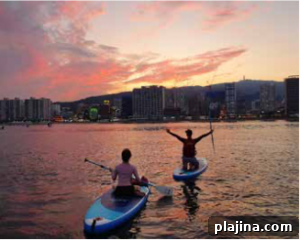
PHOTO: © KOREA TOURISM ORGANIZATION
Each neighborhood comes alive after dark and has its own standout spots. Haeundae combines glossy business-district trappings—five-star hotels, luxury shopping, white-tablecloth restaurants and futuristic architecture—with more intimate experiences. Ciné de Chef, located on the fifth floor of the massive Centum City retail mall, blends a plush lounge atmosphere with carefully prepared French and Italian dishes served alongside new film releases.
Gwangan and Gwangalli Beach, just a few subway stops from Haeundae, offer an eclectic mix of sunset surfing, beachside dining, craft beer pubs and cocktail bars. Notable spots include a branch of Galmegi Pub, Busan’s first craft brewery, Gorilla Brewing Co., Tap Security Place, Fuzzy Navel, Bar DiLan, Vegenarang (a modern vegan temple-food concept) and Happy Monk. These venues showcase Busan’s lively food and drink scene and its willingness to experiment with international trends.
Nampudong, adjacent to Busan’s port, draws fashionable crowds to places like The Commonplace—an ultra-stylish hybrid of wine bar and coffeehouse. Nearby Nogada offers an earthy craft-beer alternative, making the area a rich mix of refined and casual nightlife options.
For those interested in Busan’s music scene, neighborhoods around Kyungsung University and Pukyong National University are worth exploring. The Vinyl Underground, near Kyungsung University, hosts weekend music events that blend various pop genres, while The Basement near Pusan National University attracts locals and expats with a steady lineup of indie acts from across Korea. Seomyeon is often seen as the city’s hipster district, full of trendy restaurants, bars and unique fashion boutiques. Along its eastern edge, Jeonpo Café Street bustles with diverse eateries covering every taste and budget.
Tea houses and hot pot bibimbap joints are plentiful, but a unique dining experience awaits at Yong Ggum—literally “dragon dream.” Housed in a former World War II bomb shelter carved into a hillside, the venue offers an atmospheric setting with low lighting and the gentle sound of trickling water, paired with traditional Korean seafood dishes and dongdongju, a rustic Korean rice wine.
Whatever your evening plans, Bupyeong Kkangtong Night Market is a great starting point or finale. Opened in 2013, the market features around 30 vendors serving a mix of Korean regional specialties alongside flavors from Indonesia, the Philippines, Vietnam and elsewhere in Asia. While Busan’s LGBTQ+ scene is less centralized than Seoul’s, many welcoming bars, restaurants and clubs across the city—several noted here—invite anyone curious to discover what makes Busan refreshingly different from the capital.