
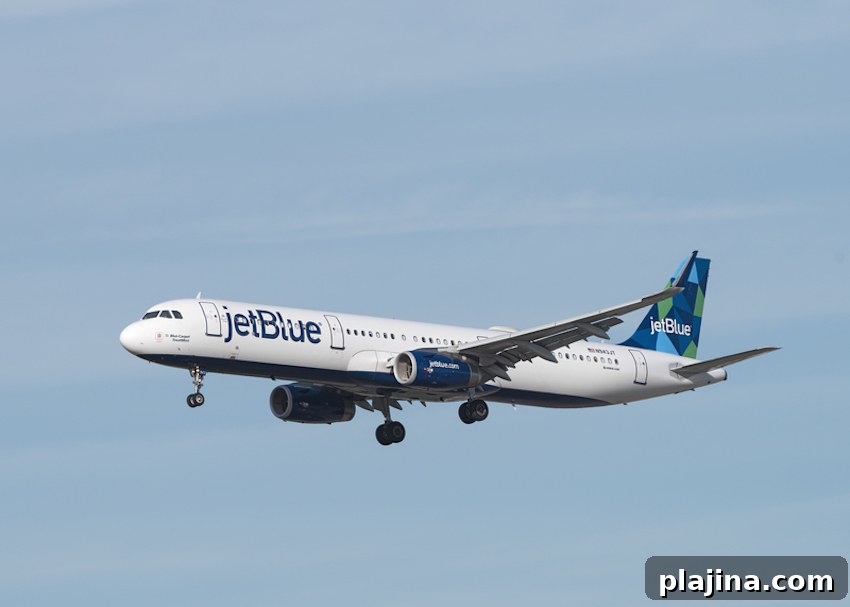
JetBlue has announced it will introduce a new no-frills fare class next year, joining other major carriers that have rolled out basic economy options. The airline says the new product is intended to give price-sensitive travelers a lower-cost choice while preserving the core JetBlue experience.
“At JetBlue, we never liked the ‘no frills’ approach,” Joanna Geraghty, JetBlue’s president and COO, wrote in an internal blog post shared with crew members. But she added that with competitors offering basic economy on many of the same routes, customer behavior indicated a real risk to JetBlue’s market position unless the airline responded.
The new fare, named Blue Save, is scheduled to launch in late 2019 and is being positioned for “customers looking to save with the lowest fare possible.” JetBlue emphasizes that Blue Save will still include many of the amenities that define the carrier’s product, even while imposing some limits compared with higher fares.
According to Geraghty, Blue Save will retain the features customers associate with JetBlue: the airline’s relatively generous coach legroom, complimentary in-flight entertainment, free Fly-Fi internet access, complimentary snacks and soft drinks, and inclusion of both a carry-on bag and a personal item. JetBlue also pledged not to oversell flights and to continue to provide high-quality service.
Customers who purchase Blue Save will accept certain restrictions that help keep the price low. Those limits may include changes to boarding priority, seat assignment options, and reduced flexibility for changes or cancellations. Geraghty emphasized the intention to apply these limits without creating a second-class experience for travelers who select the lower-priced option.
In addition to Blue Save, JetBlue will continue to offer Blue fares targeted at passengers who want the standard current offering, and Blue More fares for customers who prioritize change and cancellation flexibility and quicker processing through the airport. This tiered approach is designed to give travelers clear choices based on the tradeoffs they value most—price, convenience, or flexibility.
Geraghty noted that many passengers have shared “horror stories” about ultra-low-cost travel experiences, and that JetBlue’s goal was to offer a lower fare that still delivers on the brand’s strengths. “If we add a fare that saves customers money but still delivers the JetBlue experience, I can’t imagine why a traveller shopping on price would ever choose another airline over us,” she wrote.
The move reflects broader trends in the airline industry, where carriers balance competitive pricing with efforts to maintain service standards that distinguish their brand. By introducing Blue Save, JetBlue aims to capture customers who prioritize a lower fare while preserving the aspects of the travel experience—space, entertainment, connectivity and service—that many passengers value.
JetBlue’s announcement suggests the airline will try to avoid some of the downsides commonly associated with basic economy products by keeping certain inclusions standard. How the market responds and how travelers weigh the new lower-priced option against existing fare classes will determine whether the strategy succeeds in protecting the carrier’s market share without diluting the brand promise.