
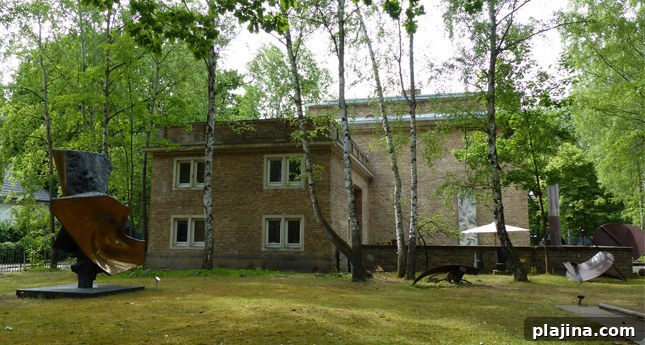
One of the most striking recent additions to Berlin’s already rich museum scene is the Kunsthaus Dahlem, which presents a compelling exhibition on Postwar German Modernism from both East and West Germany, covering the years 1945–1961. Housed in a historic building that once served as the studio of Arno Breker, the controversial sculptor associated with Albert Speer, the museum balances a thoughtful historical context with strong artistic presentation. Highlights include a sculpture garden featuring more than 20 works by Bernhard Heiliger, and significant works by artists such as Jeanne Mammen, Louise Stomps, Heinz Trökes, Karl Hartung, Ruthild Hahne and Hans Uhlmann.
Berlin is a natural home for a museum devoted to espionage, and the recently opened Spy Museum Berlin at Potsdamer Platz delivers an engaging, well-curated look at the world of intelligence. The collection spans more than 1,000 exhibits and includes the famous Enigma machine from World War II, used to encode and decode secret messages. Interactive displays and over 200 high-resolution screens enrich the visitor experience, and the on-site café, Spy Coffee, offers themed menu items such as the Mata Hari to round out the visit.
Also new to the city’s cultural offerings is Magicum Berlin, an intriguing museum dedicated to the history and practice of magic and witchcraft. Through exhibits of magical artifacts, ritual objects and items connected to hidden traditions from a variety of cultures, Magicum traces how enchantment, illusion and belief have shaped human experience. The museum invites visitors to explore secret worlds and to consider the ways magic intersects with art, ritual and daily life.
Together, these institutions reflect Berlin’s dynamic cultural landscape: museums that engage with history, art and the imagination while making their collections accessible and compelling for contemporary audiences.