
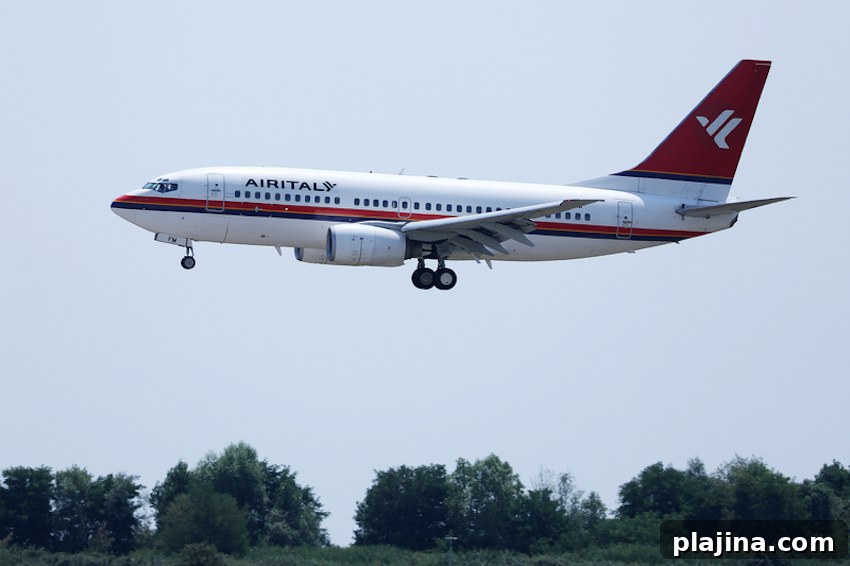
Major U.S. carriers have united in opposition to Air Italy, arguing the airline benefits from unfair competition tied to government-backed support.
Delta Air Lines, American Airlines and United Airlines are formally challenging Air Italy’s plan to begin service from Milan (MXP) to Los Angeles (LAX) and San Francisco (SFO) in 2019. Their complaint centers on Qatar Airways’ 49 percent stake in Air Italy: while Qatar Airways agreed not to operate flights to the United States from points beyond its home country, U.S. carriers contend that Air Italy’s expansion effectively circumvents that commitment.
The U.S. airlines claim Qatar Airways has received substantial state support—estimates cited by critics put subsidies at more than $50 billion—which, they say, gives Qatar and affiliated carriers an unfair commercial advantage.
“With regards to the Italian version of Qatar, we are strongly opposed and we together — Delta, American and United — are very closely aligned on this issue,” said United CEO Oscar Munoz, describing the proposed Air Italy routes as a direct challenge to previously negotiated agreements.
The dispute has drawn attention from U.S. lawmakers as well. A group of senators urged the U.S. Department of Transportation to block Air Italy’s proposed transatlantic flights, arguing the move would add subsidized capacity to already well-served markets.
“Air Italy’s entry into this crowded market appears consistent with Qatar Airways’ pattern of adding subsidized capacity in markets where demand is already well-served,” wrote 11 Republican senators in a letter to the DOT, requesting scrutiny of the proposed services.
The airlines and elected officials argue the situation raises broader questions about fair competition, state aid and adherence to international agreements intended to limit government-distorted market advantages. Air Italy and Qatar Airways have disputed these characterizations in public statements, arguing that commercial decisions and business partnerships do not constitute prohibited subsidy-driven market entry.
As regulators and lawmakers review the case, the outcome could influence how transatlantic route permissions are evaluated and whether similar joint ventures or minority investments by state-linked carriers will trigger deeper regulatory oversight in the future.