
Bucharest is a city best discovered outdoors. Traditionally said to have been founded by a shepherd, the city’s parks rank among its top attractions and several of the most notable green spaces sit close to the center. Herăstrău Park combines a boating lake, public sculptures and a quiet Japanese garden with Bucharest’s most engaging open-air attraction, The Dimitrie Gusti National Village Museum. Spanning roughly 25 acres, the museum displays 272 traditional homes and rural buildings relocated from across Romania, furnished with authentic tools, furniture and crafts. Visitors can easily spend a full day wandering the village, exploring the diverse houses and learning about regional building techniques. Among the highlights are subterranean-style dwellings with straw roofs built low to the ground—designed to provide shelter from harsh weather, keep interiors cool in summer and offer a discreet profile along historic travel routes.
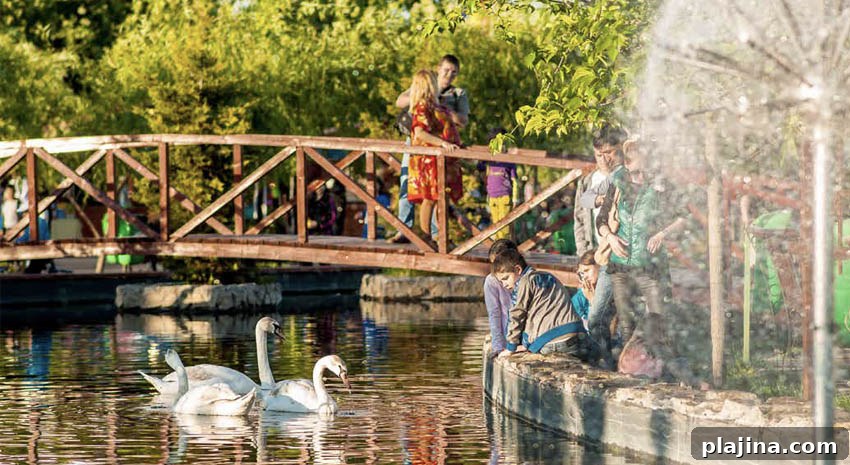
Just south of Herăstrău Park and a short walk from the National Museum of Art of Romania lies Cişmigiu Park, also known as Cişmigiu Gardens. Covering about 40 acres, this formal park surrounds an artificial lake and features several memorials, including the Monument of American Heroes and the Monument of French Heroes, plus the Romanian Round—a circular promenade lined with busts of twelve celebrated national writers. Couples row beneath elegant bridges, beds of seasonal flowers color the lawns and peacocks and swans add living charm to the scenery. Cişmigiu is an ideal place to relax between museum visits or to spend a peaceful afternoon enjoying the park’s paths and shaded benches.
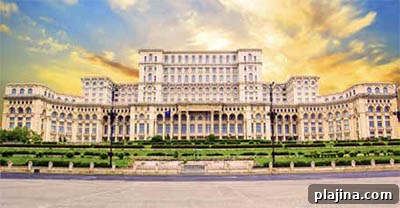
Palace of the Parliament © DATSENKO MARINA | DREAMSTIME
Farther south stands the monumental Palace of the Parliament, an immense structure that holds records as one of the world’s largest administrative buildings and among the heaviest constructed buildings. Its scale and mass are such that the foundation settles a small amount each year. In addition to housing government offices, the palace contains several museums and a conference center, yet a significant portion of its nearly 3.93 million square feet remains unused. Whether viewed as an architectural marvel, a symbol of Romania’s Communist past or both, the Palace of the Parliament is an unforgettable landmark that rewards a visit for its size, history and ambitious design.