
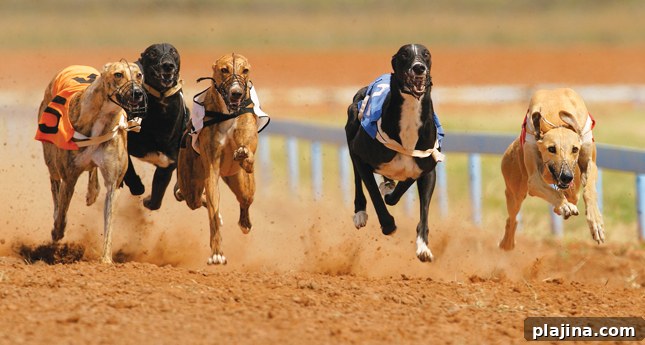
Greyhounds have long stirred debate. In Shakespearean England they were prized by Queen Elizabeth I, who decreed that only nobles and royalty could own them. Clever subjects circumvented the restriction by crossing greyhounds with other dogs, creating the lurcher—a notional type rather than a recognized breed—so it remained legally unobjectionable. More than four centuries later, one of my closest friends is a lurcher.
His name is Sid. He isn’t mine, but he stays with me whenever his owner is away. Last year he had an extended and unexpected three-week stay at my house after being struck by a car and sent to recover.
While Sid was limping around my home, a contemporary greyhound debate reached a turning point in Massachusetts. After months of intense discussion, the state enacted a ban on greyhound racing. Tracks closed and the local industry was effectively shut down.
There are compelling animal welfare concerns driving opposition to greyhound racing. Critics point to the cramped housing some dogs endure and to the horrific injuries that occasionally occur during races, injuries so severe that dogs must be euthanized at the track. Racing careers are brief—most greyhounds retire around three or four years of age—and retired racers can face uncertain futures, including the risk of being destroyed.
Paradoxically, animal welfare was part of the rationale that led to organized greyhound racing in the 1920s. Before purpose-built tracks existed, greyhounds were used for coursing, a blood sport in which dogs chased and killed live quarry such as jackrabbits, deer and coyotes. The invention of a mechanical lure that could race around an oval track transformed coursing into an urban, blue-collar alternative to horse racing, removing live prey from the equation.
In the United States the sport peaked in the mid- to late-20th century. At its height, millions of people placed bets on thousands of races, creating a substantial betting market. Since then, growing opposition and competition from other gambling options have reduced the sport’s prominence, and the greyhound racing industry today is only a fraction of its former size.
Even so, races still take place in several states and thousands of dogs continue to be bred for the sport. Not every advocate seeks an outright ban; many focus instead on improving what happens to dogs after they stop racing. Organizations like Greyhound Pets of America work to rehome retired racers and have helped many find stable, loving households. The Greyhound Racing Association of America has maintained that a large share of registered greyhounds are adopted or used for breeding after retirement.
Sid has always been a companion, never a racer. Like his greyhound cousins, he pairs a gentle, amiable temperament with a deep-seated prey drive. Once, while walking across open fields, he chased and momentarily caught a deer; both animals tumbled, stunned, and then the deer bolted unharmed while Sid, suddenly frightened, ran back to me.
After his accident, with a sore hind leg, Sid repeatedly fought the need to run. Time and again he tried to break into a sprint around the garden only to stop, yelp and limp. As his leg healed he began to complete full laps of the yard, finishing each circuit with a clear limp but unable to resist the urge to run. For greyhounds and lurchers alike, running is not merely a pastime—it is a defining instinct and, for many dogs, the truest expression of their nature.