Until the end of 2019, the Tokyo Metropolitan Government, the Tokyo 2020 Organizing Committee, the International Olympic Committee and the International Paralympic Committee worked together to ensure the Tokyo 2020 Olympic and Paralympic Games would mean more than just sporting contests. Branded in part as “The Reconstruction Games,” the effort included plans for competitive soccer, baseball and softball events in Iwate, Miyagi and Fukushima—regions still rebuilding after the 2011 Tōhoku earthquake and tsunami.
Then COVID-19 disrupted those plans and international travel. When the Games were rescheduled—Olympics July 23–Aug. 8, 2021, and Paralympics Aug. 24–Sept. 5, 2021—the Tokyo Organizing Committee described the revised Games as a symbol of human resilience that would go beyond athletics. Organizers also emphasized that ticket sales, tourism and media exposure would continue to generate support and awareness for affected cities and their recovery efforts. A Tokyo 2020 spokesperson said recovery remained a core theme: leveraging sport to inspire hope, support children in disaster-hit areas and reintroduce the world to those areas’ nature, cuisine, history, tradition and culture while thanking those who helped during reconstruction.
Reports in late January suggesting some Japanese officials were considering a second cancellation were quickly countered by IOC president Thomas Bach and others, who affirmed the Games would proceed with safety measures in place. The IOC coordinated with the World Health Organization to facilitate vaccine access for athletes, and Japan planned a broader national vaccination rollout beginning in late February.
The Games’ organizers stressed discussions involving the Government of Japan, the Tokyo Metropolitan Government and Tokyo 2020 were ongoing to ensure spectator and participant safety. Measures under consideration included physical distancing at venues and locally tailored infection-prevention practices.
Optimistic ticket holders could also look to local observers for practical advice. Robert Schrader, a St. Louis native and Kyoto-based Japan expert and travel planner, noted several long-standing practices and new measures to limit viral spread: clear signage encouraging mask use, local police politely advising people to stay home unless necessary, and overnight sanitation of trains and public spaces.
Schrader recommended visitors adopt established local habits. Wearing masks in crowded places and following everyday precautions common in Japan and other Asian countries not only lowers risk but also helps travelers blend in and show respect for local norms.
© Elyse Glickman
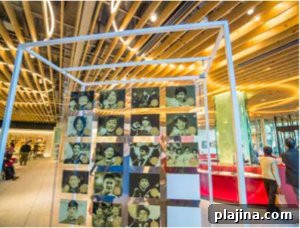
The Japan Olympic Museum offers context about how past Games were planned and adjusted. Exhibits include a section on the canceled 1940 Tokyo Olympics and a prominent display celebrating the 1964 Tokyo Games as a milestone in Japan’s postwar renewal, along with tributes to the 1972 Sapporo and 1998 Nagano Winter Games. The museum’s opening in September 2019 preceded the unveiling of the Japan National Stadium, which showcased architect Kengo Kuma’s environmentally conscious design.
Kuma’s stadium, chosen after cost and design debates over an earlier proposal, incorporates hardwood from many prefectures, forestry-inspired seating colors and features that use natural light and airflow to reduce energy needs. Elements from the original 1964 National Stadium were preserved in a Heritage Zone, reflecting a commitment to reuse and history.
By December 2019, construction of the Olympic and Paralympic Village at Harumi/Tokyo Bay was complete. The LEED-certified complex was designed to house 18,000 people during the Olympics and 8,000 for the Paralympics, then be converted into residential and retail space with views over the city.
The Games footprint included 42 venues, 10 of them in the Heritage Zone. COVID-19 prompted stringent protocols for everyone in the village—athletes, officials, media, VIPs and broadcasters. In early February, the IOC, IPC and Tokyo 2020 began issuing “Playbooks” outlining responsibilities and precautions for federations, technical officials, athletes, media and broadcasters, with updates expected as the public-health picture evolved.
IOC member and Australian Olympic Committee president John Coates said vaccines and rapid testing would be integrated into daily routines and urged attendees to follow national guidance and limit time in the Olympic Village. IOC president Bach encouraged national Olympic committees to stagger arrivals and departures so athletes compete and then leave, reducing overlap and lowering transmission risk.
Schrader noted reports of automated temperature-screening entry points, designated medical “fever centers” for foreigners and the possibility of spectator-free events if conditions required. He also predicted travel insurance with COVID coverage would likely become essential for visitors to Japan and other countries.
Authorized ticket sellers in the United States were still the IOC’s recommended purchase channels. While high-demand events like swimming and gymnastics had largely sold out, tickets for basketball, boxing, volleyball and track and field were reported available at press time. Most tickets purchased for the original dates were being honored for 2021; refunds would be issued if events moved to smaller venues or ticket holders could not attend.
Planned “Live Sites” with large screens showing events live were intended to broaden public access and create shared viewing experiences across Japan. Organizers said they would review and simplify Live Site programming to support COVID-19 countermeasures and adapt capacity limits as conditions changed.
GAME PLAN
Tristan Lavier, senior manager for the Tokyo 2020 International Communications Committee, offered practical tips for visitors to ensure a safe, smooth stay:
• Establish a daily budget for food and essentials, since some smaller restaurants and shops may not accept credit cards.
• Buy a PASMO or SUICA transit card at station vending machines and reload it for subway and bus travel throughout Tokyo and other cities.
• Consider staying in Tokyo’s outlying neighborhoods where hotel options are more plentiful and still convenient thanks to Japan’s efficient rail network.
• Pack for hot July and August weather: bring portable fans, empty water bottles and sports towels, or plan to purchase them locally.
• Use the Japan Official Travel App for up-to-date guidance on transportation, travel tips, emergency medical information and embassy contacts while in Japan.