
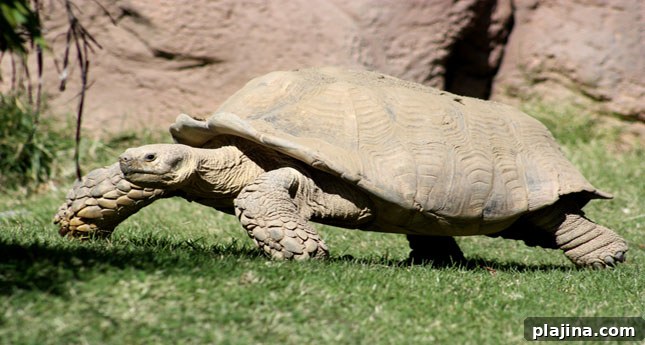
Islands often produce unusual adaptations in isolated species. Charles Darwin noted distinctive variations among the birds and tortoises of the Galápagos Islands and used those observations to help formulate his theory of evolution by natural selection. The Seychelles offer similarly striking examples of island-driven evolution.
Following Darwin’s ideas, biologists have documented that island species frequently diverge from their mainland relatives, evolving into much larger forms (gigantism) or much smaller forms (dwarfism). In some cases, both trends can appear on the same island chain, reflecting the unique ecological pressures and limited resources that shape island life.
One of the most striking examples of island gigantism in the Seychelles is the giant tortoise. These tortoises once roamed many of the islands, but early sailors hunted them extensively, reducing their numbers dramatically. A remnant population survived on Aldabra Atoll, and subsequent conservation and breeding efforts have helped reestablish Aldabra giant tortoises across several islands in the Seychelles, restoring an iconic component of the archipelago’s wildlife.
The Seychelles also provide clear examples of dwarfism. Gardiner’s frog, found in the highland undergrowth of Mahé, remains tiny throughout its life—growing to less than half an inch in length and small enough to rest on a thumbnail. Such diminutive size reflects the specific ecological niches and evolutionary pressures that operate on islands.