
Following a $230 million expansion of the Buffalo AKG Art Museum in late 2023 and a wave of new restaurants, hotels and architectural restorations, Buffalo, New York, is poised for an exciting year of openings, reopenings and enhancements. Many of these developments celebrate the city’s waterfront legacy and its rich African American heritage, making 2026 a great time to explore the Buffalo Niagara region.
In recognition of the Erie Canal’s 200th anniversary—the canal was completed in 1825—a newly built replica of an 1825 packet boat will begin a statewide bicentennial voyage this September. Earlier in the year, The Buffalo History Museum debuts an interactive waterfront exhibit called Waterway of Change, which opens in May and highlights the canal’s role in the region’s development.
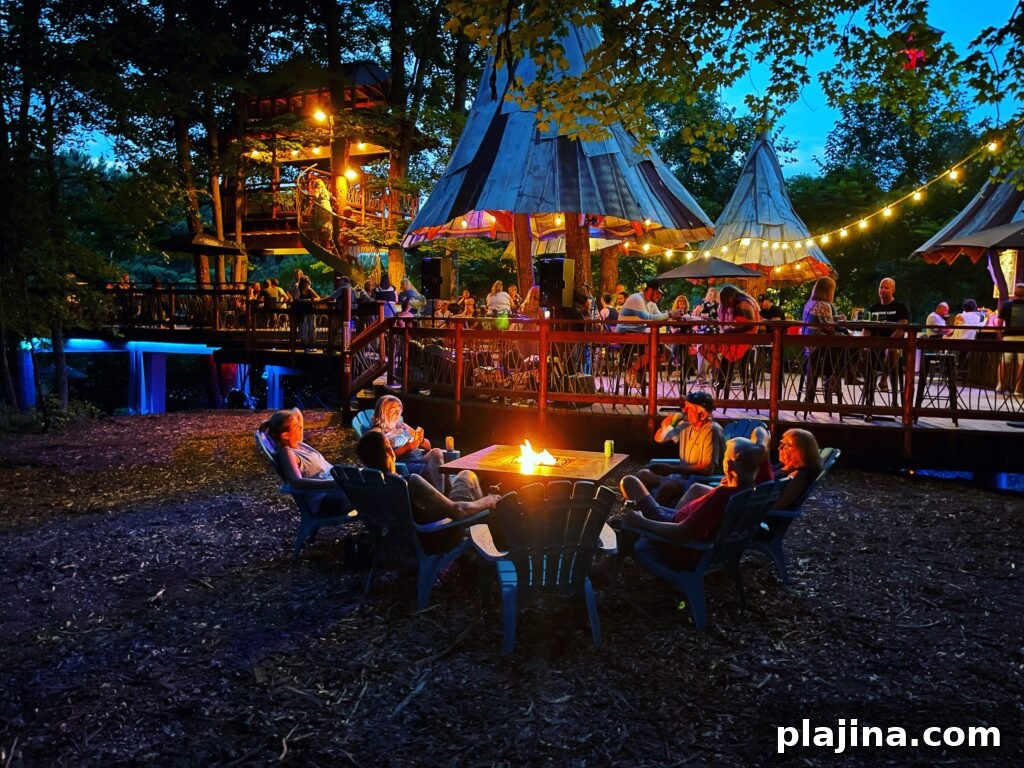
Blueberry Treehouse Farm © Visit Buffalo Niagara
Along the Michigan Street African American Corridor, two important sites are scheduled to reopen in 2025. The Michigan Street Baptist Church, a stop on the Underground Railroad where figures such as Frederick Douglass and Booker T. Washington once spoke, will welcome visitors again. The Colored Musicians Club—one of the nation’s oldest continuously Black-owned music clubs, where legends like Miles Davis, John Coltrane and Dizzy Gillespie performed—will also reopen, preserving an essential chapter of American musical history.
The celebrated Hotel Statler, last operated as a hotel in 1923 and now used as a private event space, is slated to reopen in 2026 as a mixed-use property with hotel rooms, apartments and offices. Looking further ahead, Buffalo’s Art Deco Main Terminal Building—vacant for passenger service since 1979—is moving toward reuse with plans focused on safety and stabilization, establishing secure access to the Passenger Concourse, expanding use of the Plaza and Lawn, and advancing a community-driven vision for adaptive reuse targeted for 2027.

Graycliff Estate © Visit Buffalo Niagara
Beyond its famous chicken wings, Buffalo’s dining scene is expanding into a diverse and dynamic food culture. Long-established restaurants share the stage with a new generation of chefs—many of them returning to Buffalo to contribute to its culinary revival. The city’s growth includes two recent James Beard semifinalists: Southern Junction and Waxlight Bar a Vin, both examples of innovative dining that reflect Buffalo’s evolving palate.
Buffalo’s remarkable collection of 19th- and early 20th-century architecture has also become a draw for visitors. The Richardson Olmsted complex, now the Richardson Hotel, is a National Historic Landmark designed by H.H. Richardson and transformed into a destination property. The region also boasts more than half a dozen Frank Lloyd Wright-designed sites, including the meticulously restored Martin House and the lakeside Graycliff Estate—both offering public tours and featuring structures such as a boathouse, gas station and mausoleum built after Wright’s death using his plans.

Buffalo Barbill © Visit Buffalo Niagara
Buffalo has been home to many notable cultural and political figures over the years, including Mark Twain, F. Scott Fitzgerald, Shirley Chisholm, Harold Arlen, Aretha Franklin and Rick James. Visitors can view Mark Twain’s original manuscript of The Adventures of Huckleberry Finn at the Central Library, pass by F. Scott Fitzgerald’s childhood home in the historic Allentown neighborhood, and find the graves of Shirley Chisholm and Rick James at Forest Lawn Cemetery—each offering a tangible connection to the city’s place in American history.