
For residents of Western Sydney and travelers visiting Australia for business or leisure, the completion of the construction phase of Western Sydney International Airport marks the first major airport built in Australia in more than 50 years. Scheduled to open in 2026 and located in Badgerys Creek, the new terminal heralds a generational shift that will transform the region economically, socially and culturally.
© Trevor Mein
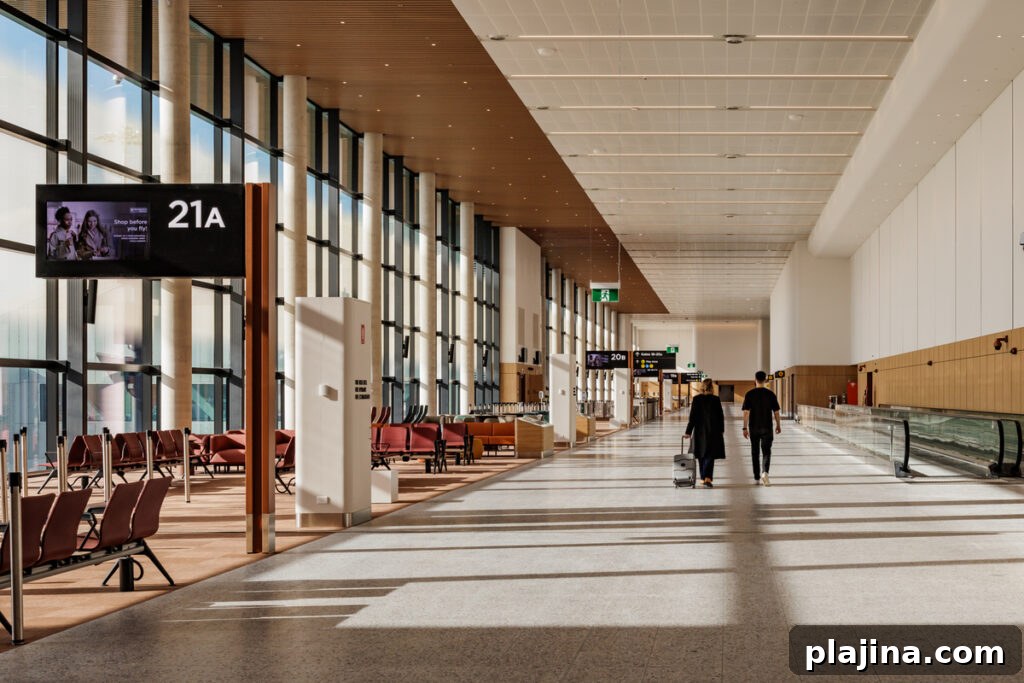
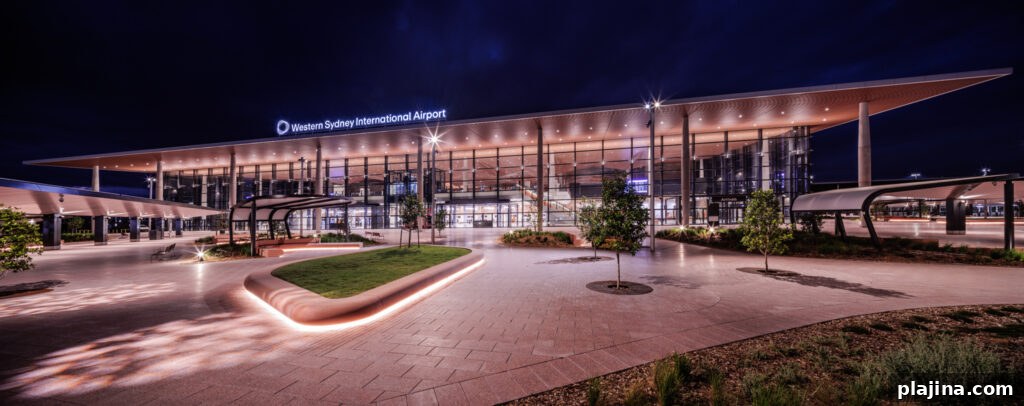
The new terminal presents a design rooted in its place, shaped by natural light and built for the future of aviation. Achieving a 5-Star Green Star Rating, the building uses a modular layout that supports phased expansion and incorporates sustainable strategies such as passive ventilation, on-site energy generation and rainwater collection and reuse.
From early concepts by COX Architecture and Zaha Hadid Architects to detailed delivery by Multiplex and Woods Bagot, the terminal balances innovation with practical performance. The result is a facility that responds to its landscape while offering an intuitive, future-ready passenger experience.
© Trevor Mein
“We are on the precipice of launching a seamless and stress-free airport experience unlike any other in Australia,” said Simon Hickey, CEO of Western Sydney International Airport. “WSI will give our global city a 24-hour international gateway that will continue to create significant economic opportunities for all of Greater Sydney.”
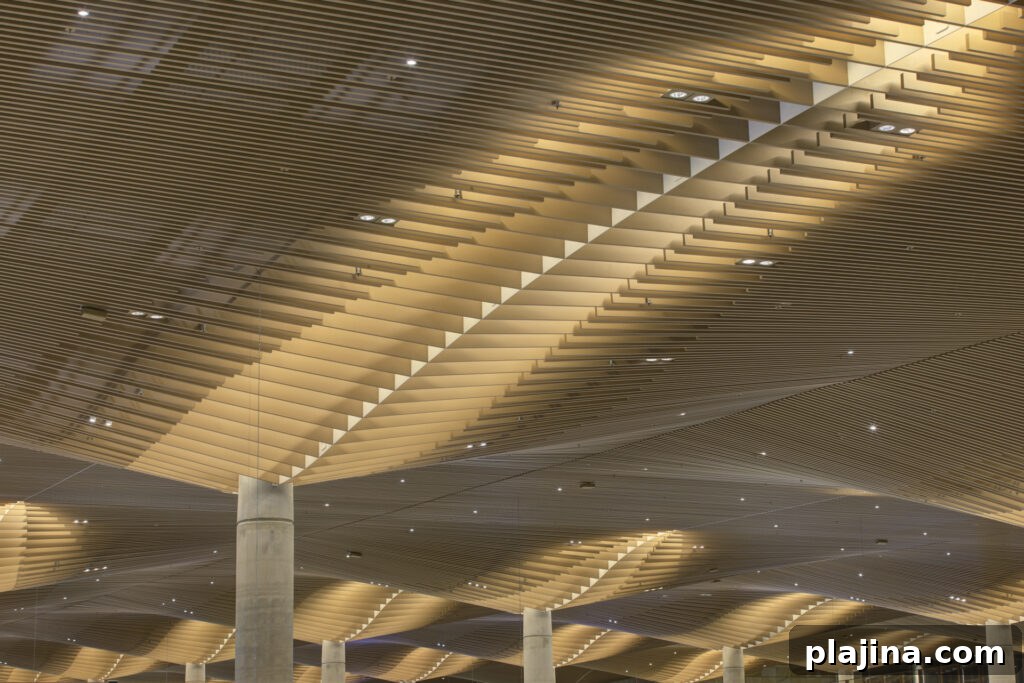
Inspired by the broad horizons of the Cumberland Plain, the terminal’s architecture reflects the region’s natural beauty. Its low, horizontal profile and transparent façades respond to the surrounding landscape. A sculptural ceiling—one of the terminal’s defining features—filters daylight from roof skylights, shaping interior ambiance and wayfinding.
“This is a rare opportunity to define the next generation of airport design on a global stage,” said Cristiano Ceccato, director and design lead at Zaha Hadid Architects. “Together with COX, we created a design that meets the highest standards of architectural innovation, passenger experience and operational efficiency. What makes this terminal extraordinary is its blend of human-scale design and international ambition. It is grounded in its setting, and yet globally competitive.”
© Brett Boardman
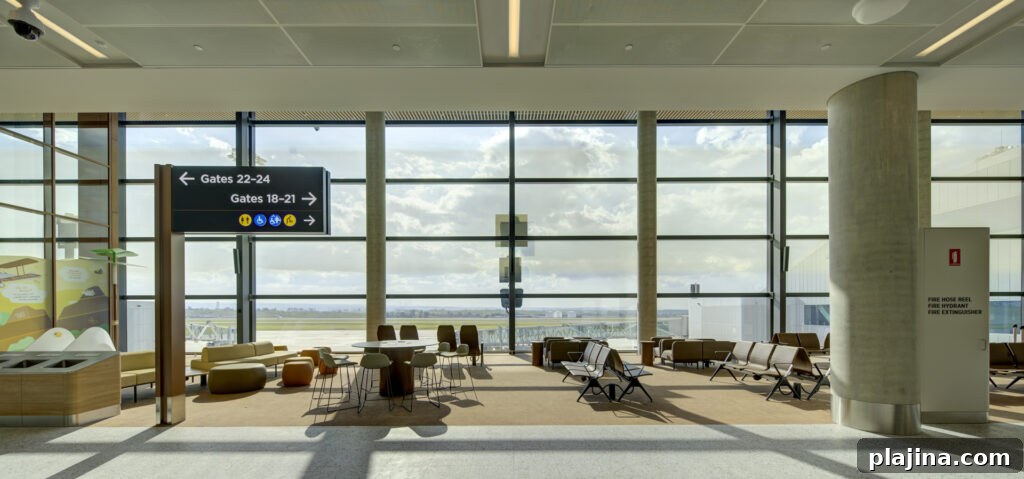
“The ‘Great Australian Light’ is one of the defining qualities of the Australian experience, and it has been central to our design thinking,” Ceccato added. “How light moves through the terminal shapes how people move, orient and feel—creating a sense of calm, clarity and connection. For many visitors, this space will be their first encounter with Australia, and we wanted that welcome to feel unmistakably grounded in place.”
Western Sydney is one of Australia’s most culturally diverse regions, and that diversity is reflected throughout the terminal’s public spaces. Design development included consultation with Dharug Custodians and collaboration with First Nations consultant Murrawin to embed local narratives into the architecture. Open sightlines, warm materials and smooth transitions between indoor and outdoor spaces create an egalitarian environment that expresses local values.
© Brett Boardman
Functionally, the terminal’s modular approach allows for phased growth so the airport can adapt to new technologies and changing passenger needs without disrupting operations. The design prioritizes passenger flow and operational efficiency while remaining flexible for future expansion, ensuring the airport can grow sustainably alongside Western Sydney’s development.
When it opens, Western Sydney International Airport will not only expand aviation capacity for Greater Sydney but also act as a long-term catalyst for jobs, investment and cultural exchange—anchoring the region’s role on both national and international stages.