
Hit or miss it is not. If there’s one thing visitors to Edinburgh can count on during the warmer months, it’s that their trip will likely coincide with a festival. Beginning in spring, the historic capital of Scotland rolls out a packed calendar of events celebrating everything from international film and contemporary art to science, literature and storytelling. The season builds to a crescendo in August with a cluster of major festivals, led by the Edinburgh International Festival.
Launched in 1947 as part of a broader effort to help the world recover and reconnect after World War II, the Edinburgh International Festival was founded on a simple idea: use the arts to promote peace, understanding and renewal. That founding mission still shapes the festival today. Over a three-week run each summer, the program presents world-class performances in opera, classical and contemporary music, theater and dance. Thousands of artists and creative professionals perform across the city, staging hundreds of events in theatres, concert halls, churches and unconventional venues.
The festival also offers a chance to experience Edinburgh’s lesser-seen spaces. During the season, organizers and venue partners often open hidden corners of the city — medieval vaults, elegant Georgian townhouses, private gardens and other historic interiors — allowing audiences to enjoy performances in settings that are usually closed to the public. These unique locations add atmosphere and context, making individual shows memorable beyond the program notes.
Running alongside the International Festival is the Edinburgh Festival Fringe, an independent and famously democratic arts showcase that began in the same year. Its origins are refreshingly simple: in 1947, a handful of groups who had not been formally invited to perform set up shows on the periphery of the official festival. Rather than accept exclusion, those performers created their own platform, and the spirit of that decision endures.
Today the Fringe is an enormous, open-access arts festival that welcomes performers and companies of all sizes and backgrounds. The only requirements are a venue willing to host a show and artists eager to present their work. That freedom has made the Fringe a hotbed of creativity and experimentation; visitors can discover new plays, stand-up comedy, physical theatre, spoken-word performances, music and hybrid forms that blur conventional genre lines. The sheer variety means audiences can curate a personalized program each day, choosing between intimate cabaret, bold new writing, large-scale outdoor spectacles and short, surprising encounters in offbeat locations.
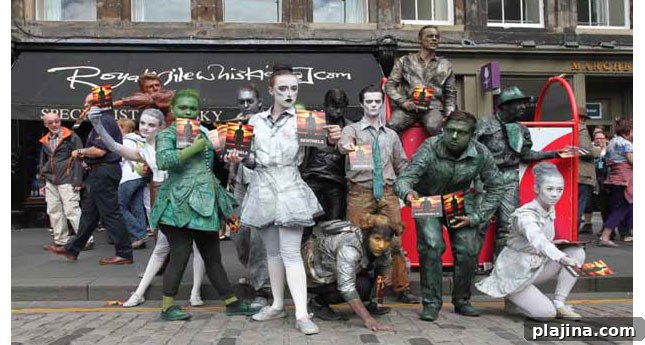
Edinburgh’s festival season is more than a series of performances: it transforms the city itself. During August, streets and public spaces are animated by performers, promoters and audiences from around the globe. Cafés, bars and temporary pop-up venues buzz with conversation; bookshops and galleries stage talks and signings; late-night events extend the social and creative energy deep into the night. For cultural travelers, Edinburgh in festival season offers a compact, intense experience where discovery and spontaneity sit beside carefully curated programming.
Both the International Festival and the Fringe have launched and amplified careers. The events act as cultural marketplaces where producers, critics, agents and programmers encounter new work and forge collaborations. At the same time, the festivals maintain strong ties to local communities, supporting Scottish artists and working with grassroots venues and volunteers to keep the season accessible and vibrant.
Whether you seek polished, international-scale productions or raw, fearless new work, Edinburgh’s festival season delivers. Plan carefully—venues fill quickly and the city gets busy—but leave room for serendipity. Part of the appeal is wandering into a show you hadn’t planned to see and finding something unexpectedly brilliant. For many visitors, a trip to Edinburgh during festival time becomes less about checking landmarks off a list and more about being immersed in a living, breathing cultural moment.