
Fringed by palm trees, skirted by dunes, buffeted by surf or buzzing with après-sun life — whatever kind of beach you prefer, Europe offers the perfect stretch of sand.
ITALY
Italy’s long Mediterranean and Adriatic coastline, plus its sand-ringed islands of Sardinia and Sicily, deliver some of Europe’s most idyllic beaches. With more than 4,500 miles of shoreline, the country has options for every taste: lively resort promenades in Rimini and Viareggio, dune-backed family beaches, and secluded coves for those seeking solitude.
In Puglia, at the heel of Italy’s boot, fine white sand and clear blue-green water combine with a relaxed, less-touristy atmosphere. Highlights include the long beaches and dramatic cliffs of Baia delle Zagare and the historic seaside town of Polignano a Mare. Pescoluse’s miles of shallow, family-friendly sand remain popular with parents of young children. Southward, the Torre Guaceto nature reserve protects dune-backed beaches and olive groves; rocky headlands shelter small coves and more stretches of golden sand along the peninsula’s tip.
Off Italy’s western coast, Sardinia is famed for world-class beaches. The glamorous turquoise bays of the Costa Smeralda in the north sit alongside the vast, open sands of the Costa Verde and Costa Sud in the south. Some shores are framed by towering dunes, others by archaeological ruins. The Maddalena Islands, reached by ferry from Palau, offer walkable beaches and boat-accessible secluded sands on tiny isles. Capo Testa’s beaches nestle beneath wind-sculpted rock formations, and many of Sardinia’s long white beaches remain uncrowded even in mid-summer.
© ELLESI | DREAMSTIME
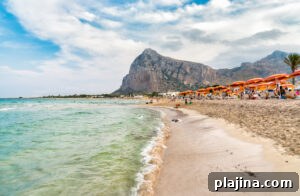
Sicily’s coastline also rings with beautiful beaches. Near the Zingaro Nature Reserve, San Vito Lo Capo sits beneath the soaring cliffs of Monte Monaco, while the more remote Capreria Beach inside the reserve is quieter and less crowded. Boat trips reveal even more secluded shores. Cefalù combines a lively traditional beach scene with historic streets, and the striking Scala dei Turchi on the south coast offers a dramatic white cliff that forms a staircase-like backdrop to the sand.
SPAIN
Spain’s Mediterranean and Atlantic coasts host a vast variety of beaches. The Costa del Sol remains one of the country’s best-known sun destinations: towns like Marbella mix developed resort life with stretches of natural shoreline such as Playa del Real de Zaragoza, where golden sand and calm waters are ideal for swimming.
Along the coast eastward, beaches range from the natural, low-amenity Playa de Maro to more serviced sands like El Playazo with lifeguards and kiosks. The Costa Tropical around Almuñécar offers a lively promenade and long crescent beach, while farther east Laredo’s three miles of white sand draw surfers and watersport enthusiasts.
© MARTIN VALIGURSKY | DREAMSTIME
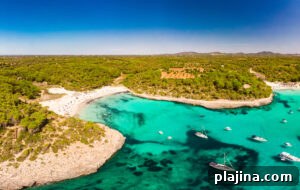
The Balearic Islands add famous beach playgrounds to Spain’s offering. Mallorca, the largest island, presents a wide variety: S’Amarador inside Mondragó Natural Park remains undeveloped and unspoiled, while neighboring Cala Mondragó and Cala d’en Borgit are backed by dunes and forest. Cala Formentor on the northern coast sits in a protected bay partly shaded by pine trees. Ibiza is synonymous with parties and an LGBTQIA+-friendly scene—Las Salinas draws the beach-party crowd, Cala Xarraca offers snorkel-friendly clear shallow water, and Punta Galera is a prime sunset spot. For quieter white sands, the short ferry ride to Formentera leads to Es Pujols and other tranquil beaches.
PORTUGAL
Portugal’s Algarve enjoys roughly 300 days of sunshine each year and blends long golden beaches with sandy coves cut into sculpted red-rock cliffs. While central resort towns can be busy and built up, smaller coastal villages retain an old-world charm: fishermen still head out to sea at dawn and mend nets on the sand.
One standout is the four-mile Praia da Falésia near Albufeira, where tall red sandstone cliffs frame popular family-friendly sands and shallow water. Carvoeiro’s dramatically eroded cliffs and the vertigo-inducing clifftop walks west of Lagos lead down to sheltered Camilo Beach, set among striking rock arches. Boat excursions reveal caves and hidden beaches tucked into the cliffs.
Beyond Lagos, a series of small beach towns stretches to Sagres, where the coastline turns north toward the open Atlantic. High cliffs drop to long, uncrowded beaches favored by world-class surfers; the coastline continues north into the Alentejo region with more wild, windswept shores.
FRANCE
When people picture French beaches they often think of the glamour of Nice, Cannes and Saint-Tropez on the French Riviera, known as much for celebrity culture as for their sands. For wide white beaches and postcard coastal scenery, many French people prefer the Atlantic coast: Brittany and the Basque region offer a mix of dramatic shoreline and traditional coastal towns.
Biarritz remains the crown jewel of the Atlantic coast, a long-established retreat for high society. The Grande Plage and Plage du Miramar are backed by promenades, colorful beach cabanas and terrace restaurants. The Atlantic’s less-protected waters present excellent surfing conditions for those who seek a challenge.
For a cozier, family-friendly atmosphere, nearby Saint-Jean-de-Luz features a picturesque harbor lined with historic houses and a protected beach that’s ideal for children. Île de Ré, reached by bridge from La Rochelle, is a sand-ringed island with dunes, low green meadows and miles of pristine sand. Its villages are best explored by bicycle, making it easy to discover secluded stretches of perfect white sand and abundant sunshine along Brittany’s varied coast.