
Standing with fellow travelers on a terrace overlooking the city lights, a soft breeze on my skin and a full moon above, I paused to take it all in: I was in Amman, Jordan — a place I had not expected to visit but one I will always remember.

PHOTO: © CATARII | DREAMSTIME.COM
Our group attended a hands-on cooking class with Beit Sitti, a family-run kitchen where Jordanian sisters teach recipes passed down through generations. We prepared our own dinner while the women shared stories about growing up in Amman and about family life. When the food was ready, we sat together and enjoyed curried lentil soup, mutabbal beitinjan (eggplant dip), fattoush salad and several more traditional dishes.
The cooking lesson offered a window into everyday life in Amman, Jordan’s capital and largest city, home to more than 3.8 million people. Amman’s history stretches back over 6,000 years and the city has been shaped by Egyptian, Roman, Arabian, Ottoman, British and French influence before Jordan gained independence in 1946. King Abdullah II has led the country since 1999 and plays a central role in appointing governments, approving legislation and guiding national policy.
Today Amman is the country’s hub for commerce, finance and international trade. The city has also become a promising environment for startups and entrepreneurs. A growing ecosystem of incubators, accelerators and co-working spaces supports local talent, while Amman’s strategic location makes it a gateway to regional markets. Notable startups include Abwaab, an online learning platform; Altibbi, a leading Arabic digital health service; and liwwa, an alternative lending platform for small- and medium-sized enterprises.
Established organizations with ties to the United States also operate in Amman. The American Chamber of Commerce in Jordan (AmCham-Jordan), founded in 1999, promotes trade and investment between Jordan and the U.S. and supports sustainable economic development. Affiliated with the U.S. Chamber of Commerce, AmCham-Jordan represents more than 250 members, including multinational and regional companies active in the city.
Organizations focused on empowering women entrepreneurs have also gained traction. Business and Professional Women – Amman (BPW-A), affiliated with the International Federation of Business and Professional Women, offers training, coaching and networking opportunities to help women grow businesses and advance careers. BPW-A concentrates on business growth, career development and cultural transformation to foster inclusion and remove workplace bias.
To attract businesses, the King Hussein Business Park opened in 2010 as a mixed-use development featuring class-A offices, retail, hotels and public spaces. The park now hosts more than 70 companies, including global firms, and is undergoing significant expansion to accommodate further growth.
CHECKING IN WITH RAGHAD AL KHOJAH
CEO, The American Chamber of Commerce in Jordan (AmCham-Jordan)
How has Amman made the city conducive to startups and attractive to entrepreneurs?
Amman’s energy and its young, tech-savvy population create a strong culture of innovation. The city offers a supportive network of incubators, accelerators and co-working spaces that foster collaboration. Its geographic position allows startups to expand across the region, while government initiatives aim to improve the business environment and encourage entrepreneurship.
Which industries are attracted to doing business in Amman?
Technology leads the way, with many startups in software development, fintech and e-commerce. Healthcare is also expanding, particularly in digital health and pharmaceuticals. Renewable energy is growing as Jordan emphasizes sustainability. The business landscape is broadening, reflecting diverse opportunities across sectors.
What do you see on the horizon for new industries coming onto the scene?
Growth will likely continue in AI, cybersecurity and blockchain, as global trends reach local startups. Green energy investment is expected to rise, and creative industries such as media, design and local content production show strong potential. Addressing funding gaps and regulatory challenges, while boosting mentorship and networking, will help Amman’s ecosystem mature further.
The entrepreneurial spirit in Amman is notable: resourceful people, determination and resilience drive innovation. While funding and regulatory complexity remain challenges, increased access to venture capital, angel investors and mentorship can help startups scale and thrive.
DIVERSIONS
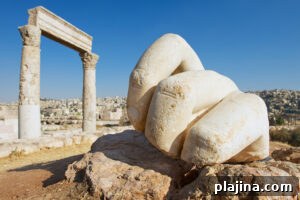
PHOTO: © DMITRY CHULOV | DREAMSTIME.
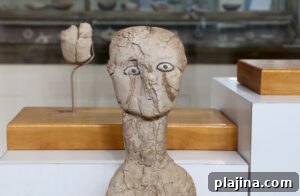
Amman is rich in history and easy to get lost in. Visit Jabal al-Qal’a (the Amman Citadel) for panoramic views and the ruins of the Temple of Hercules. The Jordan Archaeological Museum on the citadel displays artifacts ranging from the Stone Age to more recent periods, including the Ain Ghazal statues. Nearby, the Roman Theatre—dating to the second century and seating around 6,000—has been restored and still hosts performances.
© VLADIMIR ZHURAVLEV | DREAMSTIME.
Explore museums and galleries—The Jordan Museum, the National Gallery of Fine Arts, Dar Al-Anda and Nabad Art Gallery—to experience regional culture and contemporary art. For shopping and local crafts, browse souks, Rainbow Street, Turquoise Mountain, the Jordanian Craft Center and cooperatives that support women artisans.
Amman also serves as a gateway to Jordan’s iconic attractions: Petra, with its rock-cut architecture; Wadi Rum’s dramatic desert landscapes; and the therapeutic waters of the Dead Sea.
LODGING
Four Seasons Hotel Amman
Perched on one of Amman’s hills in the Abdoun neighborhood, this renovated five-star hotel offers upscale amenities and convenient access to the city’s nightlife.
5th Circle, Al-Kindi Street, Jabal Amman
$$$$
The Ritz-Carlton, Amman
Near the Amman Citadel, this luxury hotel delivers refined service and elegant accommodations, opened recently and quickly established itself among the city’s top properties.
5th Circle, Zahran Street, Amman
$$$
The St. Regis Amman
Featuring refined décor and a range of rooms, suites and serviced apartments, some with butler service, this five-star hotel emphasizes comfort and high-end amenities.
5th Circle, Shafiq Al-Hayek Street, Amman
$$$
DINING
Beit Sitti
A hands-on cooking experience where visitors learn traditional Jordanian dishes—many vegetarian options—and share a meal at the end of class. Take recipes home to recreate for family and friends.
16 Mohammad Ali Al-Saadi St., Amman
$$$$
Hashem Restaurant
A longstanding local favorite known for hummus, falafel and Jordanian street food. Popular with residents and visitors alike.
King Faisal Street, Amman
$$$
Shams El Balad
A hybrid café, cultural space and concept store serving traditional dishes like sfeiha—spiced minced lamb with pomegranate molasses—alongside creative offerings.
Mu’Ath Bin Jabal St. 69, Amman
$$$
JUST THE FACTS
Time zone: GMT +3
Phone code: Country code 962, city code 6
Currency: Jordanian dinar
Key industries: Trade and finance contribute significantly to GDP. Market opportunities include safety and security, information and communications technology, medical and water technologies, renewable energy and agriculture.
COMING AND GOING
U.S. citizens should travel with a passport valid at least six months beyond the arrival date and at least one blank page. Visas are typically issued on arrival at Queen Alia International Airport and most international land border crossings.
OFFICIAL LANGUAGE
Arabic is the official language; English is widely spoken.
INFO TO GO
More than 20 international airlines serve Queen Alia International Airport, about 22 miles south of Amman. Direct flights operate from several U.S. gateways. Transport from the airport includes the Sariyah Airport Express Bus, fixed-rate taxis and rental cars. Within the city, use taxis (request the meter) or ride-hailing services such as Uber and Careem to get around.