
Hotels and tour operators across Cancún commonly organize trips to Tulum, Chichén Itzá and Cobá. While those full-day excursions are ideal for longer visits to the Yucatán Peninsula, travelers with limited time in Cancún will find several compelling cultural destinations closer to town. These nearby sites make it easy to explore the region’s history, art and heritage without a long commute, and together they tell a vivid story of the people and civilizations that shaped the Yucatán.
© Elyse Glickman
Mayan Museum of Cancún
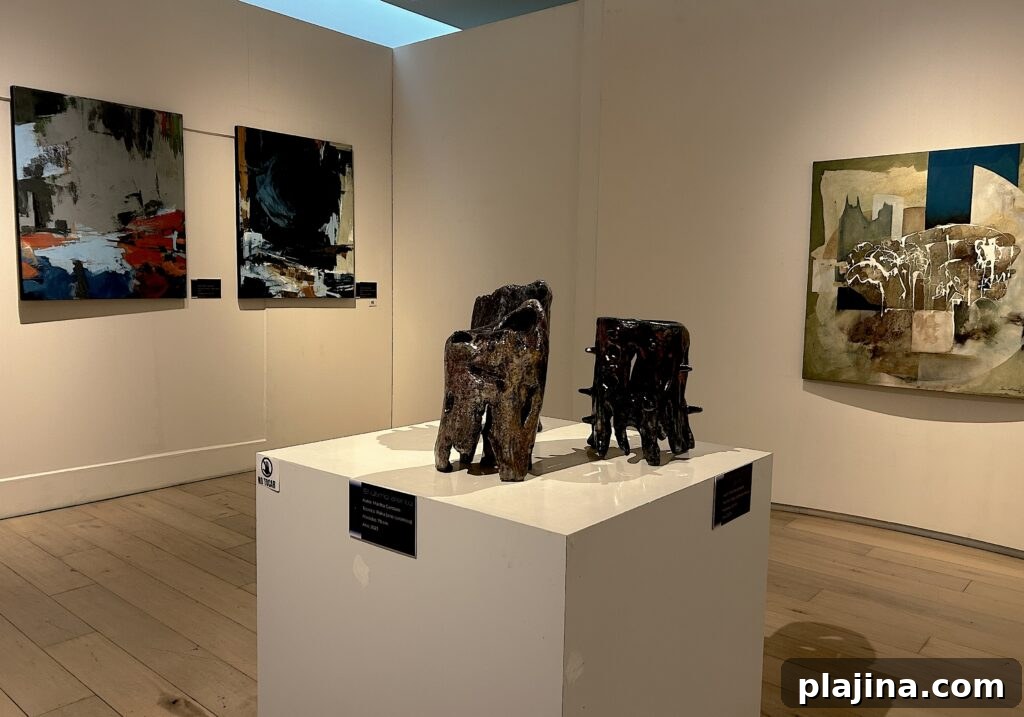
Housed in a striking building designed by architect Alberto García Lascurain, the Mayan Museum of Cancún presents one of the region’s most important archaeological collections. The museum’s exhibits draw on artifacts from notable sites such as Palenque, Chichén Itzá and Comalcalco, with many pieces displayed along the landscaped path leading to the main entrance. Inside, three principal exhibition halls highlight contemporary art, archaeological finds and other culturally significant objects. Adjacent to the museum grounds is the San Miguelito archaeological site, where stone foundations and tropical flora mark the locations of the wooden and palm-thatched houses once inhabited before the Spanish conquest.
Museo Subacuático de Arte / The Cancún Underwater Museum of Art
Located within the National Marine Park between Cancún and Isla Mujeres, the Underwater Museum of Art opened in 2010 and offers a distinctive blend of art and marine conservation. Nearly 500 sculptures, many by Jason deCaires Taylor alongside several Mexican artists, were installed to provoke reflection and to promote coral growth by providing new substrates for marine life.
The collection is divided into two main galleries and can be visited by scuba diving, snorkeling or by glass-bottom boat depending on depth and visitors’ water skills. Punta Nizuc, off the southern end of the hotel zone, sits in shallow water (about 2–3 meters) and is best experienced by snorkeling or by boat tours such as the Jungle Tour, which lets guests navigate the Nichupté Lagoon’s canals with a bilingual guide. The Manchones gallery, off Isla Mujeres, lies deeper—around 8–10 meters—and is primarily visited by scuba divers. For those who prefer to stay dry, glass-bottom boats provide an excellent way to view these submerged sculptures from the surface.
© Elyse Glickman
Panteón Municipal de Isla Mujeres, Adolfo López Mateos S/N, Centro – Supmza. 001
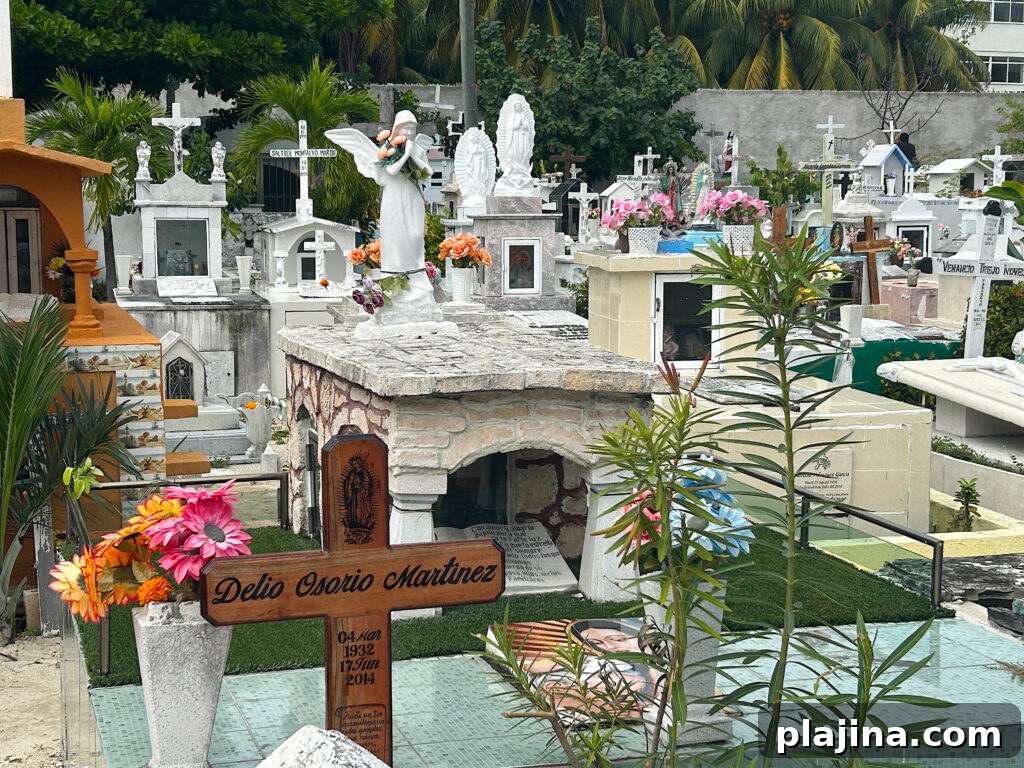
Cemeteries can be powerful records of local history and artistic expression, and the municipal cemetery of Isla Mujeres is no exception. Family members often commission intricate stonework, sculptures and painted murals to honor their loved ones. Many graves are adorned with carved angels, floral motifs and elaborately decorated markers, with some of the most ornate memorials found on children’s graves. Among the monuments is the idiosyncratic tomb of Fermín Mundaca de Marechaja, a 19th-century figure known locally for his self-fashioned pirate persona and his carved skull-and-crossbones motif. Overlooking the sea, the cemetery’s setting adds a contemplative backdrop to these lasting tributes.
Even with limited time in Cancún, these accessible cultural sites offer a meaningful cross-section of the Yucatán’s past and present—archaeology, contemporary art and local traditions—each contributing to a fuller understanding of the region’s identity.