Where is this? We sit in an open safari vehicle amid pale, parched bushland. Cicadas hiss. Vultures wheel lazily in a dusty sky. A skittish herd of antelope dots the distance, every animal alert, ears angled like satellite dishes. Closer by, shaded beneath trees, a pride of lions lounges.
Where is this? The temperature drops below freezing. We crunch through snow, weaving between excited children bundled in bulky winter coats. When an impromptu snowball fight erupts, we step back to watch their laughter.
Where is this? We stand in tranquil gardens beside a river. The midday sun beats down. In the center of the manicured lawn stands a bronze statue of one of the 20th century’s most important figures, a garland of flowers draped around the neck.
Where is this? We are in salty marshland. The ground glitters white, fractured by heat haze. Three distant creatures canter along the horizon; as the mirage fades their legs resolve and the animals become whole. Our naturalist guide names them: “Khur. Asiatic wild ass.”
So where are we? In Asia. More precisely, in India. Even more precisely: Gujarat, the western state that holds surprising contrasts.
Gujarat is often overlooked on standard Indian itineraries. Major tourist routes sweep north and east, and Mumbai lies more than 250 miles down the Arabian Sea coast. Jets leave vapor trails across Gujarati skies, transporting travelers onward; few passengers spare a glance at this largely arid, flat land beneath them.
But for discerning travelers, Gujarat is a destination in its own right, full of discoveries. The state leads India in gross domestic product and economic growth, driven by oil, industry and agriculture, while tourism remains a smaller sector. The result: fewer tourist facilities, rougher roads and a stronger sense of places where tradition endures.
Adventurous visitors willing to tolerate bumpy journeys and limited accommodations will find communities where local customs have remained resilient. Nomadic tribes still follow age-old routes. Ancient temples and mosques testify to a long history of religious diversity. Protected reserves shelter some of India’s most remarkable wildlife.
Gir Forest National Park is the final refuge of the Asiatic lion, a species that once roamed from India to Greece. By 1880 fewer than a dozen survived here; intensive conservation has increased the population to over 400 today. A game drive in Gir can feel disorienting to safari veterans: the park’s mosaic of savannah and teak recalls parts of Africa, reinforced by sightings of leopards, hyenas, jackals, honey badgers, gazelles and other species more commonly associated with the African wilderness.
Entering Gujarat gives a subtle sense of being slightly outside mainstream India. One obvious difference is the state’s prohibition on the sale and consumption of alcohol, unique in the country (foreign nationals can, however, obtain short-term permits for use at specific bars and restaurants).
This feeling of otherness is most pronounced on Diu Island, off Gujarat’s southwest coast. Ironically, Diu is directly administered from Delhi and therefore permits alcohol, drawing visitors across the tidal creek from the mainland. The town’s whitewashed streets and colonial-era architecture recall Lisbon more than most Indian towns—Portugal ruled Diu from the 16th century until 1961.
Back on the mainland, the Kathiawar Peninsula (also called Saurashtra) reveals another layer of history. Never fully integrated into British India, it once consisted of more than 200 princely states ruled by maharajas. After independence in 1948 these states joined the Indian Union; traces of that princely past remain, especially in cities such as Rajkot.
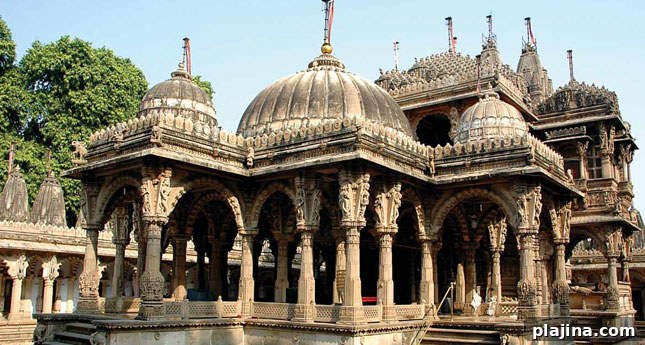
Ahmedabad, Gujarat’s largest and fastest-growing city, deserves time to explore. The Calico Museum of Textiles preserves a world-class collection, but visits are limited and advance booking is essential. Bhadra Fort, founded in 1411 and later damaged by an earthquake in 2001, is undergoing major restoration. Across Ahmedabad you will find notable mosques, Hindu temples and Jain shrines reflecting the city’s religious diversity.
Even in Ahmedabad you’ll find unexpected contrasts: a Snow Park on the city’s western edge offers families a refrigerated room filled with authentic snow. Indian theme parks are not Disney-level spectacles, but they offer genuine fun—zorbing, quad biking and bumper cars—and for many local children a first encounter with snow is a priceless moment.
Three miles north of downtown, beside the Sabarmati River, lies the Gandhi Ashram where Mahatma Gandhi led the nonviolent movement against British rule. Founded nearby in 1915 and moved to the present site in 1917, the ashram is now a serene museum. Gandhi’s simple living quarters are preserved, and one of his famous inscriptions—“My life is my message, MK Gandhi”—appears in his own handwriting. In the shaded gardens visitors can pause and reflect amid birdsong and the distant hum of the city.
Beyond Ahmedabad the pace changes. Two hours northwest, the Little Rann of Kutch opens into a vast saline mudflat stretching some 2,000 square miles. At first glance the shimmering expanse seems barren, yet the area teems with life: flocks of lesser flamingos, demoiselle cranes, pelicans and storks inhabit the wetlands; thorny scrub hides herds of nilgai; and Asiatic wild asses appear like phantoms on the heat-baked plains. The Little Rann is protected as the Indian Wild Ass Sanctuary, the country’s largest wildlife reserve for this endangered species.
Kutch is also home to the Rabari, a colorful tribe of pastoral nomads whose name means “outsiders.” Their distinctive dress—men in large turbans, women in ornate fabrics and intricate jewelry—underscores a cultural identity that has endured for centuries.
In this dry landscape, water dictates settlement and culture. Many towns rely on freshwater wells, and Gujarat’s stepwells, or baolis, are architectural responses to that need. These subterranean structures descend through flights of steps and elaborately carved colonnades to the water below, creating spaces of cathedral-like grandeur. Ahmedabad hosts fine examples such as the 16th-century Dadi Hari Vav and the even older Mata Bhavani’s Well.
Ahmedabad’s architectural story continues into the 20th century, when internationally renowned architects left their mark. A proposed Frank Lloyd Wright office for Calico Mills was never built, but the site later hosted a geodesic Calico Dome inspired by Buckminster Fuller. Louis Kahn designed the Indian Institute of Management, and Le Corbusier contributed several buildings, including the City Museum.
Across its wildernesses, towns and modern neighborhoods, Gujarat consistently challenges expectations: Where is this? Once you learn to anticipate the unexpected, the answer becomes clear. It could only be Gujarat.
Info to Go
International and domestic flights arrive at Sardar Vallabhbhai Patel International Airport (AMD), about five miles north of Ahmedabad. The airport is modern, with a terminal influenced by Singapore’s Changi design. Independent travel in Gujarat often involves long journeys by train or bus; local travel companies can arrange tailored tours with cars and drivers.
Lodging
The Gateway Hotel Gir Forest
Operated by Taj Hotels, this 28-room lodge, refurbished in 2011, is a comfortable base for exploring Gir National Park. Junagadh $$$
The House of MG
Built in 1924 as the home of textile magnate Sheth Mangaldas Girdhardas, this restored property immerses guests in local heritage. Opposite Sidi Saiyad Jali, Lal Darwaja, Ahmedabad $$$
Le Méridien Ahmedabad
An international-luxury hotel on the Sabarmati River, close to Nehru Bridge. $$$$
Dining
Agashiye
This terrace restaurant at The House of MG serves refined, contemporary Gujarati cuisine with international influences. Opposite Sidi Saiyad Jali, Lal Darwaja, Ahmedabad $$
Mirch Masala
A popular franchise decorated with Bollywood memorabilia; several city locations. Opp. Femina Town, Near Swastik Char Rasta, C.G. Road, Ahmedabad $$
Vishalla Village Restaurant
A cultural dining experience—sit outdoors on mats on a mud floor and enjoy traditional food served on leaves. Opp. Vasna Tol Naka, Ahmedabad $$
Weblinks
Agashiye
Calico Museum of Textiles
The Colors of Gujarat
Diu Island
Gandhi Ashram at Sabarmati
The Gateway Hotel Gir Forest
Gir Forest National Park
Gujarat Tourism
The House of MG
Maniar’s Wonderland
Le Méridien Ahmedabad
Mirch Masala
Vishalla Village Restaurant