
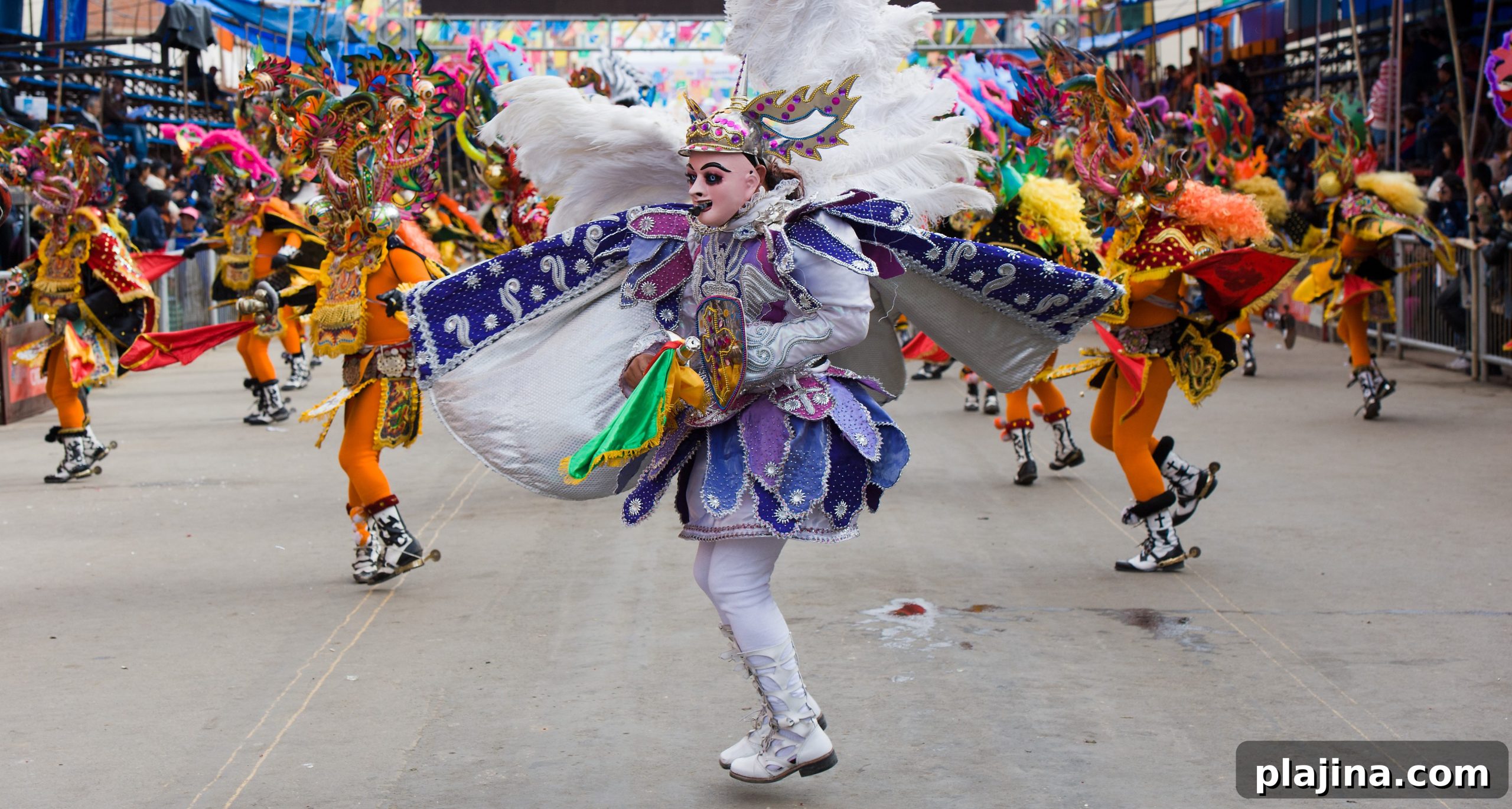
The Carnival of Oruro begins each year on the Saturday before Ash Wednesday and presents a vibrant fusion of indigenous Andean customs and Catholic rites. This renowned Bolivian celebration is a lively, colorful procession of dance, music and elaborate costumes that reflects centuries of cultural exchange and spiritual devotion.
For several days, the city of Oruro becomes a stage for hundreds of dancers and musicians who perform traditional folkloric dances such as the Diablada, Morenada and Caporales. Each dance troupe wears highly detailed attire—intricately embroidered fabrics, ornate masks and striking headdresses—while brass bands and percussionists provide a thunderous soundtrack that drives the procession forward.
At its heart, the carnival blends ritual and spectacle. Indigenous beliefs about renewal, fertility and respect for the earth are interwoven with Catholic symbolism, creating a unique syncretism visible in the choreography, iconography and sequence of events. Religious observances and blessings often accompany the performances, underscoring the spiritual dimension beneath the exuberant displays.
Visitors to Oruro encounter not only public parades but also smaller community celebrations, artisan markets and food stalls offering regional specialties. The atmosphere is immersive: streets packed with observers, the air filled with music, and every corner alive with movement and color. For photographers and cultural enthusiasts, the carnival provides a rare opportunity to witness living traditions maintained and adapted through generations.
Organizers and participants often prepare for months, crafting costumes by hand and rehearsing complex routines. This dedication contributes to the event’s reputation for authenticity and artistic quality. Beyond the spectacle, the Carnival of Oruro remains an important expression of identity for many Bolivian communities, affirming resilience, shared history and spiritual continuity.
Attending the Carnival of Oruro offers a memorable cultural experience: an energetic celebration that combines deep-rooted tradition with communal celebration, set against the dramatic backdrop of Bolivia’s highland city.