
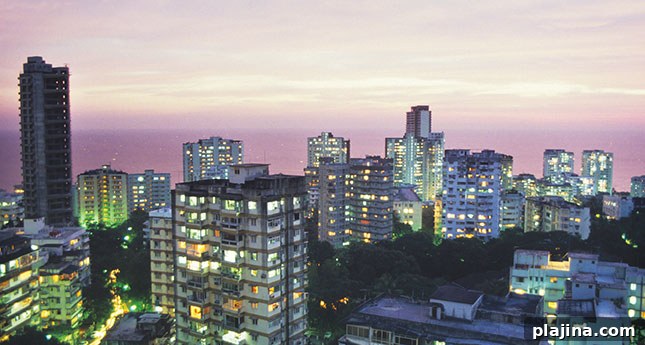
India is a BRIC nation—part of the group that includes Brazil, Russia, India, and China, the world’s largest emerging-market economies. Economists who popularized the BRIC concept predicted these countries could grow so significantly by 2050 that their combined economic influence would rival or exceed that of today’s richest nations. Among them, India was often singled out as having the greatest potential for rapid expansion: within a few decades, it could rank just behind the United States and China.
That optimistic outlook has strong foundations. Even the 2008 terrorist attacks in Mumbai, India’s bustling financial capital, did not permanently derail growth. Within weeks the city returned to business as usual: tourists continued to arrive, investors remained committed, and conferences and meetings resumed as planned.
Since liberalizing its economy in 1991, India has attracted nearly 2,000 multinational corporations. More than a fifth of these companies are American, and that proportion is likely to grow as India’s economy expands further, supported by a well-educated workforce, a world-leading technology sector, and increasingly sophisticated facilities for meetings and events.
Government officials recognize that India’s current share of less than 2 percent of the $280 billion global MICE (Meetings, Incentives, Conferences, and Exhibitions) market is modest for an emerging powerhouse. Several major infrastructure and tourism initiatives are under way to close that gap: the National Highways Development Project is modernizing roads and easing congestion; new, world-class convention centers are planned for New Delhi, Mumbai, Jaipur, and Goa; and upgrades are slated for 20 of the country’s top tourist destinations.
Hyderabad exemplifies India’s transformation. The 400-year-old capital of Andhra Pradesh is famous for the 16th-century Charminar mosque but has become best known for HITEC City—the Hyderabad Information Technology and Engineering Consultancy City—an expansive IT hub nicknamed “Cyberabad.” This 151-acre complex operates with dedicated infrastructure including its own power and communications. Microsoft established a major presence there in 1998 on a 54-acre campus.
In 2005 the Hyderabad International Convention Centre (HICC) opened in HITEC City. With a 291,000-square-foot pillarless main hall and advanced IT systems, the HICC is one of India’s most capable meeting venues. The following year, operator Accor added a 288-room Novotel adjacent to the center, creating a full-service meetings destination that quickly attracted international business.
Between 2005 and 2007 international air arrivals to Hyderabad doubled to more than a million annually, prompting investment in a modern airport. The new Hyderabad International Airport (HYD), a $560 million project, began commercial operations recently and is being expanded under a master plan designed to handle roughly 40 million passengers per year.
Hyderabad is not unique in its progress. Delhi and Mumbai also feature large convention facilities, extensive hotel offerings, and increasingly efficient public transit. Delhi’s expanded Metro has improved citywide access, while Mumbai’s extensive commuter rail network complements an in-progress metro system that is scheduled to substantially extend city connectivity once completed.
Major venues include Delhi’s India Habitat Centre, a near-million-square-foot complex spread across nine acres in the heart of the capital, and Mumbai’s Bombay Exhibition Centre, a 400,000-square-foot facility that hosts large-scale exhibitions. Iconic hotels such as Mumbai’s Taj Mahal Palace & Tower and Delhi’s The Ashok offer premier meeting spaces and historic prestige—The Ashok was India’s first five-star hotel, built in 1956 to host international dignitaries.
Beyond the business infrastructure, India remains an exceptional incentive and leisure destination. The country’s 30 UNESCO World Heritage sites, diverse landscapes, and vibrant traditions provide memorable experiences: trek in the Himalayas, ride elephants in Rajasthan, explore Old Delhi’s alleys by rickshaw, or shop in Hyderabad’s historic pearl markets and Delhi’s modern malls. Fine dining and luxury shopping are widely available in major cities.
Travel across India can be comfortable and scenic. Luxury trains, operated by Indian Railways, offer curated journeys with upscale amenities. The Golden Chariot, launched recently, links Karnataka and Goa on a seven-day southern India itinerary featuring plush accommodations, spa services, gourmet cuisine, and onboard WiFi.
India’s event calendar draws visitors year-round. New Delhi hosts an International Mango Festival each July showcasing hundreds of varieties. The Kite Flying Festival in January and the Mumbai Film Festival in November are popular draws, while Diwali—the five-day Festival of Lights in October—fills the country with color, flowers, fireworks, and candlelight. In 2010, Delhi hosted the 19th Commonwealth Games, showcasing the country’s capacity to stage large international sporting events.
Andhra Pradesh—once known predominantly as India’s “Rice Bowl”—has rebranded itself in recent years. With Hyderabad’s rapid development as a tech and convention hub, the state now markets itself as a leading destination for meetings and events, reflecting a broader national shift from agricultural prominence to a diversified economy that includes a strong MICE sector.
CONVENTION CENTERS
BOMBAY EXHIBITION CENTER
The largest private-sector exhibition venue in India, the Bombay Exhibition Center offers around 400,000 square feet across four exhibition halls, seminar rooms, and a large convention space. Located in a Mumbai satellite area, it provides convenient access to downtown and to Chhatrapati Shivaji International Airport.
HYDERABAD INTERNATIONAL CONVENTION CENTRE
Operated by Accor, the HICC is one of India’s premier convention complexes. The 291,000-square-foot facility features advanced IT infrastructure, acoustically treated movable walls, high ceilings, large projection screens, and a wide variety of meeting rooms, auditoriums, and conference halls.
INDIA HABITAT CENTRE
Spread over nine urban acres in central New Delhi, this near-million-square-foot complex offers a comprehensive range of meeting spaces, a 424-seat auditorium, and several landscaped outdoor venues—making it an accessible and versatile choice for events in the capital.
RENAISSANCE MUMBAI HOTEL & CONVENTION CENTER
Situated beside Powai Lake and within easy reach of Mumbai’s international airport, the Renaissance offers one of the city’s largest flexible function spaces—a 13,000-square-foot grand ballroom able to accommodate up to 2,500 guests—along with modern hotel amenities.
MEETING HOTELS
THE ASHOK NEW DELHI
Located on 25 acres in the Diplomatic Enclave, The Ashok was India’s first five-star hotel and remains a prominent venue for large conferences. Its extensive convention facilities make it suitable for major gatherings, and its historic status adds ceremonial gravitas.
NOVOTEL HYDERABAD
Connected to the HICC, the Novotel Hyderabad offers 288 comfortable rooms with contemporary design, WiFi, multiple dining options, and additional banquet halls and outdoor lawns that complement the convention center’s meeting capacity.
THE TAJ MAHAL PALACE & TOWER
Mumbai’s landmark hotel combines historic grandeur with high-quality amenities. Alongside luxury accommodations, notable dining and spa facilities, the Taj provides elegant meeting rooms that can host intimate sessions or larger functions for several hundred guests.