
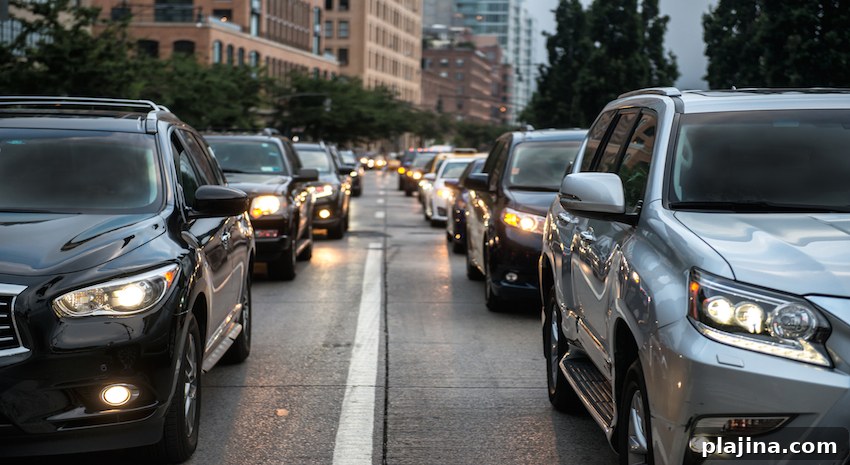
Ride-hailing services such as Uber and Lyft have reshaped how people get around cities, but they are not reducing traffic congestion. A new study indicates these services may actually be contributing to increased congestion in major metropolitan areas.
The University of California report, “Disruptive Transportation: The Adoption, Utilization, and Impacts of Ride-Hailing in the United States,” examines how ride-hailing affects travel behavior across several large U.S. cities. The authors found evidence that these services are replacing trips that once used public transit, bicycles, or walking—modes that do not add as many vehicle miles to the road.
“We found that a large portion of travelers are substituting ride-hailing in place of public transit, biking, and walking trips,” study co-author Regina Clewlow wrote in Planetizen. “These trips, which are being substituted for or generated by ride-hailing, are most likely adding vehicles to the road in major metropolitan areas.”
Using data from multiple cities, the study reports roughly a 6 percent decline in transit use in the larger U.S. metropolitan areas analyzed. That decline suggests some riders who previously relied on buses, trains, or non-motorized travel are choosing ride-hailing instead, increasing the total number of vehicle miles traveled.
Clewlow emphasized that the vehicle owner is less relevant than the total miles driven. “It doesn’t matter who owns the vehicle,” she told Wired. “It matters how many miles are driven on the road. So me swapping out a trip that I would have driven myself for a trip that I’m riding in is still the same number of miles.”
The report highlights several mechanisms by which ride-hailing can increase congestion: substitution of low-impact modes (transit, walking, biking) with single-occupancy vehicle trips; added empty miles as drivers reposition between fares; and the generation of new trips that would not have occurred without convenient, on-demand options. Together, these effects can raise the number of vehicles on city streets during peak periods.
While ride-hailing can offer benefits such as reduced need for private car ownership, greater access to on-demand travel, and potential efficiency gains when shared rides are used, the study suggests these gains may be offset if a large share of trips replace transit or active travel. Policymakers and city planners aiming to reduce congestion may need to consider regulations, incentives for pooled rides, or improved integration with public transit to mitigate these impacts.
This research provides one of the most comprehensive looks to date at how ride-hailing services influence travel choices and urban traffic patterns. By quantifying shifts away from transit and toward paid ride services, the study contributes important evidence for cities debating how best to manage the growth of app-based transportation while meeting broader goals for mobility, equity, and environmental sustainability.