
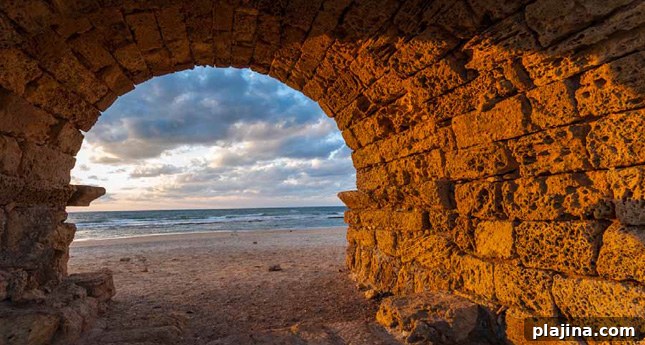
I wasn’t sure what to expect on my business trip to Tel Aviv, but the city exceeded every expectation. From the moment I arrived I felt the energy and buzz of a modern, passionate metropolis. Tel Aviv is Israel’s commercial heart, known for a vibrant cultural scene and a lively beachfront along the Mediterranean. Though founded relatively recently in 1909, it sits beside the ancient port city of Jaffa, where layers of history are evident around every corner.
After my meetings wrapped up, I had time to explore. Visiting Israel without seeing Jerusalem, Masada and the Dead Sea would have felt like a missed opportunity, so I planned those stops carefully.
Fresh bread just outside Jerusalem’s walled city © Ellen Clark
Although many of the sites are reachable as day trips from Tel Aviv, we chose to spend several nights in Jerusalem. As Israel’s largest city, Jerusalem is filled with history and meaning, and I wanted time to absorb it. Early the next morning we set out for one of the world’s holiest cities.
Before entering the old city, we stopped at the Mount of Olives for a panoramic view. The Mount figures prominently in Christian tradition and is said to be the site of Jesus’ ascension. One of the world’s oldest cemeteries is located here, with an estimated 150,000 burials spanning thousands of years. Beyond the history, the ridge offers uninterrupted views across Jerusalem, making it an ideal vantage point.
Daniel Kafri’s Gate of Faith sculpture at the Peak Park in Jaffa © Ellen Clark
Walking from our hotel toward the Old City, we passed through the pedestrian-only Mamilla Mall, a modern stretch of shops and outdoor cafes that stands in stark contrast to the ancient lanes beyond Jaffa Gate. Inside the Old City’s souk, the atmosphere is intoxicating: merchants calling out invitations to “just have a look,” aromas of spices and cooking, and a swirl of people from diverse backgrounds. Stalls sell everything from religious icons and brass menorahs to belly dancing costumes and everyday souvenirs. Haggling is part of the experience; nearly every price is negotiable.
The Old City is divided into four quarters—Armenian, Christian, Jewish and Muslim—each with its own character. The Western Wall, often called the Wailing Wall, sits in the Jewish Quarter and serves as a central place of prayer and pilgrimage for Jews. The main prayer section is traditionally for men, while a smaller section is reserved for women. I spent time navigating narrow alleys to find an overlook above the wall. Eventually I reached a viewpoint that looked down on the plaza, where mostly men in traditional dress moved in an endless stream of prayer and contemplation.
The Wailing Wall © Sean Pavone | Dreamstime.com
Food lovers should not miss Machane Yehuda Market, the city’s historic market that has evolved into one of Jerusalem’s premier dining destinations. Chefs now lead culinary tours through the market, combining shopping with tasting. We joined Chef Tali Friedman on a market tour; she introduced us to unusual spices, regional produce and local cheeses while selecting ingredients. Afterwards we returned to her apartment above the market, donned aprons and helped prepare a delicious dinner together—an immersive and joyful experience.
Two other unforgettable stops were Masada and the Dead Sea.
Perched atop a steep plateau, Masada—whose name means “fortress”—is most often reached by cable car. The ruins are unusually well preserved, in part because of the dry climate, and they offer sweeping views of the Dead Sea. The site is known for a tragic episode from 70 CE, when Jewish rebels who had held out against Roman forces for years chose mass suicide rather than capture. Walking among the ruins, the history felt palpable and somber.
Dead Sea float © Michelleliaw | Dreamstime.com
At the Masada visitor center I bought a small package of Dead Sea mud, an easy memento to take home. At a public Dead Sea beach, I used the changing facilities, applied the mineral-rich black mud all over and waded into the famously buoyant water. The experience is odd and wonderful—you truly cannot sink—but it’s not a place for swimming. After floating and taking it all in for a while, the novelty eventually gave way to relaxation.
Back in Jerusalem, a memorable dinner can be had at The Eucalyptus, where chef Moshe Basson draws inspiration from biblical cuisine. His research into ancient recipes and use of ingredients native to the region—local herbs and spices grown as they were in antiquity—make for a dining experience closely tied to the land and history. Located a short walk from the Old City walls, the restaurant is an apt setting for a meal that celebrates the region’s culinary roots.
Israel Info to Go
Ben Gurion Airport is Israel’s main international gateway, centrally located about 25 miles from Jerusalem and roughly 10 miles from Tel Aviv. The airport has two main terminals handling domestic and international flights. Israel Railways operates from the lower level of Terminal 3, connecting to Tel Aviv’s Savidor Central Station in about 18 minutes. The airport is also served by intercity buses, limousine and private shuttle services, Sherut shared taxis and standard taxis, offering a range of options for onward travel.
Where to Stay in Israel
Brown Beach House Hotel A boutique option a short walk from the beach, with a retro-chic design, a kosher restaurant, sundeck views, a spa and attentive service. 64 Ha’Yarkon St., Tel Aviv $$$$
King David Hotel Opened in 1931, the King David has welcomed world leaders and celebrities. It combines classic elegance, excellent service and views toward the Old City. 23 King David St., Jerusalem $$$$$
The Norman Tel Aviv Set in restored 1920s buildings, this intimate hotel offers refined design, a rooftop infinity pool and two fine restaurants. 23-25 Nachmani St., Tel Aviv $$$$$
Restaurants in Israel
The Eucalyptus Chef Moshe Basson creates a modern take on dishes rooted in biblical tradition, using local spices and herbs. 14 Hativat Yerushalayim St., Jerusalem $$$–$$$$
HaHalutzim 3 Chef Eytan Vanunu crafts handmade dishes in a relaxed, intimate setting, showcasing innovative Israeli cuisine. 3 Hahalutzim St., Tel Aviv $$$–$$$$
Machneyuda Restaurant Located inside Machane Yehuda Market, the chefs shop for fresh market ingredients and prepare lively, seasonal menus in an interactive open kitchen. 10 Beit Yaakov St., Jerusalem $$$$