
In front of an audience of 30,000 residents and officials, His Majesty King Jigme Khesar Namgyel Wangchuck unveiled a vision for a new economic hub in Bhutan. Nestled between India to the south and China to the north, Bhutan is known for its striking landscapes and rich cultural heritage. The country opened to international visitors in 1974 and has seen steady tourism growth since then, bringing new challenges and opportunities for its cities, including Thimphu, the capital.
As part of a broader development initiative, plans for an Economic Zone in the southern city of Gelephu have been introduced. A 386-square-mile Mindfulness City masterplan, proposed by BIG in collaboration with Arup and Cistri, aims to create a model for sustainable, culturally grounded urban growth. All design and construction will reflect Bhutanese values and the principles of Gross National Happiness (GNH), as well as the nation’s spiritual traditions.
© Brick Visual
The Gelephu Special Administrative Region, positioned on the India-Bhutan border, is intended to leverage its strategic location and connectivity to South and Southeast Asia to support Bhutan’s future growth. The plan emphasizes investments in green technology, education, and infrastructure to foster economic opportunities for citizens while preserving the country’s natural advantages. Bhutan remains one of the world’s rare carbon-negative nations, with roughly 70 percent of its land covered by forests that absorb more carbon dioxide than the country emits.
BIG’s Landscape and Urban Design Team has proposed a comprehensive masterplan that includes a new international airport, potential railway links, a hydroelectric dam, abundant public spaces, and a local building standard guided by the nine domains of GNH: psychological well-being, health, education, living standards, time use, ecological diversity and resilience, good governance, cultural diversity, and community vitality.
© Brick Visual
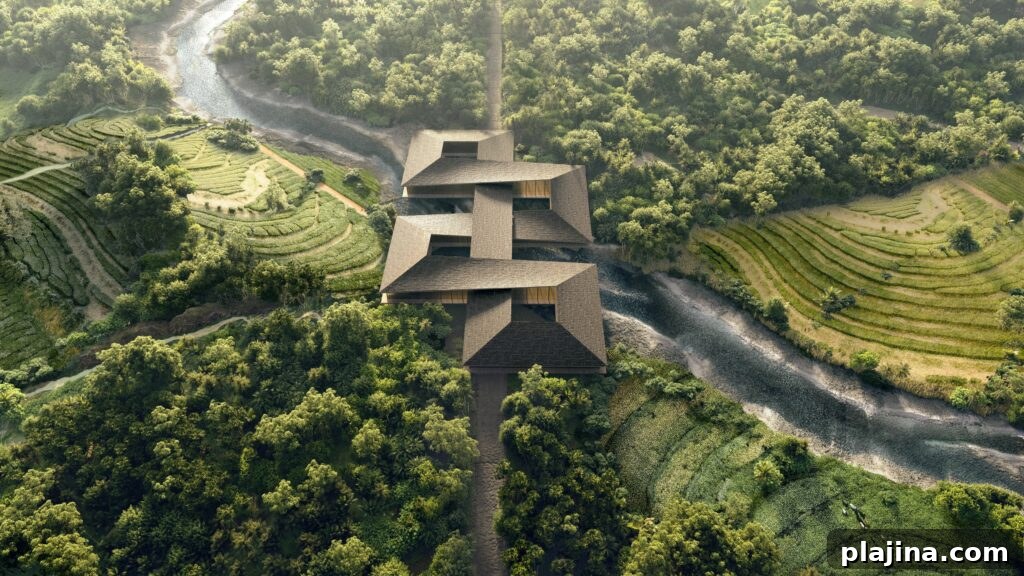
The Mindfulness City concept seeks to expand and interconnect local ecosystems, arranging neighborhoods around the natural flow of 35 rivers and streams that traverse the site. This approach will shape urban terraces that cascade from highland recreational and agricultural areas down to denser urban zones in the valley, mirroring the layered character of traditional paddy landscapes.
Existing infrastructure, agricultural plots and utilities will help form 11 distinct neighborhoods across the region. Each neighborhood will be organized following mandala principles, symmetrically arranged around central public spaces. Density will transition gently from dispersed, smaller-scale buildings in the northern highlands to larger urban footprints toward the southern lowlands.
© Atchain
To mitigate monsoon flooding, paddy fields will be integrated along rivers and tributaries running north to south, enhancing water management while serving as biodiversity corridors. These green buffers are designed to maintain natural migration routes for elephants and other wildlife and to protect both existing and future development.
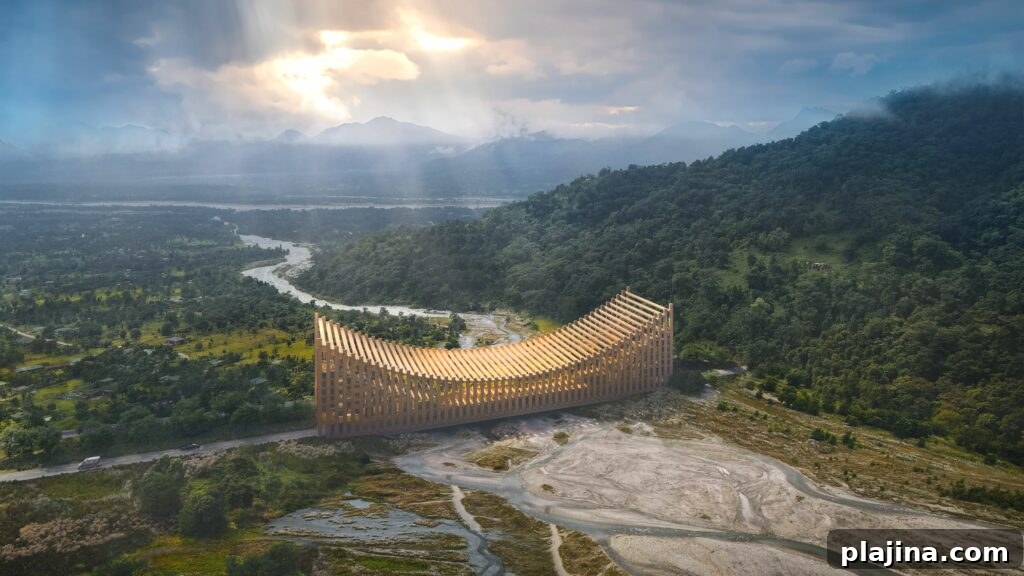
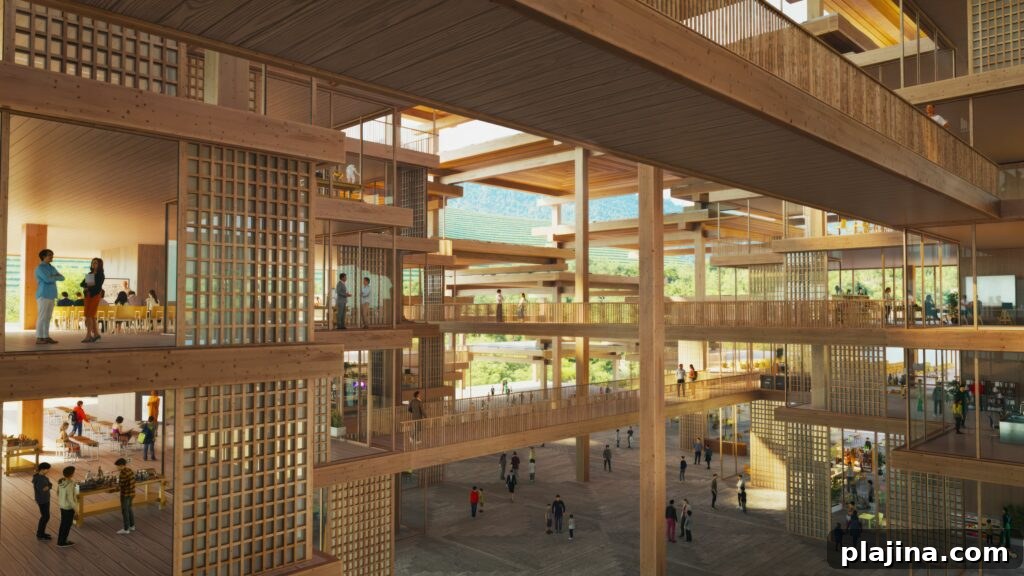
Rivers dividing neighborhoods will be connected by three primary mobility corridors. Some of these links will double as civic and cultural infrastructure, creating inhabitable bridges that host public programs and services aligned with the nine GNH domains.
© Brick Visual
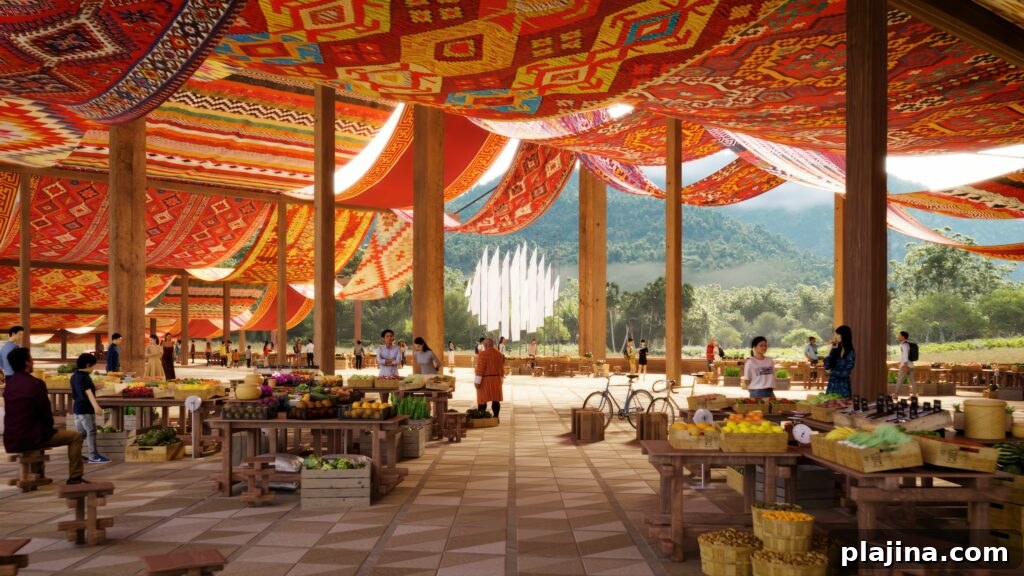
Each major bridge will host significant city destinations: an airport terminal, a Vajrayana spiritual center that invites the public to observe monastic mindfulness practices, a healthcare facility integrating Eastern and Western approaches, a university, hydroponic and aquaponic greenhouses showcasing a blend of traditional farming and modern agri-science, a cultural center dedicated to Bhutanese traditions, and marketplaces featuring local textiles and crafts.
On the western edge of the site, a hydroelectric dam will serve dual roles as infrastructure and public realm. Its retaining wall will provide viewpoints and stairways for contemplative walks, while a temple and visitor center will be embedded within an engineered cliff face. The Sankosh Temple-Dam concept symbolizes the synthesis of culture and nature, forming a distinctive landmark that reflects Gelephu’s heritage and its aspirations for a sustainable future.
© Brick Visual
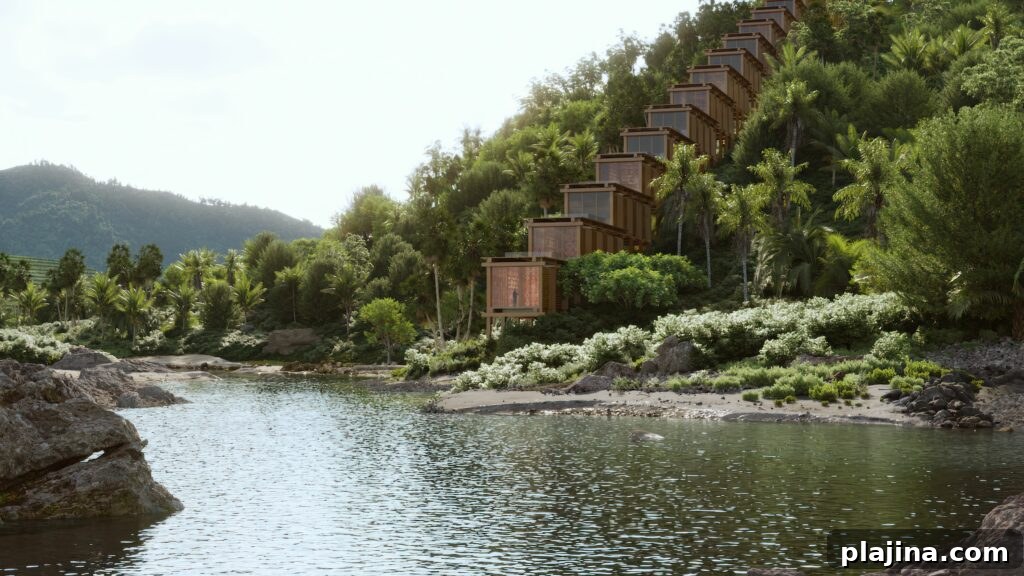
Streets throughout the city will use permeable paving to promote stormwater infiltration rather than overloading drainage systems. Local materials—wood, stone and bamboo—will be prioritized in construction, and architectural motifs will draw on Bhutanese traditions such as rabsel, with timber frames, multiple windows and panels, wooden lintels, cornices and spiritual murals that maintain cultural identity.
Bhutan’s air connections are served by two national carriers, Drukair and Bhutan Airlines. Paro International Airport currently receives direct flights from destinations including Dhaka, several cities in India, Kathmandu, Singapore and Bangkok. As with all travel to Bhutan, visitors are required to obtain a visa prior to arrival.