
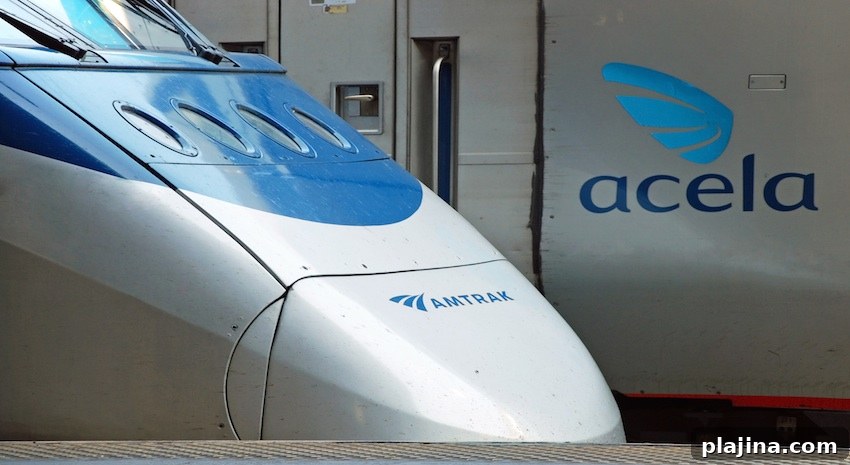
Amtrak announced plans to introduce 28 next-generation high-speed trains in 2021 to replace the current Acela Express fleet. This initiative is part of a $2.45 billion program to modernize service throughout the Northeast Corridor. The new trainsets will offer about one-third more seats, onboard Wi-Fi, personal power outlets and USB ports, adjustable reading lights at every seat, and improved dining options.
“Amtrak is taking the necessary actions to keep our customers, the Northeast region and the American economy moving forward. These trainsets and the modernization and improvement of infrastructure will provide our customers with the mobility and experience of the future,” said Joe Boardman, CEO and president of Amtrak.
With the new equipment, Amtrak plans to increase peak service frequency to roughly every 30 minutes between New York and Washington, D.C., and expand available service between New York and Boston. Infrastructure improvements tied to the program will enable higher speeds—up to 186 mph in sections where track and signaling allow—and the company says the new designs incorporate advanced safety features.
“As more people rely on Amtrak, we need modernized equipment and infrastructure to keep the region moving. These trainsets will build on the popularity and demand of the current Acela Express and move this company into the future as a leader in providing world-class transportation,” said Anthony Coscia, chairman of the Amtrak board.
Planned Northeast Corridor upgrades also cover station improvements, including work at Washington Union Station and New York’s Moynihan Train Hall, along with enhancements to fleet maintenance facilities to support the new trainsets.
The first prototype trainset was scheduled to arrive in 2019, and Amtrak planned to retire the existing fleet serving the Boston–New York–Washington corridor by the end of 2023. These changes are intended to increase capacity, improve passenger comfort and reliability, and better position rail as a competitive, sustainable travel option in the region.