
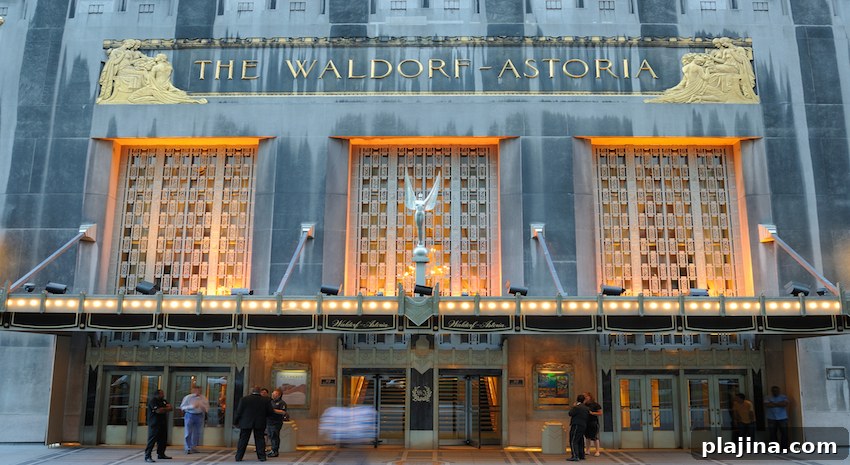
The iconic Waldorf Astoria New York, a landmark on Park Avenue since 1931, closed its doors on February 28 to begin an extensive renovation expected to last about two years. Long regarded as one of the city’s most distinguished hotels and once touted as the tallest hotel in the world, the Midtown Manhattan property will undergo significant updates to modernize the building while respecting its historic character.
Acquired three years ago by the Chinese insurance firm Anbang, the Waldorf Astoria’s renovation was part of the purchaser’s long-term vision for the property. The scope of work focuses primarily on reconfiguring guestroom space, particularly within the hotel’s two prominent towers, to create condominiums. These residential units are planned for sale once the renovation is complete. This shift responds to market demand for luxury residences in prime Manhattan locations while aiming to preserve the building’s grandeur.
Despite the conversion of many guestrooms to condos, project leaders have emphasized that key public spaces and defining historic features will be preserved. The famous lobby, which contains much of the hotel’s signature design and cultural memory, is slated to remain intact along with selected interior elements and architectural details. These conservation efforts seek to maintain the Waldorf Astoria’s distinct identity even as parts of the property are adapted for new uses.
The Waldorf Astoria’s role in New York’s social and cultural history is significant. Over the decades the hotel has hosted presidents, world leaders, and leading figures from entertainment and business. Its guest list has included a string of high-profile names, and the property has often been associated with the glamour of classic New York hospitality. Retaining the hotel’s historic public spaces helps preserve that legacy while allowing for updated functions behind the scenes.
Renovation projects of this scale typically include structural upgrades, updated mechanical and safety systems, and careful restoration of historic finishes. In the Waldorf Astoria’s case, those interventions will aim to balance modern standards of comfort and building code compliance with preservation of design elements that contribute to the hotel’s landmark status. Converting hotel rooms to residential condos also involves reworking circulation, services, and amenities to meet the expectations of full-time residents.
When complete, the reimagined Waldorf Astoria will offer a mix of restored public spaces that celebrate the building’s past and newly created residential units that reflect contemporary luxury standards. Maintaining the lobby and other signature interiors ensures that visitors and residents alike can continue to experience the hotel’s historic atmosphere. At the same time, new condominiums will introduce a residential dimension to this storied Midtown address.
As the project proceeds, the balance between preservation and modernization will determine how successfully the Waldorf Astoria retains its iconic status while adapting to changing real estate dynamics. For now, the temporary closure marks the start of a major transformation that aims to secure the building’s future and keep its most recognizable features for generations to come.