
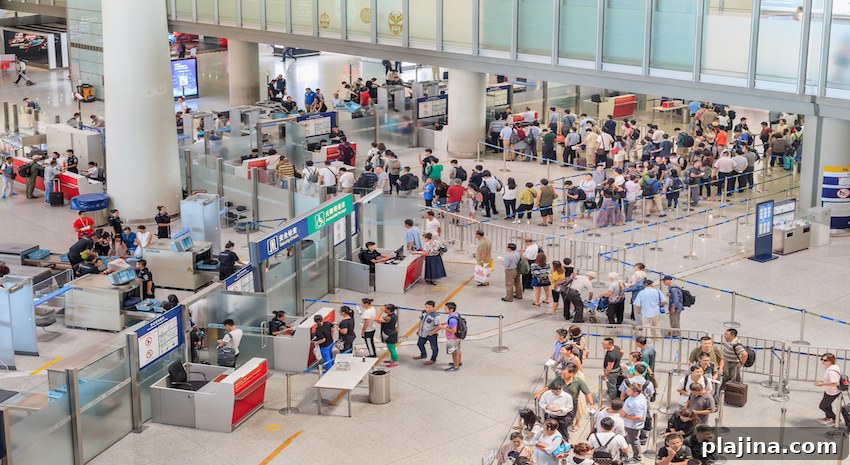
Global passenger traffic at the world’s largest airports increased by 5.5 percent year over year in 2016, while roughly one in four of the smallest airports — defined as those handling fewer than one million passengers annually — recorded declines.
These findings are drawn from a new report published by Airports Council International (ACI).
“When airlines shift capacity, smaller regional airports can suffer, with some experiencing stagnation or a reduction in nonstop routes between cities,” said Angela Gittens, director general of ACI World. “Despite these challenges, smaller airports remain important because they support local social and economic development. Developing strategies to sustain them is essential to maintaining a strong, resilient aviation system.”
The report highlights that Hartsfield–Jackson Atlanta International Airport remained the busiest domestic airport in the world in 2016, handling 92.7 million passengers, a 2.7 percent increase over the previous year. It was followed by Beijing Capital International Airport (PEK) and Chicago O’Hare International Airport (ORD). Among international hubs, Dubai International (DXB), London Heathrow (LHR) and Hong Kong International (HKG) ranked as the busiest.
Overall, global airport passenger traffic rose 6.5 percent in 2016, reaching nearly 7.7 billion passengers. Every region reported growth except Africa, which did not see an increase that year.