
Step out of a downtown Dakar hotel and start counting: 1, 2, 3… How long before someone approaches you offering SIM cards, counterfeit watches or sunglasses? By the time you reach 4, 5, 6, a vendor is likely to call out, “Bonjour, monsieur. Une Rolex?”
In a dozen attempts, I rarely make it to 10. Traders swarm quickly, pitching goods in French, then Italian, Spanish and English. The persistent selling can be irritating and sometimes feels threatening, but it also offers an immediate, close-up view of Senegal’s bustling informal economy.
The informal sector contributes roughly 60 percent of the country’s gross domestic product. In Dakar, around 75 percent of workers earn a living in unofficial employment. Streets are lined with makeshift stalls selling everything from clothing and shoes to electrical goods and hard-to-find car parts. Sidewalks and hotel gates are constant scenes of hawkers pressing their wares, while vendors at intersections dart between cars to reach passing drivers.
At first glance the city can seem to teeter on the edge of chaos, yet beneath the surface there is order. Dakar functions, and the government increasingly seeks to bring the informal economy into the formal system. Institutions such as the Banque Régionale de Solidarité have been created to serve small entrepreneurs and informal businesses, helping to bridge the gap between unofficial trade and mainstream finance.
Despite much economic activity occurring outside the tax base, Dakar is undergoing visible transformation through major infrastructure projects. A new airport southeast of the city, a connecting highway, waterfront hotels along the Corniche, a substantial port expansion and plans for a railway to Saint-Louis are reshaping the urban landscape. Many of these developments have been financed with funds from the Middle East, reflecting growing international investment in Senegal’s future.
Senegal is predominantly Muslim, a fact marked by the daily calls to prayer that echo across neighborhoods. Yet when it comes to style and social life, the influence of French culture remains strong. Dakar has become one of West Africa’s most fashion-conscious cities. Residents often dress with care for everyday errands: women wear colorful African robes or the newest Western styles, and street style is an important part of daily life.
Nightlife in Dakar is lively and celebrated, particularly on Saturday nights. Clubs and music venues pulse with mbalax, a vibrant musical fusion that blends West African rhythms with Cuban influences. Live performances keep the city moving well into the early hours, and the music scene is integral to Dakar’s cultural identity.
When the city’s constant activity becomes overwhelming, the surrounding geography provides a fast escape. Dakar occupies the Cap Vert peninsula and is fringed by four tranquil islands. The most visited is the historic Île de Gorée, a short 25-minute ferry ride from the mainland.
Gorée offers a striking contrast to frenetic Dakar: no traffic, quiet lanes and shaded alleys winding between 18th- and 19th-century buildings. Bougainvillea spills over ancient ochre walls, and the pace is contemplative. Yet the island’s beauty carries a somber history. In the late 1700s Gorée was a center of the transatlantic slave trade. The House of Slaves, built by the Dutch, preserves the cramped cells and the so-called “door of no return,” which opens toward the Atlantic where slave ships once waited.
Back on the mainland, the coastline’s strategic appeal becomes clear as you travel to Pointe des Almadies. Here, boys play soccer in a beachside parking lot while nearby restaurants prepare for sunset diners. Standing at the water’s edge, you can literally claim the feeling of being the westernmost person on the African continent. The headland projects westward across the Atlantic, a reminder of Dakar’s geographic importance and its invitations to international visitors.
Diversions
The Cap Vert peninsula’s most notable natural features are the twin rounded volcanic hills called Les Mamelles. A controversial 150-foot “African Renaissance” monument is rising on one summit; on the other stands Les Mamelles Lighthouse, built in 1864, which offers sweeping views of the peninsula on clear days.
Pointe des Almadies is a worthwhile stop: the westernmost point of continental Africa, with pleasant beaches and several popular restaurants. The best beach in Dakar is often said to be on Île N’Gor, an upscale island reached by a short boat ride from Plage N’Gor. For wildlife and seclusion, Îles de la Madeleine — an uninhabited island and two islets protected as a national park — are prime for birdwatching, especially for sightings of the red-billed tropicbird. Île de Gorée remains the most famous island and makes for a meaningful day trip; keep in mind some museums close on Mondays.
In downtown Dakar, shopping is a major activity. Colorful markets offer textiles, crafts and everyday goods, though visitors should be cautious of pickpockets. The Village Artisanal is an excellent place to purchase souvenirs such as wooden carvings, local fabrics and paintings; avoid carved elephant tusks, which are illegal. For distinctive studio work, the Sand Painting Factory showcases artists creating pictures from colored sands gathered across Senegal, with pieces available at modest prices.
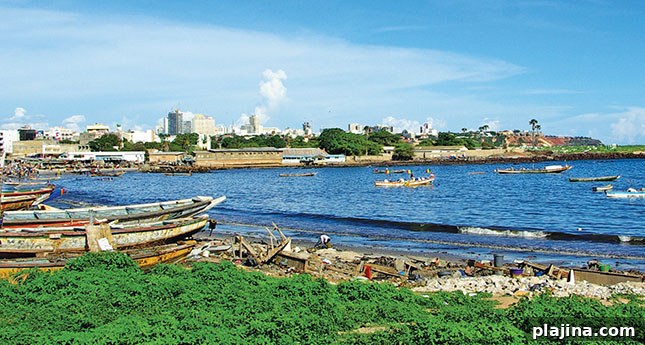
Soumbédioune Bay is a lively sight in late afternoon as fishing boats return and are hauled ashore. The bustle of activity is compelling and well worth spending time watching the rhythms of the fishing community.
Info To Go
All international flights currently arrive at Léopold Sédar Senghor International Airport (DKR), located about 10 miles northwest of the city center. A taxi into town typically costs around $15. A new airport farther from the city has been planned and scheduled to open in recent years, reflecting growing passenger traffic and modernization efforts.
Lodging
Until newer hotels open, which were under construction in recent years, accommodation in Dakar can be expensive because of limited room availability. Prices often reflect international standards rather than local ones.
Hotel Savana Dakar
A business-friendly hotel and seaside resort offering a relaxed atmosphere and a good restaurant for unwinding after a day of exploring. Rte de la Corniche-Est, tel 221 849 4242.
Le Meridién President
One of Dakar’s premier luxury properties, located near Pointe des Almadies with amenities including a nine-hole golf course, tennis facilities and extensive gardens. Tel 221 33 869 6924.
Pullman Dakar Teranga
A top all-around choice, this hotel features spacious rooms, some with ocean views, and a waterfront pool, conveniently located near central Dakar. 10 Rue Colbert, tel 221 33 889 2200.
Dining
Hostellerie du Chevalier de Boufflers
A long-established harborside restaurant on Île de Gorée known for fresh seafood prepared in traditional styles. Île de Gorée, tel 221 33 822 5364.
Just 4 You
One of Dakar’s renowned music venues serves excellent seafood and nightly performances by local stars and visiting musicians. Located on Avenue Cheikh Anta Diop, it’s a cultural hotspot well worth a visit.
Le Cozy
Chef Michael Boussol brings refinement to Dakar’s dining scene with a French-influenced menu that integrates ingredients and techniques from Asia, Europe and Africa. 8 Rue Ramez Bourgi, tel 221 33 823 0606.