
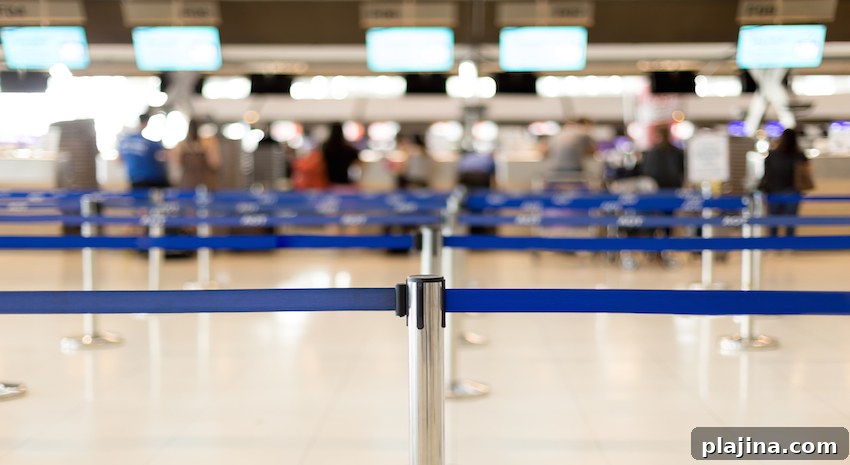
In a bold announcement that will please frequent flyers, the new head of the Transportation Security Administration outlined a vision to eliminate traditional security lines at airports.
TSA Administrator David Pekoske told the Airports Council International – North America conference that the “airport security area of the future” would not rely on long queues at checkpoints.
“In my ideal world, we don’t have hundreds of people queued up to go through security,” Pekoske said. “That in itself is a security vulnerability.”
He explained that long lines create predictable crowding that can expose travelers to risk, and said the TSA intends to collaborate with airports and airlines to design more secure, efficient screening that avoids concentration of passengers in single choke points.
“If we get some infrastructure investment dollars to be able to change the layout at some airports or even build new terminals, can we get an airport security system that’s not a checkpoint, per se, but has security in a continuum?” Pekoske asked, suggesting a distributed approach to screening integrated into terminal design rather than a single, centralized queue.
Pekoske acknowledged that building and testing a new model will take time. “It’s going to take several months to get anywhere close to getting a mock-up in place, but you will definitely see us reach out and say, ‘Hey, here’s what we’re thinking,’” he said, indicating plans for pilots and stakeholder engagement.
He pointed to existing trusted-traveler programs, such as TSA PreCheck and Global Entry, as examples of how screening can be sped up while maintaining security. These programs demonstrate the value of risk-based screening that separates low-risk travelers from general passenger flows.
Technology will also play a central role in the proposed changes. Pekoske promised to back innovations—like computed tomography (CT) scanners—that can speed up baggage and passenger screening while improving threat detection.
“The need to refresh the technology at the checkpoints is critical,” he said. “I will use whatever influence I have as administrator to push that.”
Overall, Pekoske’s comments outline a shift toward a more seamless, distributed security model that combines infrastructure changes, advanced screening technology, and risk-based programs to reduce queues and enhance safety. While the timeline remains uncertain, the TSA plans to work with industry partners to test concepts and gradually introduce improvements that could change how travelers experience airport security.