
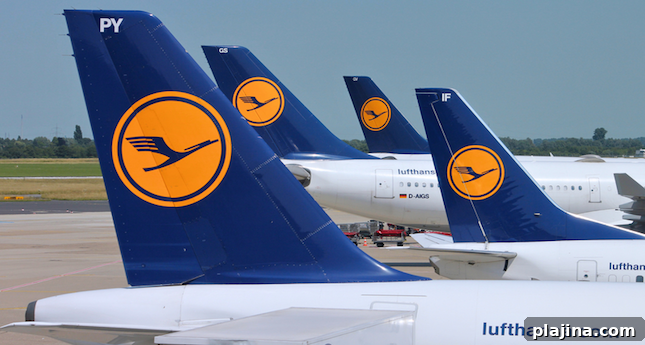
Beginning next summer, Lufthansa will become the first major network carrier in Europe to offer high-speed broadband on its short- and medium-haul routes. This move marks a significant shift in onboard connectivity for European domestic and regional travel, bringing passengers an onboard internet experience more commonly found on long-haul flights.
The new service, developed in partnership with Inmarsat, uses the latest Ka-band satellite technology from Inmarsat’s Global Xpress network. Global Xpress delivers ubiquitous, high-capacity coverage and low-latency connections suited to the demands of modern passenger usage. Inmarsat recently added a third satellite to the constellation, strengthening throughput and coverage, and Lufthansa will be the first airline customer to deploy this system for short- and medium-haul operations.
By leveraging the Global Xpress platform, the onboard system will support a wide range of online activities. Travelers can check and send emails, browse websites, use cloud-based productivity tools, engage in social media, and access richer web content. The capability also extends to media streaming, enabling passengers to enjoy video and audio streaming services during flight, depending on network load and the airline’s content policies.
Mobile connectivity will be integrated as well. Passengers will be able to send and receive text messages and transfer data using their personal mobile phones under their existing mobile contracts. Rather than requiring special airline-specific plans or devices, users will continue to be billed and managed through their usual mobile providers for roaming and data usage. To respect passenger experience and comfort, voice calls will remain prohibited on board, following customer feedback indicating a preference for a quieter cabin environment.
The technology rollout includes a robust installation and certification program to equip short- and medium-haul aircraft with the required antennas and onboard network hardware. The Ka-band terminals are optimized to work at the altitudes and flight profiles typical of regional aircraft, while onboard Wi-Fi systems will manage user access, prioritize critical communications, and enforce any airline policies such as content filtering or bandwidth caps. Ground systems and service management will monitor usage and performance to ensure a reliable passenger experience.
For airlines, this connectivity solution offers operational benefits in addition to passenger services. Better in-flight connectivity supports real-time aircraft health monitoring, improved crew communications, and faster transfer of operational data. Airlines can also deliver targeted, real-time information to passengers—such as flight updates, gate information, or ancillary offers—directly through the onboard network.
The introduction of high-speed broadband on short- and medium-haul flights is expected to change passenger expectations for European regional travel. As more travelers come to expect continuous connectivity, carriers offering reliable onboard internet will gain a competitive edge for business and leisure passengers who value productivity or entertainment en route. Lufthansa’s early adoption positions it at the forefront of this trend, demonstrating both a commitment to passenger experience and a willingness to invest in emerging aviation technology.
As the service launches next summer, passengers should look for announcements from Lufthansa about specific routes, pricing models, device support, and any initial usage limits. The airline and its technology partner will likely phase the rollout across the short- and medium-haul fleet, gathering operational data and customer feedback to refine service quality over time.