
If you’re traveling between Washington, D.C., and New York City and want to avoid crowded trains or congested highways, consider an often overlooked alternative: the Cape May-Lewes Ferry. Operating year-round across Delaware Bay, this direct 17-mile route connects Lewes, Delaware, with Cape May, New Jersey. The crossing takes about 85 minutes, offering a predictable, traffic-free link between the region’s major population centers without the hassle of long rail rides or slow highway travel.
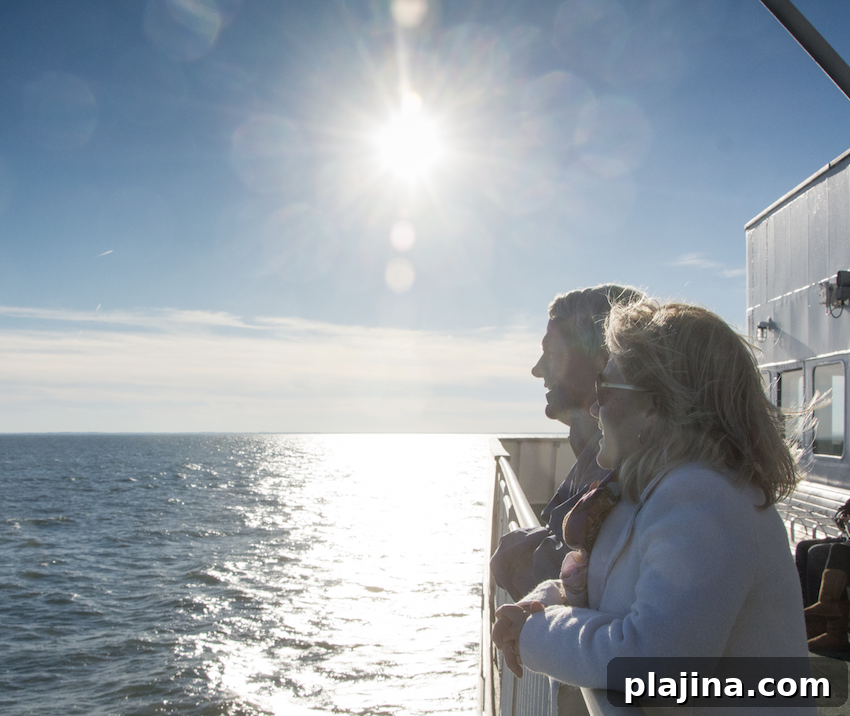
One of the ferry’s main advantages is freedom of movement. Unlike bus or train travel where you may be confined to a single seat, the ferry lets you move between seating areas, visit an onboard gift shop, or stretch your legs on open decks while you enjoy fresh air and unobstructed water views. This relaxed, scenic transit experience can turn a simple point-to-point journey into a pleasant part of your trip.
The ferry service also has deep roots in the region’s transportation history. Maps from the late 19th century show a ferry landing near Cape May Point that originally served horse-drawn carriages and later connected with a steam-powered rail trolley. The modern Cape May-Lewes Ferry service began on July 1, 1964, and since its inception it has transported millions of travelers and vehicles across the bay. Over the decades, the route has become a dependable option for vacationers, commuters, and drivers seeking an efficient coastal crossing.
Vessels used on the route are modern and designed for passenger comfort. They typically accommodate up to about 100 vehicles and roughly 1,000 passengers, depending on the ship and configuration. Onboard amenities often include climate-controlled lounges, elevators for accessibility, televisions, and WiFi for staying connected during the passage. Passenger terminals at both Lewes and Cape May are well-maintained and passenger-friendly, providing a smooth transition between ferry and local transportation.
At each terminal, local transportation options help complete your journey. Seasonal shuttle services, taxis, and connections to municipal transit systems make it easy to continue to nearby destinations after disembarking. Whether you’re heading into Cape May’s historic districts, exploring Delaware’s beaches, or traveling onward to Philadelphia, Baltimore, or Washington, the ferry serves as a useful leg in a broader travel plan.
Using the ferry can also simplify multi-car or family travel. Driving onto the vessel allows groups to bring more luggage, beach gear, or bicycles without the constraints of rail baggage limits. Vehicles are securely parked during the crossing, and passengers are free to use public spaces and amenities on board. The result is a flexible travel option that combines the convenience of a road trip with the comfort and leisure of a short cruise.
Beyond convenience and comfort, the sail itself delivers a memorable experience. Traversing Delaware Bay offers views of coastal marshes, shipping channels, lighthouses, and seabirds, especially during sunrise or sunset runs. For many travelers, the crossing is an enjoyable break from the monotony of long drives, providing a scenic pause in the middle of a longer itinerary.
For practical planning, ferries operate year-round with schedules that vary seasonally, and reservations are recommended during peak travel times. Terminals provide clear signage and staff assistance to help with loading procedures and vehicle staging. If you prefer flexibility, walk-on passenger service is also available, making the ferry accessible whether you arrive by car, bike, or public transit.
In short, the Cape May-Lewes Ferry offers a direct, comfortable, and scenic alternative for regional travel along the Mid-Atlantic coast. With modern vessels, useful onboard amenities, convenient terminal services, and a rich local history, it remains an attractive option for travelers looking to avoid road congestion and lengthy rail connections while enjoying a pleasant 85-minute crossing.