
No city likes to be second, yet history, geography and chance have left many nations with a clear runner-up city. In Japan that role often falls to Osaka, a vibrant metropolis that lives in the shadow of Tokyo but asserts its own distinct character and strengths.
Osaka’s standing has changed through the centuries. For a long time Kyoto served as Japan’s political capital while Osaka was the commercial heart. From the 18th century the balance of influence shifted toward Edo (now Tokyo), and in 1868 Tokyo became the nation’s official capital. Since then, a friendly but persistent rivalry between Osaka and Tokyo has continued.
The two cities differ not only in size but in temperament. Osakans are known for being outgoing, warm and gregarious; Tokyoites are often seen as more reserved and formal. The local dialect in Osaka sounds distinctive and lively compared with Tokyo’s standard Japanese, and cultural contrasts feed a range of playful stereotypes. Osakans are famed for their devotion to food, summed up in the local saying kuidaore—“eat until you drop.”
Downtown Osaka is traditionally split into two main districts: Kita (north) and Minami (south). Kita, anchored by the Umeda area, is the city’s business and administrative core. Minami is the center for dining, shopping and nightlife, known for bustling streets and neon-lit avenues.
At the center of Kita is Osaka Railway Station, one of the busiest rail hubs in the world. Since 2009 the station area has been extensively redeveloped. New commercial towers rise above the platforms, and former rail yards to the north were transformed into a sleek high-rise quarter called Grand Front Osaka.
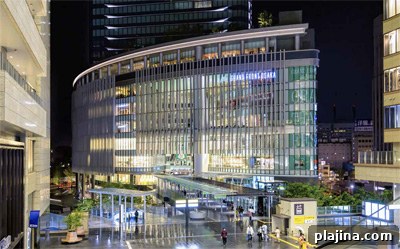
Grand Front Osaka commercial complex, built in a former rail yard © CHECCO | DREAMSTIME.COM
With the initial redevelopment phase complete, plans are underway to convert remaining rail yard spaces adjacent to Grand Front Osaka into public parkland. For now, central Osaka remains intensely urban: dense blocks of buildings intertwined with highways, waterways and rail lines that keep the city in constant motion.
Although Tokyo’s population is more than three times larger, Osaka pulses with distinct energy around the clock. That vitality supports a strong economy: Osaka’s gross domestic product rivals that of some countries, and the wider Kansai region produces output comparable to nations such as Switzerland or Sweden.
Key to this commerce is Hanshin Port, built on reclaimed islands in Osaka Bay. The port was badly damaged by the Great Hanshin Earthquake of 1995, when many quays were destroyed, but it recovered and today is one of Japan’s busiest container hubs. Another landmark infrastructure achievement is Kansai International Airport, constructed on artificial islands in the bay and opened in 1994. The airport’s offshore location allows 24-hour operations, helping it become a major cargo gateway and a vital international link for the region.
To attract more global investment, Osaka has created a single-window agency—the Osaka Business and Investment Center (O-BIC)—designed to simplify market entry. O-BIC offers services including temporary office space, guidance on bureaucracy, PR support and referrals to legal, real estate and recruitment partners. Lower office and housing costs, a diversified industrial base and competitive wages make Osaka an attractive alternative to Tokyo for many businesses.
While Tokyo remains Japan’s primary political and corporate center, Osaka has strengthened its own global profile and continues to develop as a major commercial, cultural and tourism hub.
Things to Do in Osaka
One of the city’s most striking modern landmarks is the Umeda Sky Building. Its twin towers are joined at the top by the Floating Garden Observatory, which offers a sweeping 360-degree panorama of Osaka. The building’s unusual design can create gusty winds on the upper levels, so hold onto your hat while enjoying the view.
For other high vantage points, visit Tsutenkaku Tower, a long-standing symbol of Osaka. The current tower dates from 1956 and includes an observation deck that provides city views and a quirky nightly light sequence that hints at the following day’s weather. Another popular aerial perspective comes from the 350-foot Ferris wheel atop the HEP Five shopping mall, offering dramatic vistas of the urban landscape, especially after dark.
A nighttime cruise along the Dotonbori Canal is a signature Osaka experience. Neon billboards and shop signs reflect in the water, creating a vivid, animated scene. The Glico running man billboard, in place since 1935, is one of the area’s most recognizable icons. Typical sightseeing cruises last around 90 minutes.
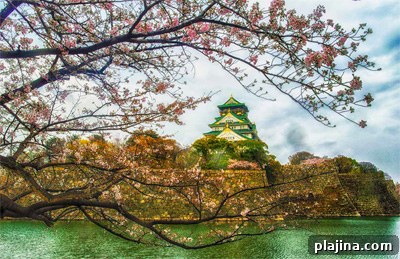
Osaka Castle © ATOSAN | DREAMSTIME.COM
The historic heart of Osaka lies east of the central districts at Osaka Castle, set within broad parkland and protected by impressive stone walls. The castle has been rebuilt several times over the centuries; its current form was restored in the late 20th century and houses a museum. From the top of the Main Tower visitors can enjoy sweeping views of the city, and the grounds are a welcome green retreat amid the urban environment.
To the west, on Osaka Bay, redevelopment has created major attractions such as Universal Studios Japan and the Osaka Aquarium Kaiyukan, both drawing large numbers of visitors and contributing to the city’s strong tourism appeal.
CHECKING IN WITH
STEPHEN A. ZURCHER, dean, Kansai Gaidai University
AKIO “ARTHUR” MATSUMOTO, president, LS7 Corp.
HELEN HWANG, advisor to American Chamber of Commerce Japan Kansai
What opportunities does Osaka offer American investors?
ZURCHER: Osaka has a vibrant entrepreneurial culture and many small- and medium-sized enterprises. Positioned among Kyoto, Nara and Kobe, the region combines cultural depth with commercial opportunity.
Advantages and disadvantages compared with Tokyo?
ZURCHER: Tokyo concentrates much of Japan’s corporate headquarters and government activity, which can be an advantage for access to national networks. However, higher competition and costs make Tokyo more expensive for many businesses. Companies increasingly diversify operations across Tokyo and Osaka to optimize market coverage.
Cultural differences for American investors?
ZURCHER: Japanese business culture differs from the U.S. broadly, but Osaka’s business environment is often perceived as more open and approachable compared with Tokyo, which can make dealings here relatively easier for foreign investors.
Key future developments?
MATSUMOTO: Employment, particularly for young people, is a priority. Tourism growth is a near-term focus—Kansai aims to capture a large share of inbound visitors, which will require expanding accommodation options through new hotels and licensed private lodgings (minpaku).
Recommended attractions?
HWANG: Take a river cruise to Osaka Castle, visit Universal Studios Japan (and the Harry Potter area), enjoy sunset views from the Umeda Sky Building, and explore the shopping around Umeda station.
Osaka Info to Go
Kansai International Airport (KIX) is the main international gateway for Osaka and the Kansai region, located on an artificial island about 24 miles southwest of downtown. Rail connections take roughly 50 minutes to the city. Osaka/Itami Airport (ITM) now focuses on domestic flights and lies about 25 minutes by car from the city center.
Osaka: Just the Facts
Time Zone: GMT +9
Phone Code: Country code: 81 City code: 66
Entry/Exit Requirements: U.S. citizens need a passport valid for the duration of their stay and an onward/return ticket. Visa-free entry is available for stays up to 90 days but does not permit employment or changes of visa status while in Japan. Contact the Japanese Embassy if unsure.
Currency: Yen
Official Language: Japanese. English is not widely spoken by all residents, though English signage is common in transport hubs, shops and restaurants.
Key Industries: Electronics, pharmaceuticals, high-tech manufacturing and finance
Where to Stay in Osaka
Cross Hotel Osaka A well-located, value-conscious option near the lively Dotonbori entertainment district. 2-5-15 Sinsaibashisuji, Chuo-ku $$$
Hilton Osaka Centrally positioned beside Osaka Station with convenient access to shopping and transport, offering panoramic views from upper floors. 1-8-8 Umeda, Kita-ku $$$$
The Ritz-Carlton, Osaka A luxurious choice with spacious rooms and tranquil design, set in a prime Umeda location. 2-5-25 Umeda, Kita-ku $$$$
Restaurants in Osaka
Fukutaro Renowned for Osaka-style okonomiyaki—savory pancakes that are a local staple. The main outlet in Namba is especially popular. 3-17 Sennichimae 2 chome, Chuo-ku $$
Kaiseki Tama A top choice for kaiseki, the refined multi-course dining experience—ideal for special occasions. 1-13-17 Itachibori $$$$
Kani Douraku Dotombori Honten Famous for crab dishes and its giant crab sign above the entrance, this outlet on the Dotonbori Canal is the original branch of a popular chain. Dotonbori Canal $$$