
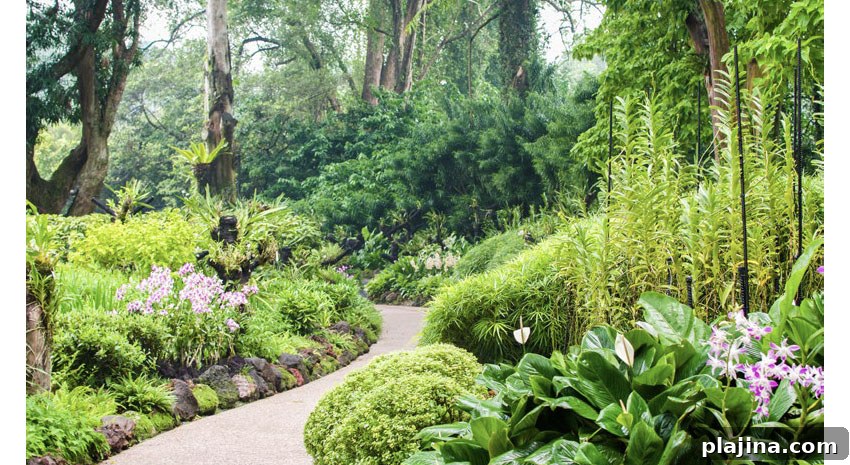
Singapore is committed to protecting the environment, conserving natural resources, reducing energy use and creating abundant green spaces for a high quality of life. Despite a population density of roughly 18,000 people per square mile, the city-state manages to integrate sustainability measures with extensive parks and gardens. This blend of urban efficiency and greenery reflects the ingenuity of the diverse communities that call Singapore home.
Singapore also takes its carbon footprint seriously. The solar installation at Marina Barrage illustrates the country’s commitment to renewable energy. The Solar Park’s 405 panels help supply daytime electricity for the barrage’s gallery and offices, producing roughly the monthly power consumption equivalent of 180 average Singapore households.
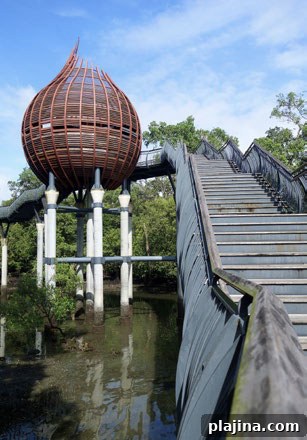
Sungei Buloh Wetland Reserve kingfisher pod © TANG90246 | DREAMSTIME.COM
Veteran wildlife consultant and nature guide Subaraj Rajathurai has long championed the preservation of Singapore’s natural areas. He helped protect sites such as Sungei Buloh, a mangrove reserve in the northwest, and a 300-acre tract of forest at Lower Peirce Reservoir. For more than three decades, Rajathurai has campaigned for blending urban development with the protection of valuable ecosystems.
Green spaces are prominent throughout the island. With four nature reserves and over 1.3 million trees, Singapore has earned the nickname “City in a Garden.” Nearly half the country is estimated to be covered by greenery, a testament to long-term planning and public commitment to nature.
Checking in with Subaraj Rajathurai
Naturalist and wildlife consultant
With comments from Singapore Tourism
What makes Singapore a great destination for business travelers?
RAJATHURAI: You can go from a five-star hotel to a rainforest in about 20 minutes. Singapore serves as a gateway to Asia, and that includes access to remarkable natural areas.
What’s new in development and foreign investment?
RAJATHURAI: A notable project is the Mandai nature precinct, which will bring together a revamped bird park and a new rainforest-themed safari with the existing zoo, Night Safari and River Safari. Pulau Ubin has also been conserved and enhanced to preserve its natural, cultural and historical character for eco-tourism and education.
Why is Singapore committed to green policies?
RAJATHURAI: Beginning with initiatives led by Mr. Lee Kuan Yew, Singapore has understood that urbanization affects daily life. Programs such as large-scale tree planting in the 1970s, the creation of parks and green connectors, and the preservation of key biodiversity areas all aim to balance development with conservation. As a developed nation, Singapore also recognizes a responsibility to protect biodiversity globally.
Why is Singapore thriving?
RAJATHURAI: Singapore thrives because it maintains strong regional and global ties and builds partnerships that support growth and resilience.
SINGAPORE TOURISM: Singapore remains dynamic through constant innovation, turning constraints into opportunities that raise its global profile. The city-state combines safety and world-class infrastructure with a vibrant food scene, diverse cultural offerings and a resilient, forward-looking population.
What’s on the horizon?
RAJATHURAI: Expect new attractions, improved infrastructure and continued success.
SINGAPORE TOURISM: As a leading retail and MICE destination with a rich culinary landscape, Singapore continually evolves. Recent openings such as AJ Hackett Sentosa, Changi Airport’s Terminal 4 and the Ethnobotany Garden at the Botanic Gardens have expanded visitor experiences. New hotels, restaurants, attractions and business innovations are always in development.
Why do people travel to Singapore?
RAJATHURAI: Singapore is compact yet offers safety, stability and excellent infrastructure. It’s an ideal place for both holiday and business travelers who value convenience, strong transport links and access to nature.
Things to Do in Singapore
The National Orchid Garden, the world’s largest tropical orchid display, is a highlight within the Singapore Botanic Gardens. Located near Orchard Road, the Botanic Gardens were designated a UNESCO World Heritage site in 2016—the first in the country.
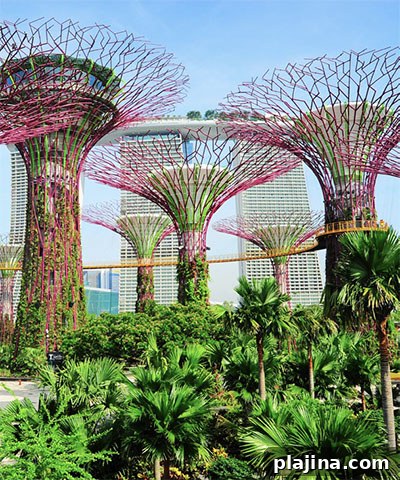
Supertrees at Gardens by the Bay © RICHIE CHAN | DREAMSTIME.COM
Gardens by the Bay was built to transform Singapore from a Garden City into a City in a Garden. The waterfront park enhances quality of life by integrating plants and floral displays into urban living. Highlights include the iconic Supertree Grove with its aerial walkway, the Flower Dome—the world’s largest glass greenhouse—and the Cloud Forest, home to the tallest indoor waterfall in the world.
Changi Airport is notable for its sustainability and green attractions. Terminal 1’s Cactus Garden features more than 100 species of cacti and arid plants; Terminal 2’s Orchid Garden displays over 700 orchids across 30 varieties; and the rooftop Sunflower Garden showcases several sunflower types grown at Changi’s nursery. Terminal 3 houses the world’s first airport Butterfly Garden, which supports more than 1,000 tropical butterflies from dozens of species across the seasons.
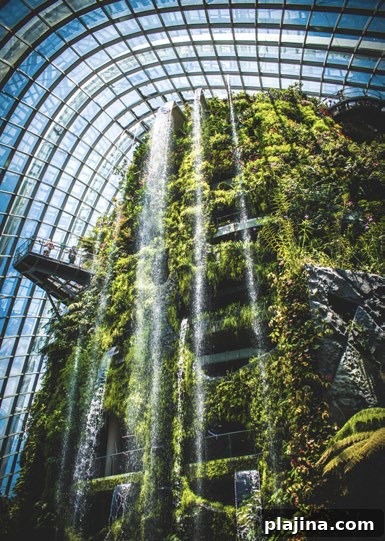
Gardens by the Bay Cloud Forest © ROBW58 | DREAMSTIME.COM
At Marina Bay, Merlion Park features the iconic Merlion statue, a creature with a lion’s head and a fish’s body that spouts water into the bay. The park’s panoramic waterfront views are especially popular at night.
The Singapore Night Safari, opened in 1994 adjacent to the Singapore Zoo, is the world’s first nocturnal safari park. Managed by Wildlife Reserves Singapore, it focuses on conservation, rescue and research. The Night Safari is home to more than 2,500 animals across 130+ species and offers walking trails and tram rides through eight geographic zones.
Singapore Info to Go
Singapore has two commercial airports: Changi Airport (SIN), the main international gateway, and Senai International Airport (JHB) in Johor, Malaysia, about 38 miles away. Changi is roughly 12 miles from central Singapore and is consistently ranked among the world’s best airports. It serves more than 100 airlines flying to hundreds of cities worldwide. The train station is reachable from Changi’s Terminal 2 and Terminal 3; transfer at Tanah Merah station for westbound trains to the city. Taxis depart from arrival levels, and a trip to the city center takes about 30 minutes and typically costs SGD 20–40, with meters and an airport surcharge applied.
Coming and Going
U.S. citizens need a passport valid for at least six months beyond their entry date. A visa is required for stays of 90 days or longer.
Official Language
Malay is the national language; English, Mandarin and Tamil are also widely spoken.
Where to Stay in Singapore
Andaz Singapore — Conveniently located near Marina Bay and adjacent to cultural districts like Kampong Glam, Little India and Bras Basah–Bugis. 5 Fraser St. $$$$
Four Seasons Hotel Singapore — A luxury hotel within walking distance of Orchard Road and the Botanic Gardens. 190 Orchard Blvd. $$$$
Shangri‑La Hotel Singapore — A five-star retreat set amid 15 acres of lush grounds, close to the Botanic Gardens. 22 Orange Grove Road $$$$
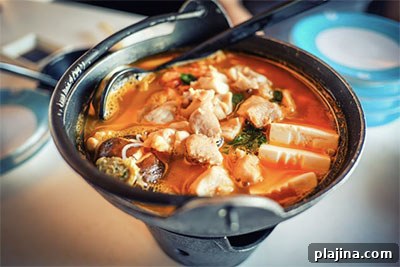
Local cuisine © SURASAK | DREAMSTIME.COM
Restaurants in Singapore
Alma by Juan Amador — European cuisine with Asian influences from Chef Juan Amador, located at Goodwood Park Hotel. 22 Scotts Road $$$$
Candlenut — The world’s first Michelin-starred Peranakan restaurant, serving refined dishes that blend Chinese, Malay and other regional influences. 17A Dempsey Road $$$$
Colony — An acclaimed international buffet set in a colonial-style conservatory with live cooking stations and a wide range of heritage dishes. The Ritz-Carlton, Millenia Singapore, 7 Raffles Ave. $$$$