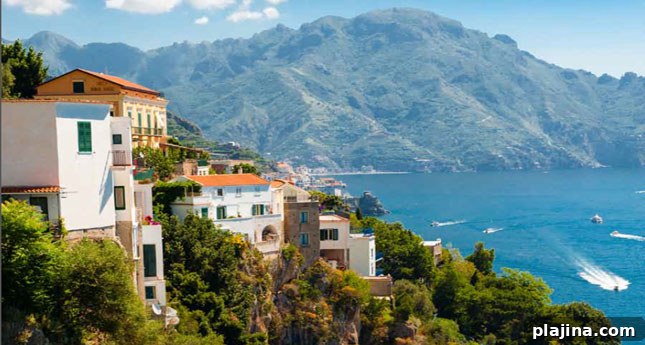
In the 10th century, Mediterranean trade was dominated by the merchants of an unexpected maritime power: the Duchy of Amalfi, tucked into steep sea cliffs south of Naples, Italy. When the renowned Arab traveler Ibn Hawqai visited Amalfi in 977, he praised it as the most prosperous and illustrious city in the region, surpassing Naples in wealth and prestige. After a century at the pinnacle of commerce, Amalfi’s dominance waned as Venice and other trading powers rose. Still, the coast’s dramatic shoreline and sense of grandeur remain, even as the centers of influence have shifted from medieval princes and captains to modern visitors and holidaymakers.
Today the Amalfi Coast draws even more travelers than it did a millennium ago. A string of luminous villages clings to near-vertical slopes, dotted with lemon groves and cascading into the Tyrrhenian Sea. These picturesque towns, with upscale boutiques, seafood cafés and pedestrian alleys, are linked by a ferry network below and a winding coastal road above—the so-called Blue Highway—one of the world’s most scenic and adrenaline-inducing drives.
To take in the coast fully, we travel both by land and by sea. Leaving Naples and skirting Mount Vesuvius by rail, we make Sorrento our base. Sorrento sits a short bus or ferry ride from the Amalfi Coast and offers a respite from the busiest tourist zones. From our hotel balcony we enjoy an impressive view of Vesuvius, the volcano that buried Pompeii in AD 79. Pompeii remains a compelling destination, but our focus is the road to Amalfi.
Roads cling to the cliff face along the Amalfi Coast © Freesurf69 | Dreamstime.com
The coastal drive from Sorrento skirts the cliff tops and follows Strada Statale 163, a narrow highway that connects 13 towns between Positano and Vietri sul Mare across roughly 25 miles. Despite the short distance, the road is famously serpentine and not for the faint-hearted. We opt for the bus from Sorrento, which gingerly navigates the hairpin turns and tight village centers. The Amalfi Coast was designated a UNESCO World Heritage cultural landscape in 1997, and calling the route “the road with 1,001 turns” is no exaggeration. In high season it sometimes admits only buses, and even in late spring traffic and narrow passages slow travel considerably. At its height in the Middle Ages, Amalfi supported around 70,000 people; today the town’s year-round population hovers near 5,000, though daily visitors can multiply that figure many times over.
Façade of St. Andrew’s Cathedral © Picturemakersllc | Dreamstime.com
From the harbor, where luxury yachts often bob, we climb the town’s tiered squares connected by pedestrian-only shopping lanes. Amalfi’s centerpiece is St. Andrew’s Cathedral, an 11th-century church honoring the town’s patron saint, celebrated for its Byzantine frescoes and a collection of relics brought here during the Fourth Crusade in the 13th century.
Near the top of Amalfi’s main street sits the Museum of Paper (Museo della Carta), built on the remains of a paper mill once owned by the Milano family. Amalfi was an early European center for papermaking, adopting techniques transmitted from Arab artisans. Well-preserved vats and machinery show historic production methods, and the museum shop sells locally produced “bambagina,” a thick, elegant paper still prized for invitations, stationery and artistic uses.
After descending the town’s terraces we lunch outdoors on the beach, savor pistachio gelato and catch the bus to Ravello, a storied town perched high above the coast. Founded in the fifth century, Ravello flourished alongside Amalfi and is famed for its villas and gardens. Villa Rufolo, built in 1270, crowns the town with Moorish courtyards, Gothic gateways and a tower that once served as a lookout against pirate raids. Villa Rufolo blends Sicilian, Norman and Arabic architectural influences; in the 19th century Richard Wagner found inspiration there while composing parts of Parsifal. Since 1952 the villa’s gardens have hosted the open-air Ravello Music Festival, and the belvedere offers some of the finest panoramic views on the coast.
Café and store, Ravello © Adeliepenguin | Dreamstime.com
Ravello’s other notable estate, Villa Cimbrone, was restored in the early 20th century by British baron Ernest William Beckett. He added temples, gazebos, bronzes and sculptures, creating the famous Terrace of Infinity, another spectacular lookout across the sea.
As we wind back down toward Amalfi, the landscape is rich with olive groves but dominated by lemon terraces. The Amalfi lemon, or sfusato amalfitano, is large, with a thick, fragrant rind and few seeds—ideal for producing limoncello, the region’s signature lemon liqueur. Sorrento produces its own lemon variety and hosts expansive lemon gardens, and both areas celebrate lemons in many forms, from liqueurs and fresh juice to cakes and gelato.
We return to Sorrento by bus along the Blue Highway as dusk paints the cliffs. Back on our hotel balcony we toast the day with limoncello, a sweet close to a day among sea-cliff towns.
The next morning we board a ferry from Sorrento to experience the coast from the water. Our destination is Positano, the emblematic vertical village many consider the jewel of the Amalfi Coast. John Steinbeck famously called Positano “a dream place,” and its steep lanes, terraced shops and pastel villas feel cinematic and unforgettable. The town has inspired artists and musicians alike and has appeared in films and travel writing for decades.
Arriving at Spiaggia Grande, Positano’s main beach lined with cafés and sunbeds, the village rises dramatically up the cliff in a spiral of boutiques, linen shops, delis, pastry stands and Byzantine churches. The town’s relaxed Mediterranean charm and unique topography make it instantly captivating.
We take a late-afternoon ferry back to Sorrento, letting the coastline’s high cliffs, hidden coves and lemon terraces drift past. In Sorrento we explore Via San Cesareo near Piazza Tasso, sampling regional specialties at shops and small enotecas. Compared with Amalfi or Positano, Sorrento is larger and busier—around 16,000 residents—with more extensive shopping and a livelier pace, but it preserves its own historical and cultural allure. Its name recalls the mythic sirens who once lured Odysseus, and tales of ancient temples and coastal legends still color the town’s identity.
For a final taste of the region, we stroll through the Giardini di Cataldo, a lemon garden resembling a city park. Shaded rows of citrus trees offer a cool respite, and a small stand in the center serves a variety of freshly made lemon liqueurs. Sorrento’s lemons are juicier than those of Amalfi but equally aromatic, enhancing everything from limoncello and fresh juices to lemon cake (delizia) and lemon gelato (sorbetto alla limone). These lemon-flavored treats are fitting parting delights from the Coast.
Amalfi Coast Info to Go
Sorrento is accessible from Naples International Airport (NAP) by direct Curreri buses, by ferries from Port Beverello and by the Circumvesuviana railway from Napoli Centrale. Sorrento connects to the Amalfi Coast via SITA public buses, ferries from Marina Piccola and by rental car, though the coastal road can be slow, crowded and narrow—best suited to experienced drivers.
Where to Stay in the Amalfi Coast
Hilton Sorrento Palace — A hillside resort with expansive views of town, sea and Mount Vesuvius, offering spacious rooms and full amenities. Via S. Antonio 13, Sorrento
Monastero Santa Rosa Hotel & Spa — A converted monastery along the Blue Highway featuring oceanfront rooms, a thermal spa, infinity pool and refined dining. Via Roma 2, Conca dei Marini
Palazzo Avino — A historic villa in Ravello with luxurious rooms, sea views, an outdoor pool and fine dining. Via San Giovanni del Toro 28, Ravello
Restaurants in the Amalfi Coast
Next2 — Modern, minimalist dining with terrace seating and seafood specialties in Positano. Via Pasitea 242, Positano
Ristorante Il Buco Sorrento — Sorrento’s Michelin-starred restaurant set in an old vaulted cellar, known for creative seafood dishes. 2a Rampa Marina Piccola 5, Piazza S. Antonino, Sorrento
Ristorante Marina Grande — Beachfront dining in Amalfi offering fresh fish, antipasti and classic coastal dishes. Viale della Regione 4, Amalfi