
As a travel journalist who has visited dozens of countries, I am often asked to name my favorite destination. I never hesitate: Antarctica.
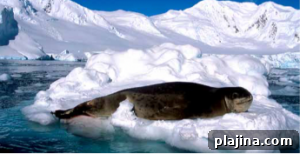
The memories from expeditions to the bottom of the world are vivid. A penguin that casually climbed into my lap. A leopard seal, all teeth and intensity, preparing to rocket toward our Zodiac. Sculpted icebergs drifting in blue-green water below the Antarctic Circle.
Like most voyages to the White Continent, my trip with Quark Expeditions focused on the Antarctic Peninsula, a ribbon of rock and ice that reaches north toward Tierra del Fuego at the tip of Argentina. Quark has been operating polar cruises for decades and runs several small expedition vessels in this region, all carrying fewer than 200 passengers. Their newest ship, Ultramarine, added in 2021, features two helicopters for scenic flights and a fleet of Zodiacs for shore excursions.
Cruise operators traveling to Antarctica follow the guidelines of the International Association of Antarctica Tour Operators, which promotes safe, environmentally responsible visits. Only expedition and mid-size ships with fewer than 500 passengers are permitted to make shore landings; larger vessels remain offshore and cruise along the coastline.
Friends in Chicago wondered why I would head to the Antarctic in the middle of winter at home. The day I left, the temperature there had plunged to minus 8 degrees Fahrenheit (minus 28 with wind chill). Yet because seasons are reversed in the Southern Hemisphere, our February weather on the peninsula was comparatively mild, ranging from the mid-30s to around 50 degrees Fahrenheit during my 11-day trip. I even walked the deck without a coat on some afternoons. The sun set late—around 9:30 p.m.—and twilight lingered for a long time.
Onboard, our days balanced education and exploration. We watched films and attended lectures on glaciology, ornithology, marine biology and polar history. Morning briefings outlined plans and any changes driven by weather or ice conditions; evening recaps allowed passengers to share sightings and ask the expedition team questions.
Protecting wildlife and habitat is a central priority on Antarctic voyages. Passengers are instructed not to collect feathers, stones, or other natural objects and to take nothing and leave nothing behind. We were told to keep at least 15 feet from wildlife, and to maintain even greater distance from fur seals, which can be unpredictable. If a bird begins to fly and cry above you, you may be too close to its nest.
© KATHERINE RODEGHIER,
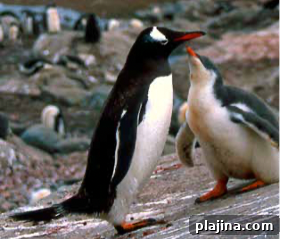
Our expedition leader advised us to be still and let animals approach, and one did on Half Moon Island. I sat on a rock watching chinstrap penguins—recognizable by the thin black band across their heads—when one waddled over, hopped into my lap and tilted its head as if curious about the red parka-clad stranger. At Neko Harbor, gentoo penguins crowded the slopes above the shoreline, creating a raucous chorus as parents and chicks called to one another. While nesting, penguins feed on krill and regurgitate it to feed their hungry chicks. Skuas and other seabirds swooped overhead, waiting for opportunities to snatch scraps.
© KATHERINE RODEGHIER
Zodiac excursions brought us close to the water, where penguins launched from the sea and seals and minke whales dived near our boat before disappearing beneath the waves. I heard the sharp crack and thunder of an iceberg calving from a glacier, then watched smaller bergs collide and tumble like oversized pebbles. Newly formed icebergs sometimes display blue or dark-green streaks—variations in ice density created under the glacier’s tremendous pressure over millennia. Wind, swell and repeated collisions sculpt these bergs into extraordinary shapes, with aquamarine tunnels and hollowed caves. Cruising among them in our Zodiac felt like drifting through a sea of crystal cubes set against deep-blue water.
Back aboard the ship, someone spotted humpback whales about 40 yards away. They spyhopped and breached, and soon a mother and her juvenile approached within sight of the rail. We gathered along the port side as the pair swam slowly by, rolled on their sides and appeared to meet our gaze. The whales then surfaced and dove on the ship’s other side, prompting passengers to dash across the deck to continue watching. For more than an hour the whales kept us guessing with their playful surfacing and dives.
For travelers seeking extra adventure, the expedition offered activities for an additional fee, such as sea kayaking, stand-up paddleboarding and overnight camping ashore in a bivouac sack.
INFO TO GO
The Antarctic cruise season generally runs from early November through late March. Most itineraries depart from Ushuaia at the southern tip of Argentina; some travelers add a day in Buenos Aires to see its architecture and experience its cultural heritage before continuing south. In Ushuaia, passengers usually transfer to a downtown departure point and may have time to explore the small port town before boarding.
Crossing the often-rough Drake Passage to the Antarctic Peninsula takes about 48 hours. As an alternative, some itineraries fly from Punta Arenas, Chile, to King George Island in the South Shetlands, avoiding the Drake and shortening overall travel time.
Quark Expeditions runs a variety of itineraries that visit Antarctica, the Falkland Islands, South Georgia and Patagonia. Other expedition cruise operators also work in the region under IAATO guidelines, offering different ship sizes and experiences for travelers interested in polar wilderness.