
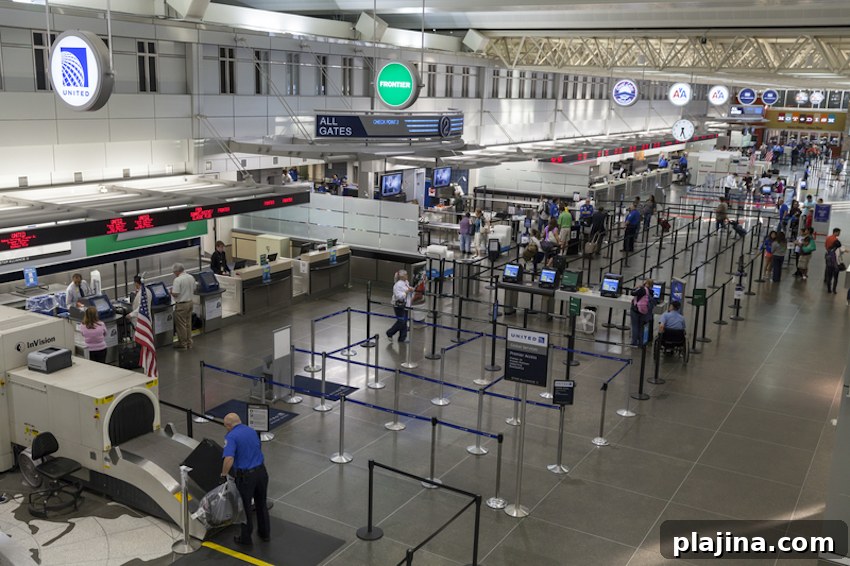
Last month, the Transportation Security Administration announced plans to expand the use of biometric technology in airports.
Today, TSA and airlines still rely on a combination of travel documents, visual identity checks and biographical data to verify travelers. New biometric tools will allow TSA to broaden the use of facial recognition and fingerprint scanning at security checkpoints. These enhancements are intended to reduce queue times and improve passenger flow through airport security.
In June 2017, TSA piloted fingerprint scanning for TSA PreCheck passengers at Hartsfield-Jackson Atlanta International Airport and Denver International Airport. Earlier this year the agency tested facial recognition at Los Angeles International Airport, and late last month it introduced the first biometric terminal using facial recognition at Hartsfield-Jackson Atlanta International Airport.
Passengers enrolled in TSA PreCheck provide a photo as part of enrollment, which allows TSA to evaluate biometric systems in operational settings.
“By testing biometric technology in the airport environment, TSA hopes to increase security effectiveness and stay ahead of the threat,” said David Pekoske, TSA administrator. “We will continue to leverage our partnerships to deliver enhanced capabilities to checkpoint lanes throughout the country.”