
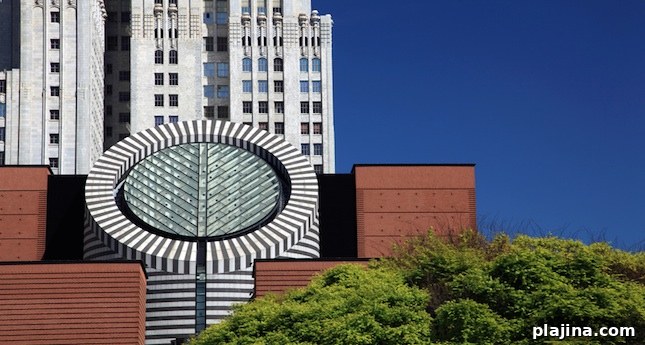
San Francisco’s Museum of Modern Art recently opened a major extension that makes it the largest modern art museum in the United States. The addition, completed after three years of construction and costing $305 million, roughly doubles the museum’s gallery space. With a total of 145,000 square feet, SFMOMA now surpasses New York’s Museum of Modern Art by about 20,000 square feet.
The expansion was designed by the Norwegian firm Snøhetta, whose design features undulating white panels on the exterior. Those flowing forms were intended to echo San Francisco’s waterfront and the city’s well-known fog, creating a distinct visual identity along the skyline.
Inside, the museum added approximately 4,000 new works to its holdings, enriching its displays with pieces by artists such as Pablo Picasso, Diane Arbus, Gerhard Richter, and Andy Warhol. The extension includes a new sculpture garden and a living wall planted with roughly 20,000 plants, bringing green space and outdoor exhibition opportunities into the museum experience. In addition, an entire floor has been dedicated to photography, allowing for expanded exhibitions and programming focused on the medium.
The reopening also introduced changes to visitor services and interpretation. New wall labels provide updated information about the works on view, and reinvented audio guides incorporate a more conversational tone—featuring comedians, sportscasters, and actors from the television series Silicon Valley—to engage a broader audience.
Reactions to the new look and the expanded museum have been mixed. While many praise the increased gallery space and the refreshed facilities, some critics have been less enthusiastic about the exterior design. One review in the Guardian described the structure using colorful language, calling it “like a gigantic meringue, a building-sized baked Alaska slumped on the skyline.”
Overall, the expansion positions SFMOMA as a leading institution for modern and contemporary art in the U.S., offering significantly more exhibition space, a larger permanent collection, new outdoor areas, and dedicated photographic galleries that together broaden opportunities for visitors, researchers, and artists.