
River cruises are growing in popularity worldwide as cruise lines race to build vessels that offer unprecedented levels of luxury. Mirroring trends from the oceangoing “blue-water” cruise industry, river lines are responding to demand for increasingly upscale accommodations and amenities.
River cruises offer advantages that ocean sailings cannot match: easy access to major inland cities like Vienna and Paris, dramatic inland scenery from the Mississippi to the Yangtze, and fewer full days at sea so passengers spend more time within sight of shore. River itineraries usually include more complimentary shore excursions than blue-water cruises, feature more relaxed dress codes and operate in much calmer waters—important for travelers prone to seasickness. While large ocean ships provide bigger staterooms and suites, numerous dining options, extensive spa and fitness facilities, casinos and large-scale entertainment, river ships have limited space and must prioritize different comforts. Even so, river cruise lines are expanding stateroom sizes, creating new dining and leisure venues, and introducing amenities once reserved for ocean liners.
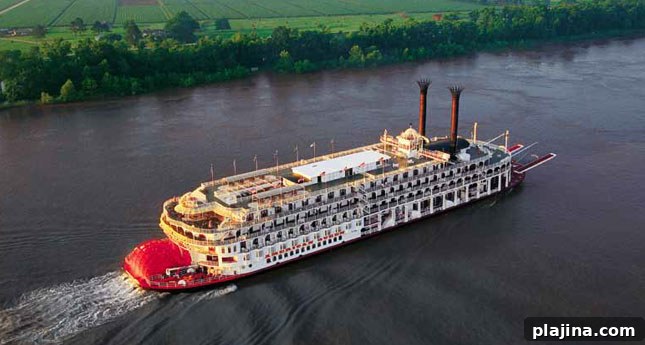
A clear example is the American Empress, a sternwheeler relaunched in April to cruise the Columbia and Snake rivers of the Pacific Northwest. Built at Nichols Brothers boatyard on Washington’s Whidbey Island in 2003 for the region’s unique navigation needs, the 223-passenger vessel was mothballed for five years before undergoing a comprehensive redesign. Its new owners invested $55 million to convert the ship into a luxury vessel with upgraded staterooms and fresh dining options to take advantage of the Columbia Gorge’s rugged scenery, Native American and pioneer history, and nearby wine country.
We inspected the ship in dry dock in Portland, Ore., prior to the refit and later saw its transformation on a shakedown cruise. The American Empress emerged modern and bright, with only a few decorative touches—chandeliers and coffered ceilings—left from its former ornate style. All 112 staterooms have outside views and most include private verandas; each room is equipped with a Keurig coffee maker, flat-screen TV and Clarins toiletries. The spacious Paddle Wheel Lounge houses a library and workstations. The Astor Dining Room provides three full-service meals daily with menus featuring fresh seafood, soups, breads, salads and desserts, and complimentary regional wines from Oregon, Washington and California at dinner.
Reflecting the trend toward greater onboard luxury, the American Empress converted an upper-deck ice cream parlor into the 55-seat River Grill & Bar, a specialty restaurant with an open kitchen surrounded by counter seating so guests can watch chefs grill lobster and wild salmon. Wall-to-ceiling sliding glass doors open to a sweeping stern deck for alfresco dining. The Astor Dining Room hosts a wine-pairing dinner each cruise, and the Show Lounge presents tastings led by vintners from Oregon and Washington.
Onboard historians, known as “riverlorians,” mingle with guests, sharing stories about the Columbia’s sternwheeler era as the ship follows the final stages of Lewis and Clark’s Voyage of Discovery. Shore excursions—from Clarkston, Idaho on the Snake River to Astoria, Ore. at the Columbia’s mouth—include complimentary Hop On, Hop Off bus tours and optional activities such as flights over Mount Hood, drives along the historic Columbia Gorge Highway and visits to Bonneville Dam’s hydroelectric turbines and fish ladders. Guests can also borrow bikes to explore ports independently. The result is a deluxe, yet educational, voyage that traces America’s westward journey along scenic riverfronts.
The American Queen Steamboat Company helped revitalize Mississippi river cruising with the larger paddle wheeler American Queen. American Cruise Lines followed with the Queen of the Mississippi, the first of five newly built luxury paddle wheelers. In 2015, Viking River Cruises, a dominant force in European river cruising, announced plans to operate on the Mississippi with two vessels adapted for North American navigation—without paddle wheels—marking a major transatlantic expansion for river cruising.
Aquavit Terrace © Viking River Cruises
Viking River Cruises is often credited with driving the recent boom in river cruise construction. In Europe, Viking launched 16 Longships in a single 24-hour period in 2014, setting a Guinness world record for “the most ships inaugurated in one day by one company.” Viking’s Longships set a high standard for river luxury: each accommodates 190 passengers in 95 staterooms, including spacious two-room suites with large verandas. The Longship’s signature Aquavit Terrace features retractable floor-to-ceiling glass doors, allowing indoor-outdoor dining with panoramic views. Longships also include organic herb gardens, solar panels and vibration-reducing engines to improve comfort and sustainability.
Herb
garden on a Viking Longship © Viking River Cruises
Keeping pace with Viking, Emerald Waterways launched the first of its four new “Star Ships” this year. The 182-passenger Emerald Star, christened in Amsterdam, features amenities more commonly associated with ocean liners: a sundeck pool with a retractable roof, a full-sized cinema, a gym, a hair salon and a massage room, alongside a range of suite options. Scenic Cruises, Emerald’s parent company, is also introducing “Space Ships” on European rivers, offering luxurious appointments and private balconies that convert into all-weather lounges at the push of a button.
Whether cruising rivers in Europe or North America, these new and refitted ships are bringing ocean-like comforts to the river market. For river travelers, the scenic shorelines and historic towns remain the main attractions, but operators are increasingly introducing the luxuries of blue-water sailing upstream—enhancing comfort and expanding choices while preserving the intimate, destination-focused nature of river voyages.